

A guide to the visionaries behind Palm Springs' homes, neighborhoods, hotels, civic buildings, and architectural landmarks.
Palm Springs architecture did not emerge from the work of a single architect, a single style, or even a single generation. An extraordinary group of architects, developers, builders, and designers shaped the city's distinctive built environment, seeing the desert as an opportunity to rethink how people could live.
From Albert Frey's experiments in desert modernism and Richard Neutra's internationally celebrated Kaufmann House to the thousands of Modernist homes built by the Alexander Construction Company, Palm Springs became a living laboratory for architectural innovation.
Some architects designed landmark homes for Hollywood stars and industrialists. Others created hotels, schools, churches, banks, and civic buildings. Developers such as George Alexander, Jack Meiselman, Roy Fey, and Paul Trousdale helped bring modern architecture beyond individual custom homes and into entire neighborhoods.
Together, their work helped create one of the most significant concentrations of midcentury and desert modern architecture in the United States.
This guide explores the architects and developers whose work helped shape Palm Springs, along with many of their notable projects, neighborhoods, and buildings.
Key Figures in Palm Springs Architecture
Palm Springs has been shaped by dozens of important architects, designers, developers, and builders. Among the most influential are:
- Albert Frey — A pioneer of desert modernism whose work includes the Palm Springs Visitor Center, Palm Springs City Hall, and Frey House II.
- George Alexander — The developer behind many of Palm Springs' best-known midcentury neighborhoods.
- William Krisel — Architect of numerous Alexander developments, including Twin Palms, Vista Las Palmas, and Canyon View Estates.
- Donald Wexler — Known for his prefabricated steel houses, Palm Springs International Airport terminal, residential architecture, and civic buildings.
- Richard Neutra — Designer of the internationally celebrated Kaufmann House.
- John Lautner — Creator of the dramatic Elrod House and Bob Hope Residence.
- William F. Cody — A versatile architect whose work ranged from the Del Marcos Hotel and L'Horizon to country clubs, residences, and the Palm Springs Library.
- Stewart Williams — Designer of the Frank Sinatra House, Edris House, Palm Springs Art Museum, and numerous commercial and civic buildings.
- Hugh Kaptur — A prolific Palm Springs architect whose work spans homes, hotels, fire stations, golf facilities, and commercial buildings.
- Jack Meiselman — A major developer of Palm Springs' midcentury residential neighborhoods.
- Roy Fey — Developer associated with several significant Palm Springs residential communities.
- Charles E. DuBois — Known in Palm Springs for his distinctive Swiss Miss houses and other residential developments.
The Architects Who Shaped Palm Springs
Albert Frey, Architect
Few architects are more closely associated with Palm Springs than Albert Frey. Born in Zurich, Switzerland, in 1903, Frey became one of the most important figures in developing what would become known as desert modernism.
Frey studied architecture in Europe and later worked in Le Corbusier's Paris office, an experience that exposed him to some of the most influential ideas in Modern architecture. After moving to the United States, he worked with A. Lawrence Kocher, managing editor of Architectural Record.
Together, Frey and Kocher designed the Aluminaire House in 1930 for the 1931 Architectural League exhibition in New York. The innovative metal-and-glass structure was built in less than 10 days and later appeared in the Museum of Modern Art's influential 1932 exhibition, Modern Architecture: International Exhibition. The Aluminaire House eventually made its way to Palm Springs, where it was erected near the Palm Springs Art Museum.
Frey first visited Palm Springs in 1934 while working on the Kocher-Samson Building. The desert landscape made a lasting impression on him. After periods of work in New York and Palm Springs, Frey formed a partnership with architect John Porter Clark that would last nearly two decades.
Frey's architecture was never simply Modernism transplanted into the desert. His buildings responded to Palm Springs' climate, topography, light, and landscape. He used steel, glass, concrete, and other modern materials while embracing the mountains and dramatic desert setting surrounding his buildings.
His work includes private homes, apartments, civic buildings, the Palm Springs Aerial Tramway Valley Station, and the distinctive former Tramway Gas Station, now home to the Palm Springs Visitor Center.
Selected Palm Springs Projects
- Kocher-Samson Building — 1934, 766 North Palm Canyon Drive
- James V. and Mildred Guthrie House — 1935, 666 Mel Avenue
- Kellogg Studio — 1936, 321 West Vereda Sur
- Mason Residence — 1937, 448 Cottonwood Road
- Chaney Apartments — 1939, 275 East Tamarisk Road
- Frey House I — 1940, demolished
- Julian Sieroty Residence — 1941, 695 East Vereda Sur
- Racquet Club Bungalows — 1945, 2743 North Indian Avenue
- Villa Hermosa Apartments — 1946, 155 Hermosa Place
- Colgan Apartments, later Villa Orleans — 1946, 269 Chuckwalla Road
- Raymond Loewy House — 1946, 600 West Panorama Road
- Andrew and Anna Jergens House, also known as Graceland West — 1946, 845 West Chino Canyon
- Bel Vista Residence — 1946, 1164 North Calle Rolph
- Sun View Estates Residence — 1950
- Palm Springs City Hall — 1952–1957, 3200 East Tahquitz Canyon Way
- Laura Carey House, also known as the Carey-Pirozzi House — 1956, 651 West Via Escuela
- Frelinghuysen Residence — 1959, 707 Panorama Road
- Hugo Steinmeyer Residence — 1962, 318 Pablo Drive
- Palm Springs Aerial Tramway Valley Station — 1963
- Frey House II — 1964, 686 Palisades Drive
- Tramway Gas Station, now the Palm Springs Visitor Center — 1965, 2901 North Palm Canyon Drive
Frey remained in Palm Springs for the rest of his life. He died in 1998 at the age of 95, leaving behind a body of work that helped define the city's architectural identity.
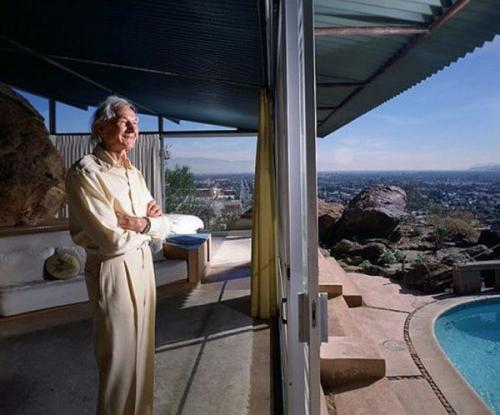
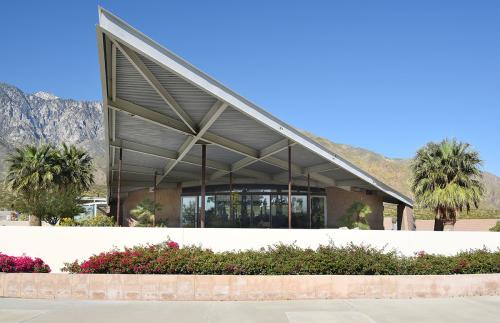
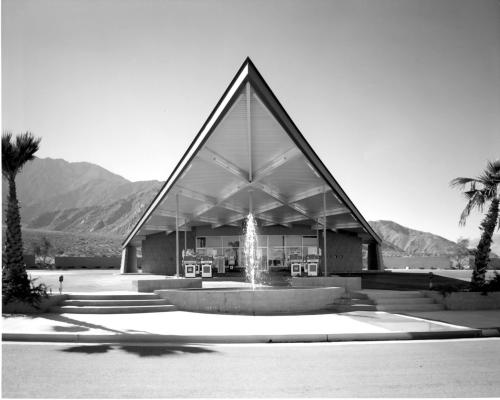
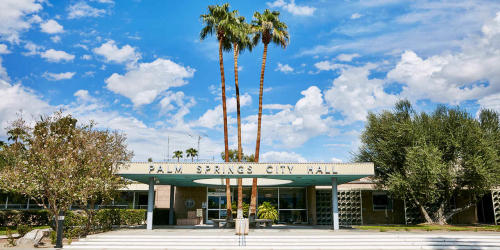
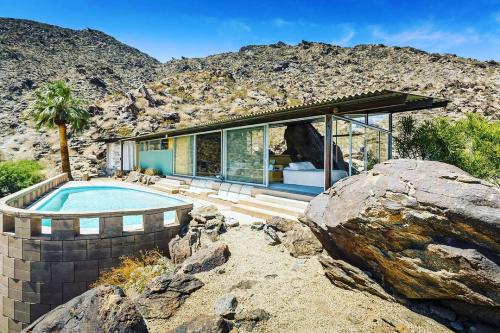
Frey House II
Herbert W. Burns, Architect
Herbert W. Burns helped shape a distinctive side of Palm Springs architecture through a series of boutique hotels, apartment hotels, and residential projects that reflected the city’s evolution as a stylish desert resort destination.
Working primarily during the mid-20th century, Burns developed an architectural approach that was well suited to Palm Springs living. His designs often emphasized relaxed indoor-outdoor spaces, swimming pools, landscaped courtyards, and a sense of privacy—qualities that would become central to the Palm Springs hotel experience.
While many of Palm Springs' best-known architects are celebrated for dramatic examples of Desert Modernism, Burns made an important contribution to the city's smaller-scale hospitality architecture. His work helped establish the intimate, design-forward character that continues to define many of Palm Springs' boutique hotels today.
Several of his projects have survived and been adapted over the decades, allowing visitors to experience an architectural legacy that remains closely connected to Palm Springs' identity as a resort destination.
For a deeper look at his life, career, and architectural contributions, explore our guide to Herbert W. Burns: The Visionary Who Shaped Palm Springs Boutique Hotel Style
Selected Projects
- Town & Desert Apartment Hotel - 1947, 370 W Arena Road
- Claude Freeman Residence - 1948, 441 West Chino Canyon Road
- Dr. George Gillman Residence - 1948, 574 W. Mariscal Road
- Solomon & Helen Moore Residence - 1948, 375 W. Vista Chino
- Fay Brainard Residence - 1948, 1120 East Alejo Road
- Harriet Van Horn Residence - 1948, 1121 Linda Vista Road
- Jean Bell Residence - 1948, 1241 Linda Vista Road
- Isador Reseblatt Residence - 1949, 1480 N. Via Maraleste
- Holiday House - 1951, 200 W. Arenas Road
- Desert Riviera - 1952, 610 E. Palm Canyon Drive
- The Four Hundred - 1955, 400 W. Arenas
- Village Manor Apartments (Orbit In) - 1957, 562 W. Arenas Road
- Desert Hills Apartment Hotel (Desert Hills) - 1956, 601 W. Arenas Road
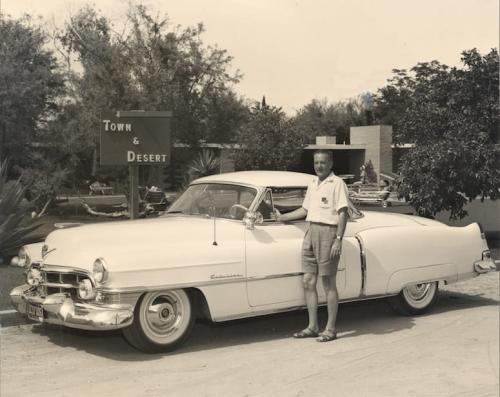
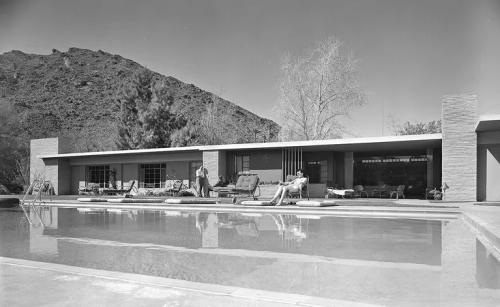
Town & Desert Apartment Hotel
John Porter Clark, Architect
John Porter Clark established an architectural office in Palm Springs in 1932 and quickly became one of the city's important figures in its early architectural development.
Clark met Albert Frey when Frey came to Palm Springs to work on the Kocher-Samson Building. The two architects formed a partnership in 1939 that continued until the late 1950s.
While Frey often receives the greatest international recognition, Clark played a significant role in shaping Palm Springs during its formative years. His work included residential, commercial, and civic projects, and his long career contributed significantly to the city's transition from a small desert resort to an important architectural destination.
Notable Projects
- Hamrick House — 1941
- Welwood Memorial Library — 1940
Clark established his solo practice after leaving the partnership with Frey.
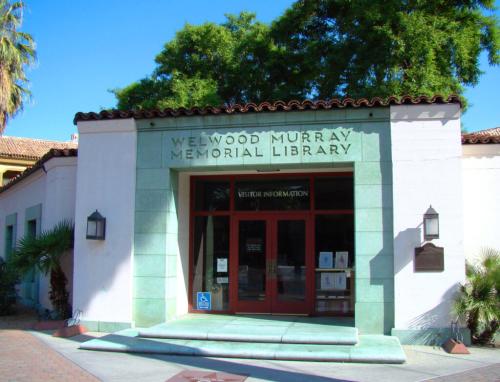
William F. Cody, Architect
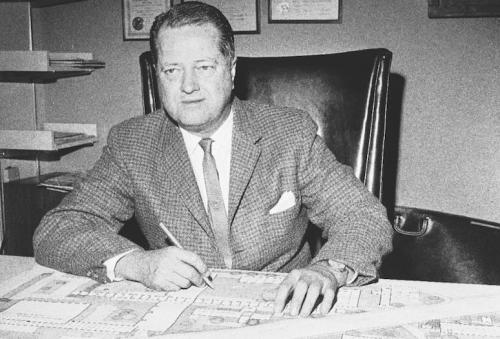
William F. Cody was one of the most versatile architects working in Palm Springs during the postwar era. His work included hotels, country clubs, commercial buildings, churches, residences, and civic projects.
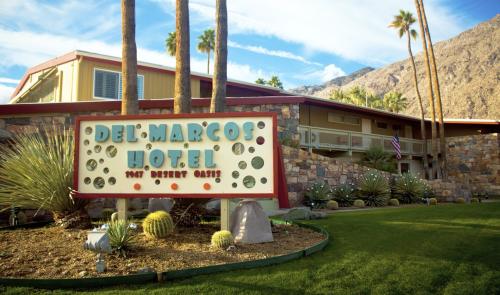
Cody received his first Palm Springs commission in 1945 when he was retained to alter the Desert Inn. In 1947, he completed the Del Marcos Hotel, his first independent commission in Palm Springs. The building received an honorable mention from the Southern California chapter of the American Institute of Architects.
As Palm Springs grew into an increasingly fashionable winter and weekend destination after World War II, Cody's career expanded with it. He became particularly associated with country clubs and resort developments, designing or altering facilities at Thunderbird Country Club, Eldorado Country Club, Tamarisk Country Club, the Racquet Club, and the Tennis Club.
Cody's residential architecture was equally important. His homes emphasized simplicity, natural light, large expanses of glass, and a close relationship between interior and outdoor spaces. Because his work did not adhere to a single recognizable style, he is sometimes more difficult to categorize than some of his contemporaries.
Selected Palm Springs Projects
- William Cody Residence — 1946, 1950 East Desert Palms Drive
- Del Marcos Hotel — 1947, 225 West Baristo Road
- Levin Residence — 1948, 1940 East McManus Drive
- Desert Palm Estates — 1951
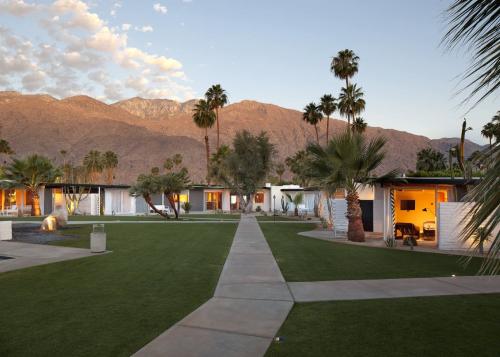
- L'Horizon Hotel — 1952, 1050 East Palm Canyon Drive
- William Perlberg and Bobbie Brox House — 1952, 888 North Avenida Palmas
- Racquet Club Cottages West — 1960, 360 West Cabrillo Road
- Abernathy Residence — 1962, 611 North Phillips Road
- Commercial Gas Station — 1964, 2796 North Palm Canyon Drive
- Glass House — 1967, 755 Camino Norte
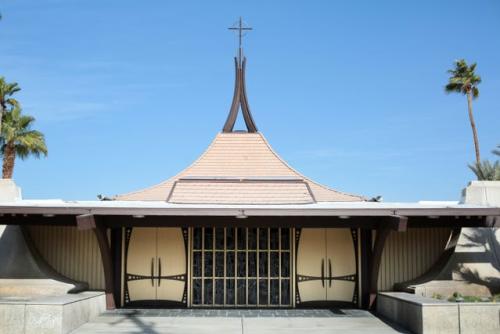
- St. Theresa Catholic Church — 1968, 2900 Ramon Road
- Palm Springs Library — completed 1975, 300 South Sunrise Way
Cody died in 1978 at the age of 62, but his remarkably varied body of work remains an important part of Palm Springs' architectural history.
St. Theresa Catholic Church
L'Horizon Hotel
Charles E. DuBois, Architect
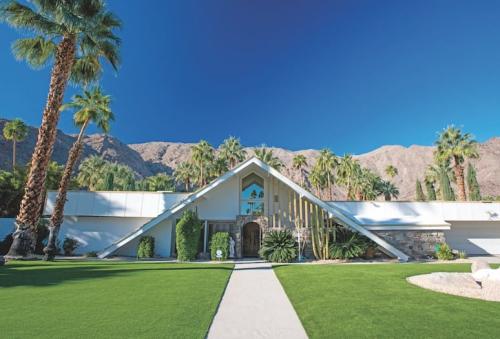
Charles E. DuBois is best known for the distinctive Palm Springs homes now known as the Swiss Miss houses.
DuBois studied architecture and worked with several prominent architectural firms before establishing his own practice. During World War II, when construction slowed, he worked as a senior set designer for MGM.
In Palm Springs, his best-known contribution came through a group of dramatic A-frame and chalet-inspired houses in Vista Las Palmas. Developer Joe Dunas wanted homes that would stand apart from the flat roofs and butterfly roofs becoming increasingly associated with Palm Springs Modernism.
DuBois created a distinctive design with steeply pitched rooflines that extended across the house's width, creating covered entryways and shaded rear terraces. Inside, the dramatic roof structure created double-height living spaces.
Selected Palm Springs Projects
Swiss Miss Houses, 1958–1962
Examples include:
- 1133 Vista Vespero — 1958
- 1110 Abrigo Road — 1958
- 775 West Crescent Drive — 1958
- 700 Via Las Palmas — 1959
- 855 Via Las Palmas — 1959
- 1355 North Rose Avenue — 1961
Approximately 15 Swiss Miss houses remain in Palm Springs' Vista Las Palmas neighborhood.
Other projects include:
- Sunrise L'Anai — 1962–1964
- Las Palmas Summit Historic District — 1962–1963
- Canyon Estates — 1971–1973
A. Quincy Jones, Architect
A. Quincy Jones was a Los Angeles architect known for his contributions to Modern residential architecture and his collaborations with other significant architects, including Paul R. Williams.
Jones founded A. Quincy Jones, AIA, and Associates, and his firm received the American Institute of Architects Architectural Firm Award in 1969. Jones himself received numerous awards and citations during his career.
Although his Palm Springs work represents only part of his larger architectural legacy, several of his projects contributed to the city's midcentury development.
Selected Palm Springs Projects
- Tennis Club Addition — 1946
- Town & Country — 1947, 169 North Indian Canyon Drive
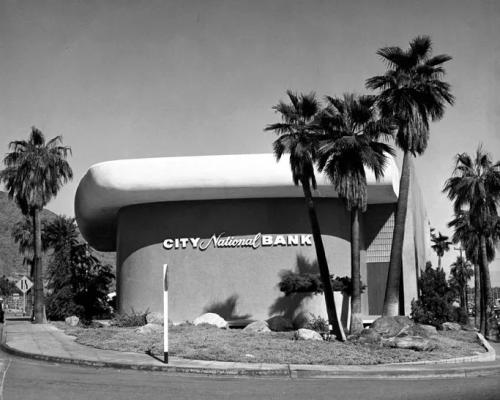
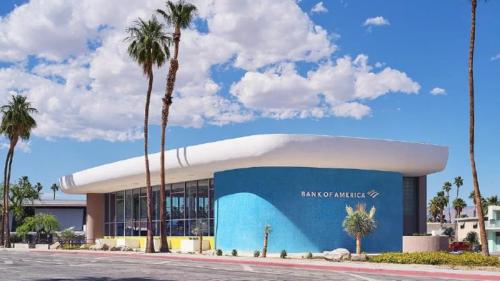
- Bank of America (City National Bank) — 1949, 146–150 North Palm Canyon Drive
- Jerome J. Robinson House — 1957, 999 North Patencio Road
- Country Club Estates Condominiums — 1965, La Verne Way and South Camino Real
Hugh Kaptur, Architect
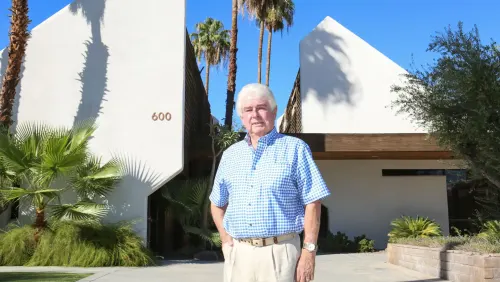
Hugh Kaptur arrived in Palm Springs in 1954 and became one of the city's most prolific architects.
Early in his career, Kaptur worked briefly for Wexler & Harrison. After being laid off during the 1957 recession, he continued working in the local architectural community, producing renderings for Donald Wexler, Albert Frey, and other architects.
As Palm Springs entered another period of significant residential development, Kaptur began designing post-and-beam homes. In 1962, he partnered with architect Robert Ricciardi, resulting in projects including Palm Springs Fire Station No. 3 and the Palm Springs Golf Course Clubhouse.
Throughout his career, Kaptur designed residential, commercial, hospitality, civic, and recreational projects throughout Palm Springs.
Selected Palm Springs Projects
- Noel Gillette Residence — 1957, 1033 East Via Colusa
- Impala Lodge — 1958, 555 East San Lorenzo Road
- Arthur and June Boyer Residence — 1958, 984 North Rose Avenue
- Hugh and Rosemary Kaptur Residence — 1958, 1897 East Belding Drive
- Desert Park Estates — 1958
- Earl Stroube Spec House I — 1958, 1951 South Camino Monte
- Earl Stroube Spec House II — 1959, 1935 South Camino Monte
- Pete Siva House — 1959, 660 Palisades Drive
- Residence — 1960, 1577 Calle Marcus
- Palm Springs Fire Station No. 3 — 1963, near Via Miraleste and Racquet Club
- Steve McQueen House — 1964, 2203 Southridge Drive
- Casa Blanca Motor Hotel, later Musicland Hotel — 1967, 1342 South Palm Canyon Drive
- Tahquitz Creek Golf Course Clubhouse — 1967, 1885 Golf Club Drive
- Palm Springs Fire Station No. 4 — 1971, 1300 South La Verne Way
- Desert Dorado — 1973
- Tahquitz Plaza — 1974–1977, 600–700 East Tahquitz Canyon Way
- William Holden Residence — 1977, 2433 Southridge Drive
- Canyon West Estates Condominiums — 1978
- Canyon East Estates Condominiums — 1978
- Palm Villas — 1979, 3155 Ramon Road
- Rancho El Mirador Condominiums — 1983, 291 East Mel Avenue
- Deauville Condominiums — 1985, East Amado Road and El Segundo
- Villa Caballeros Condominiums — 1985, 255 South Avenida
- Caballeros Villa Serena Apartments — 1986, 900 East Saturnino Road
- Pueblos Apartments — 1987
- Paul and Kay Selzer Residence — 1988, 38727 Maracaibo Circle
- The Villas — 2002, 1700 South Araby Drive
- Kaptur Court — 2016, 262 West Vista Chino
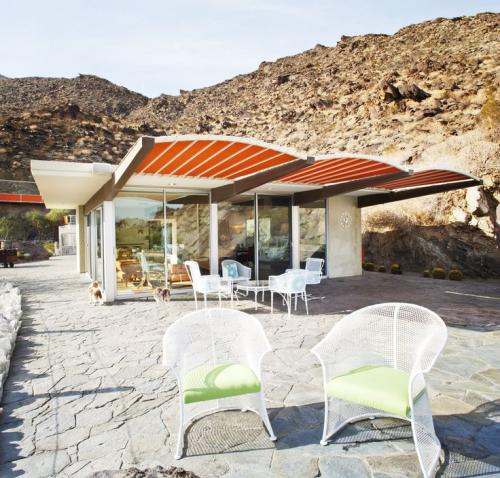
Siva House
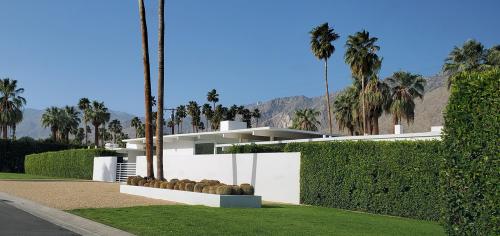
William Holden Residence
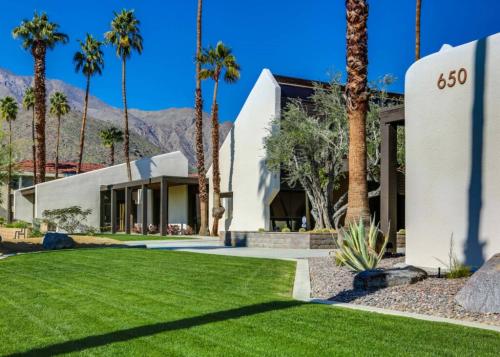
Hugh Kaptur Tahquitz Plaza Building 2
William Krisel, Architect
William Krisel was one of the most influential architects associated with Palm Springs' postwar residential boom.
Born in Shanghai in 1924 to American parents, Krisel later returned to the United States and attended the University of Southern California, earning his architecture degree in 1950. He became a licensed landscape architect in 1954.
Krisel formed the firm Palmer & Krisel with Dan Palmer. The firm designed custom homes, commercial buildings, and large-scale residential developments throughout Southern California and beyond.
A close friend of Bob Alexander and his family, Krisel was brought to Palm Springs to design what became one of the city's most recognizable collections of Modern homes. Smoke Tree Valley, now known as Twin Palms, helped establish the formula that would make Alexander homes famous: Modern design, efficient planning, and construction on a scale that brought architect-designed homes to an entire neighborhood.
Krisel's Palm Springs work includes Twin Palms, Vista Las Palmas, Racquet Club Estates, Canyon View Estates, and the Ocotillo Lodge.
His work helped establish many of the visual elements now strongly associated with Palm Springs architecture, including dramatic rooflines, post-and-beam construction, walls of glass, indoor-outdoor living, and carefully planned relationships between homes and the desert landscape.
John Lautner, Architect
John Lautner studied under Frank Lloyd Wright at Taliesin and later built a career focused primarily on residential architecture.
Lautner's work was often characterized by dramatic forms, unconventional rooflines, sculptural concrete, and an intense relationship between architecture and its surroundings. He frequently created models to help communicate the spatial experience of his designs.
In Palm Springs, two of his most recognizable projects sit dramatically above the city.
Selected Palm Springs Projects
- Arthur Elrod Residence — 1968
- Bob Hope Residence — 1973–1979
The Elrod House, with its dramatic circular living space and sweeping views, became internationally famous and remains one of Palm Springs' most recognizable examples of residential architecture.
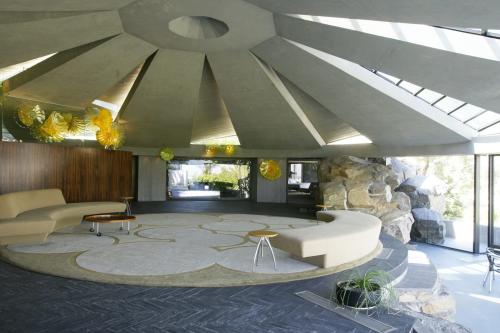
Elrod Residence
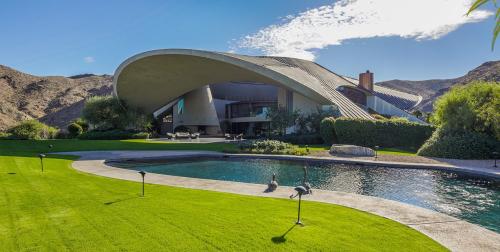
Bob Hope Residence
Richard Neutra, Architect
Richard Neutra was one of the most influential architects of the twentieth century and a major figure in the development of Modern residential architecture.
His Palm Springs work includes the Grace Lewis Miller House, completed in 1937. Although relatively small, the house exhibited many characteristics of Neutra's architecture, including simple forms, flat roofs, attention to climate, and a close relationship between the interior and the landscape.
Neutra's most famous Palm Springs project came nearly a decade later.
In 1946, Edgar J. Kaufmann commissioned Neutra to design a desert home for his family. Kaufmann had previously hired Frank Lloyd Wright to design Fallingwater in Pennsylvania but chose Neutra for his Palm Springs residence.
The resulting Kaufmann House became one of the most internationally recognized examples of Modern residential architecture.
The house combines a steel frame, expansive glass walls, stone, and wood with dramatic views toward the San Jacinto Mountains. Photographer Julius Shulman's images helped bring the architecture of Palm Springs to an international audience.
Selected Palm Springs Projects
- Grace Lewis Miller Residence — 1937, 2311 North Indian Canyon Drive
- Kaufmann Residence — 1946, 470 West Vista Chino
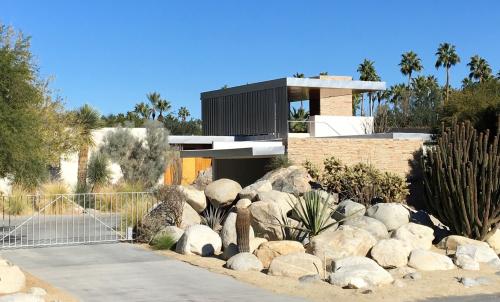
Kaufmann Residence
Dan Palmer, Architect
Dan Palmer was William Krisel's partner in the influential firm Palmer & Krisel.
The firm's work extended far beyond Palm Springs, producing thousands of homes throughout California and other states. By the end of the 1950s, Palmer & Krisel had designed more than 20,000 houses in California, Arizona, Nevada, Texas, and Florida.
In Palm Springs, the partnership's work was instrumental in establishing the visual language of postwar Modern residential architecture.
Palmer and Krisel's partnership dissolved in 1964, but their work remains closely associated with the architectural development of Palm Springs and the larger Southern California region.
Donald Wexler, Architect
Donald Wexler was one of Palm Springs' most important and prolific architects.
After moving to Los Angeles in 1950, Wexler worked for Richard Neutra before coming to Palm Springs to work with William F. Cody at Tamarisk Country Club. In 1952, he and Richard Harrison formed Wexler & Harrison.
The partnership dissolved in 1961, after which Wexler established Donald A. Wexler Associates.
Wexler's work ranged from private residences to schools, hotels, civic buildings, and commercial architecture, as well as the innovative prefabricated steel houses that remain among the most significant experiments in Palm Springs Modernism.
He was named a Fellow of the American Institute of Architects in 2004. Wexler died in 2015 at the age of 89.
Selected Palm Springs Projects
- Joe and Joyce Pawling Residence — 1954, 230 West Lilliana Drive
- Leeds-Howard House I — 1954, 515 Via Lola
- Wexler Residence — 1955, 1272 East Verbena Drive
- Ted Leff Residence — 1957, 362 West Via Sol
- Leeds-Howard House II — 1959, 375 Via Lola
- Zen House — 1959, 1344 South Calle de Maria
- El Rancho Vista Estates — 1959–1960
- Roy Fey Spec Houses — 1960
- Tony Curtis and Janet Leigh House — 1960, 641 North Camino Real
- Prefabricated Steel Houses — 1962
- Canyon Country Golf Club Clubhouse — 1963
- Dinah Shore Estate — 1964, 432 West Hermosa Place
- Green Fairway Estates — 1964
- Palm Springs Airport Terminal — 1965, 3400 East Tahquitz Canyon Way
- Raymond Cree Junior High School — 1966, 1011 East Vista Chino
- Michael and Barbara Heathman Residence — 1969, 633 South La Mirada Drive
- Merrill Lynch Building — 1970, 415 South Palm Canyon Drive
- Sagewood Condominiums — 1972
- Twin Springs Condominiums — 1973
- Palm Springs Pavilion — 1974
- The Rose Garden — 1978
- Cecil P. Jones Residence — 1982, 899 Tamarisk Road
- Allen Miller/Tropicana Townhomes — 2003, Prescott Drive
Prefabricated Steel Houses
Wexler's prefabricated steel houses represent one of his most innovative contributions to Palm Springs architecture.
The homes were designed to explore the possibility of efficient, factory-produced housing that could respond to the desert climate while maintaining the openness and clean lines associated with Modern architecture.
Examples include:
- 290 East Simms Road
- 3125 Sunny View Drive
- 3100 Sunny View Drive
- 3133 Sunny View Drive
- 3165 Sunny View Drive
- 300 Molino Road
- 330 Molino Road
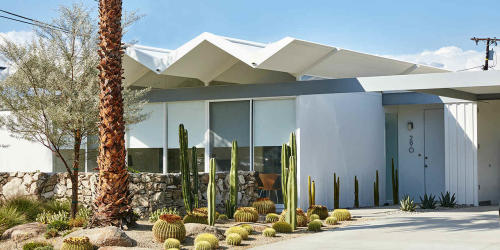
Steel House
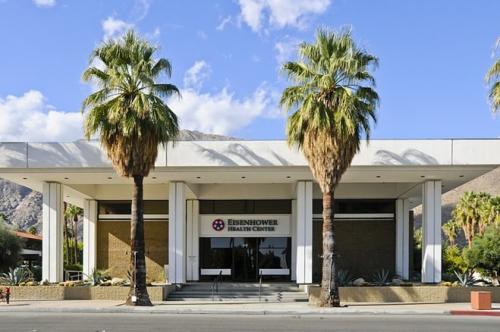
Marrill-Lynch Building
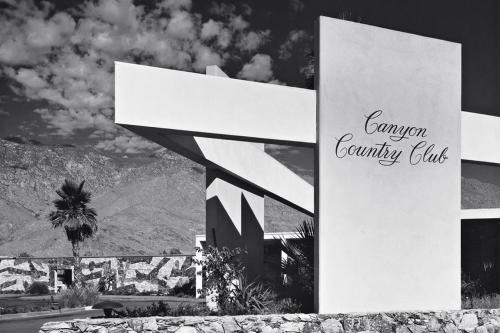
Canyon Country Club
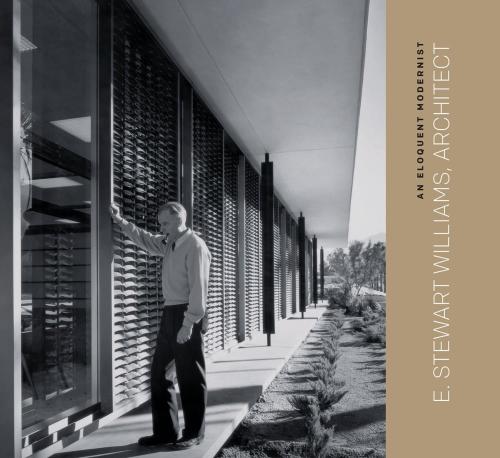
Stewart Williams, Architect
E. Stewart Williams arrived in Palm Springs in 1946 to join his father, Harry, and brother, Roger, in architectural practice.
The Williams family had already established a connection with Palm Springs through Harry J. Williams, who designed La Plaza Shopping Center in 1936.
Stewart Williams quickly became one of the city's most important architects. His first major residential commission in Palm Springs was the Frank Sinatra House, completed in 1947.
Over the following decades, Williams designed homes, schools, hotels, banks, religious buildings, cultural institutions, and commercial projects. His architecture often combined the precision of International Style Modernism with natural materials and a strong sensitivity to the desert environment.
Selected Palm Springs Projects
- Frank Sinatra Residence — 1947, 1148 East Alejo Road
- Palm Springs High School — 333 South Farrell Drive
- Temple Isaiah — 1949–1951
- Oasis Commercial Building — 1953–1955
- Edris Residence — 1954, 1030 West Cielo Drive
- Harold Hicks Real Estate and Insurance Building — 1955, 345 North Palm Canyon Drive
- E. Stewart and Mari Williams Residence — 1955, 1314 Culver Place
- Koerner Residence — 1955, 1275 South Calle de Maria
- Coachella Valley Savings No. 1 — 1956, 383 South Palm Canyon Drive
- Sutter House — 1960, 1207 South Calle de Maria
- Santa Fe Federal Savings and Loan Association — 1960, 300 South Palm Canyon Drive
- Coachella Valley Savings No. 2 — 1961, 499 South Palm Canyon Drive
- Palm Springs Art Museum — 1976
- Erik and Sidney Williams Residence — 1986, 800 West Stevens Road
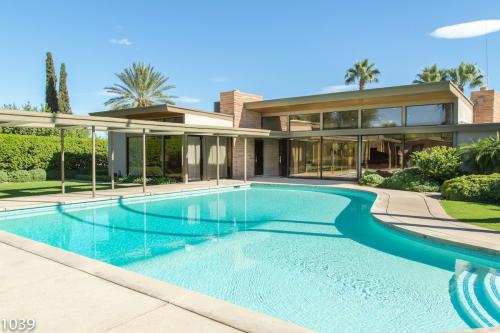
Sinatra Residence
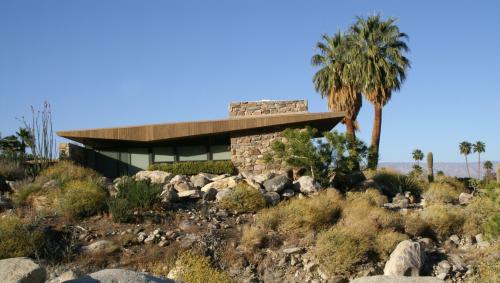
Edris Residence
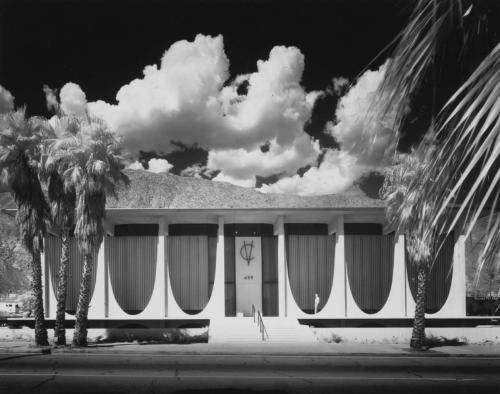
Coachella Valley Savings #2
The Developers Who Helped Build Palm Springs
George Alexander, Developer
George Alexander played one of the most important roles in the development of Palm Springs during the postwar years.
Alexander began his career as an accountant before moving into real estate and development in Los Angeles. He began investing in Palm Springs in 1930 and was involved in projects including the Smoke Tree Guest Ranch.
By the mid-1950s, the Alexander Construction Company began transforming the residential landscape of Palm Springs. George Alexander provided the financial vision and acquired development sites, while his son Bob Alexander oversaw construction.
Working with architect William Krisel and others, the company built more than 1,200 homes in Palm Springs.
The Alexander Construction Company helped make Modern architecture available to a much broader market. Instead of creating one custom Modern house at a time, Alexander and his architectural collaborators created entire neighborhoods of architect-designed homes.
Major Alexander Developments
- Ramon Rise — 1956
- Twin Palms Estates — 1957–1958
- Ocotillo Lodge — 1957–1958
- Enchanted Homes — 1957
- Racquet Club Road Estates — 1958–1960
- Vista Las Palmas — 1956–1959
- Golden Vista Estates — 1960
- Racquet Club Estates — 1959–1960
- Golf Club Estates — 1961
- Steel Houses — 1961–1962
- Riviera Gardens — 1961
- Alexander Home — 1962
- Ladera Circle, Las Palmas Summit — 1962
- Desert Lanai — 1963
- Farrell Canyon Estates — 1963
- Araby Estates — 1964
- Sunrise Estates — 1964
- Green Fairway Estates — 1964–1965
The Alexander name remains one of the most recognizable in Palm Springs architecture, particularly among enthusiasts of midcentury Modern design.
Roy Fey, Developer
Roy Fey came to Palm Springs in 1955 and quickly became involved in the city's expanding real estate and residential development industry.
Before moving to the desert, Fey had been involved in accounting, manufacturing, and residential development in Chicago, where he reportedly built thousands of houses following World War II.
In Palm Springs, he established Fey's Canyon Realtors and Fey Construction Company. His developments became part of the city's growing collection of postwar residential neighborhoods.
Selected Developments
- Caballeros Estates — 1959, designed by Wexler & Harrison
- El Rancho Vista Estates — 1960, designed by Wexler & Harrison
- Canyon View Estates — 1962, designed by William Krisel
- Mesquite Canyon Estates — 1979
- Canyon West Estates
Alvah Hicks, Developer
Alvah Hicks arrived in Palm Springs in 1912 and became one of the key builders and developers of the city's early growth.
A master carpenter by trade, Hicks constructed many of the buildings associated with the Desert Inn and built the home of oil magnate Thomas O'Donnell above what is now the O'Donnell Golf Course.
He later became involved in the water and building industries, founding the Palm Springs Water Company and establishing one of the area's first building supply businesses.
Hicks also built the Ingleside Inn and several homes during the 1920s and 1930s. Many of his buildings were designed by William Charles Tanner, described as an architectural artist.
In the 1940s, Hicks developed Little Tuscany Estates. He also served on Palm Springs' first city council and was involved in the city's incorporation in 1938.
Jack Meiselman, Developer
Jack I. Meiselman was one of the major developers of Palm Springs' postwar residential neighborhoods.
Although he was not an architect, Meiselman's company helped create hundreds of homes that contributed to the city's midcentury residential character.
Meiselman homes often incorporated features such as tongue-and-groove ceilings, clerestory windows, scored stucco, decorative concrete block, and large expanses of glass connecting interior spaces to backyards and pools.
His developments provided another important chapter in the story of Palm Springs Modernism.
Selected Developments
- El Mirador Park — 1946–1955
- Luring Sands Park — 1953
- Karlisa Cove — 1956
- Palm Lane Estates — 1956–1958
- Ramon Rise Estates — 1956
- Chino Palms Estates — 1958–1959
- Alejo Palms Estates — 1959
Paul Trousdale, Developer
Paul Trousdale was a prominent Southern California developer whose work included the development of homes in Palm Springs.
In the Tahquitz River Estates area, Trousdale partnered with Pearl McManus to develop more than 200 homes along the banks of Tahquitz Wash.
The development of the neighborhood followed efforts to stabilize the wash, which historically shifted its course during periods of heavy rain.
The result was a neighborhood representing several periods in Palm Springs' residential history, with both Modern and more traditional homes.
Why These Architects and Developers Matter
Palm Springs did not become an architectural destination simply because it embraced one style.
The city's built environment developed through a combination of experimentation, innovation, business vision, climate-responsive design, and a willingness to try new approaches to how homes and buildings could relate to the desert.
Architects such as Albert Frey, Richard Neutra, Donald Wexler, William Krisel, William F. Cody, Hugh Kaptur, and Stewart Williams designed buildings that ranged from modest homes to internationally recognized landmarks.
Developers such as George Alexander, Jack Meiselman, Roy Fey, and others helped bring those ideas to entire neighborhoods.
Together, they created a remarkable architectural legacy that includes:
- Midcentury Modern neighborhoods
- Dramatic custom residences
- Hotels and resorts
- Country clubs
- Civic buildings
- Schools
- Churches
- Banks and commercial buildings
- Apartment and condominium communities
- Experimental housing
Many of these buildings remain in use today. Others have been restored, altered, repurposed, or lost.
What remains is one of the most significant concentrations of twentieth-century architecture in the United States.
Explore Palm Springs Architecture
Palm Springs continues to attract visitors from around the world who come to experience its distinctive architecture, from landmark Modern homes and civic buildings to entire neighborhoods shaped by the ideas of the architects and developers featured in this guide.
Explore more: