

How one ancient spring shaped a people, a place, and a city.
Long before Palm Springs became a destination, before roads or railways or resorts, there was Séc-he — the hot mineral spring at the heart of the Agua Caliente Band of Cahuilla Indians’ ancestral homeland. Archaeological evidence shows that Indigenous people have lived in this valley for thousands of years, sustained by the spring’s warm waters and the life it nurtured in the desert.
For the Agua Caliente people, Séc-he is not simply a natural feature. It is a sacred place, a source of healing, and a central part of their creation story. Its presence shaped settlement patterns, cultural traditions, and daily life long before the modern city of Palm Springs emerged.
The Meaning of Séc-he
In the Cahuilla language, Séc-he means “the sound of boiling water.” The spring’s mineral-rich waters rise naturally from deep underground, warmed by geothermal forces and infused with minerals that have been valued for their restorative qualities for generations.
To the Agua Caliente people, Séc-he represents:
- Healing — a place where the body and spirit are renewed
- Continuity — a connection to ancestors and future generations
- Community — a gathering place for families and ceremonial life
- Identity — a living symbol of their enduring presence in the valley
This relationship continues today, reflected in the Tribe’s stewardship of the land and the opening of the Agua Caliente Cultural Plaza, which honors this deep history.
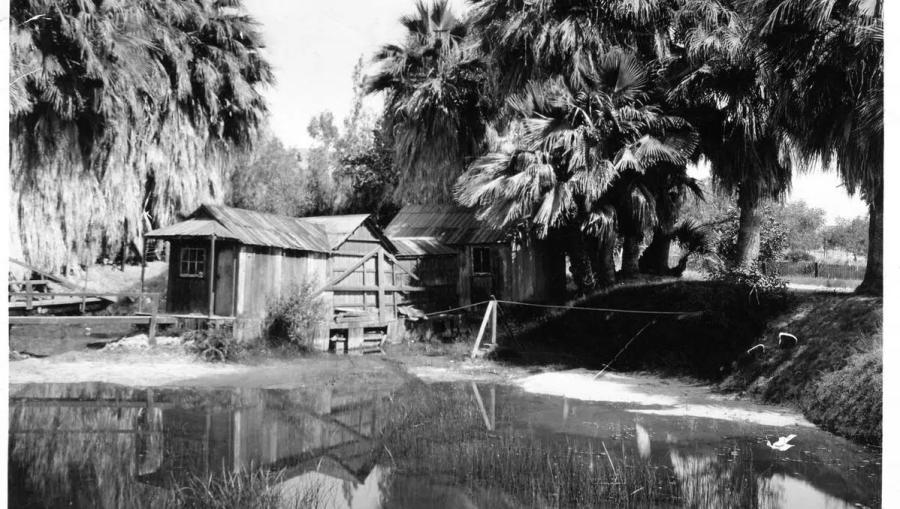
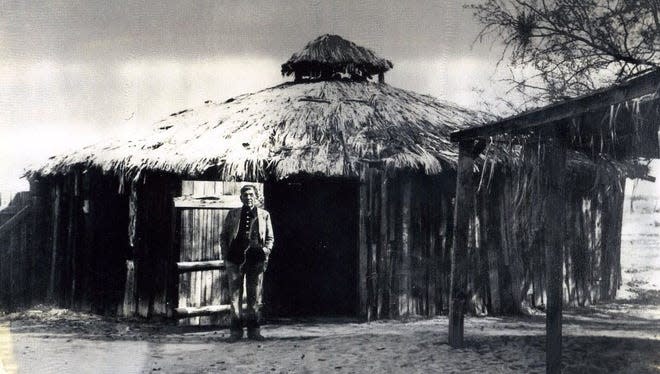
First bathhouse, 1910. Credit: Palm Springs Historical Society
The first written accounts of Palm Springs were from Captain Jose Romero. He and his team were exploring a route to open California to Sonora, primarily to facilitate mail transmission. He recorded in his journal on December 27, 1823, referring to the area as “Agua Caliente.”
“On this day at 11:00 am, two gentile Indians were seen, and when they were presented, they told me they were Cohahaguillas (Cahuilla), who had already served on the rancho (group of huts for housing ranch workers), and were called Jose, and the other, Vincente. The latter took me as far as the well, and Jose went to call on his relatives for them to bring us mescal (agave). They brought nine of them, and I gave them gifts of beads. The Gentiles built the well. It has a depth of about six varas (16.5 feet).”
Romero’s journal explains that the Palm Springs area was relatively well known and widely used by the Spanish and Mexicans.
Welwood Murray built the first hotel in Palm Springs, the Palm Springs Hotel, in 1886. It was located north of the Welwood Murray Library. To enhance the hotel, Murray leased the hot springs from the Tribe for $100 per year and built a bathhouse. The dressing room was directly over the spring. The lease expired in 1892.
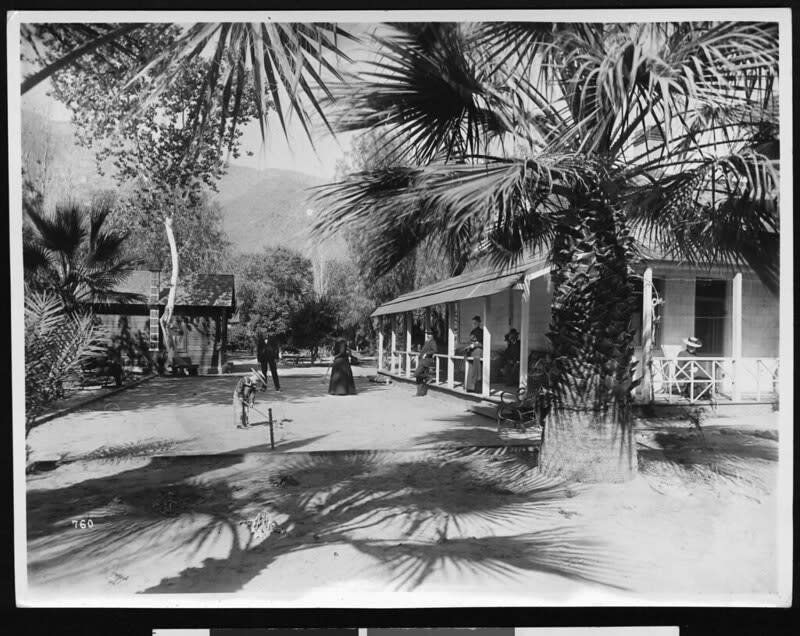
Palm Springs Hotel, 1901. Credit: California Historical Society
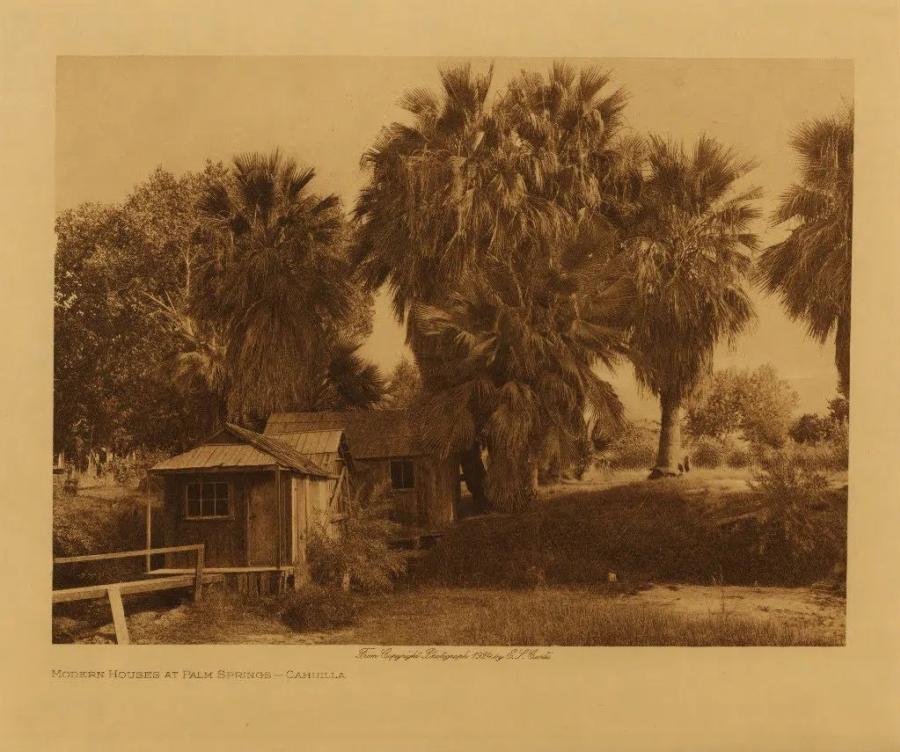
Edward S. Curtis Collection
At the end of 1902, the Tribe reclaimed the hot springs and, in about 1916, replaced the bathhouse with their own. It was a two-room structure with one large enough to cover a pool and allow four people to stand together in the hot curative waters. In 1928, the Tribe built the third bathhouse. The building remained an unpainted wooden bathhouse with high windows and two doors marked “Women” and “Men.”
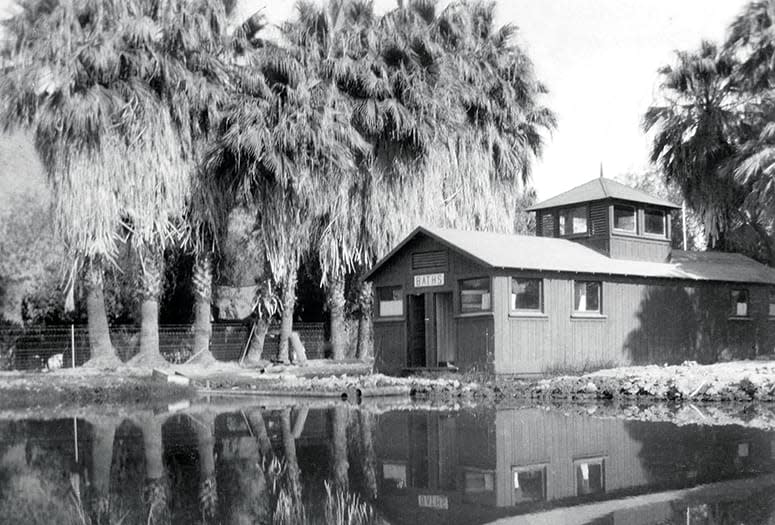
In 1958, the bathhouse was razed to make way for the new Agua Caliente Resort Spa. When it opened in 1960, it was considered one of the most beautiful spas in the world.
The Spirit
The Cahuilla legend retold by Tribal elder Francisco Patencio in the mid-1900s offers this colorful tale about the creation of Agua Caliente Hot Mineral Springs:
“The head man, Tu-to-meet, was tired and sick and lame, so he took his who-ya-no-hut [staff of power], which he struck in the ground. He twisted it around, causing water from a spring to flow out. He named it Sec he, meaning the sound of boiling water, which is up to the earth and on the earth, which is never to dry up, never to go away, but to be there forever and always for the sick.”
Francisco Patencio
Considered a Living Being
The hot mineral spring was the heart of Tribal life. In Stories and Legends of the Palm Springs Indians, published in 1943, Patencio writes that the native people were at first apprehensive of the spring’s powers and believed the hot waters were a portal to the underworld where the nukatem, ancient sacred beings, lived. Over time, the hot mineral spring became part of traditional existence, providing sustenance and protection.
Benefits of Soaking
According to a Mayo Clinic study, soaking in hot mineral water increases heart rate while lowering blood pressure, providing the same benefits as exercise with less stress on the heart. Bathing in a hot mineral spring can deliver a variety of benefits, including increasing the flow of oxygen-rich blood throughout the body and promoting overall well-being. The skin absorbs the minerals, promoting feelings of well-being.
A Great Source of Power
Over the years, many generations have experienced the therapeutic powers of the Agua Caliente Hot Mineral Springs. Its water is silky and mild with a very high pH. A 10-minute soak in the slightly sulfuric water is said to relieve stress, ease muscle aches and joint inflammation, and help treat skin conditions such as dryness, redness, eczema, and rashes.
For the Tribe, the springs are a source of deeper healing. Sec-he is a place to recharge and connect with the place and the spirits.
Agua Caliente Cultural Plaza is the Hub For Cultural Tourism
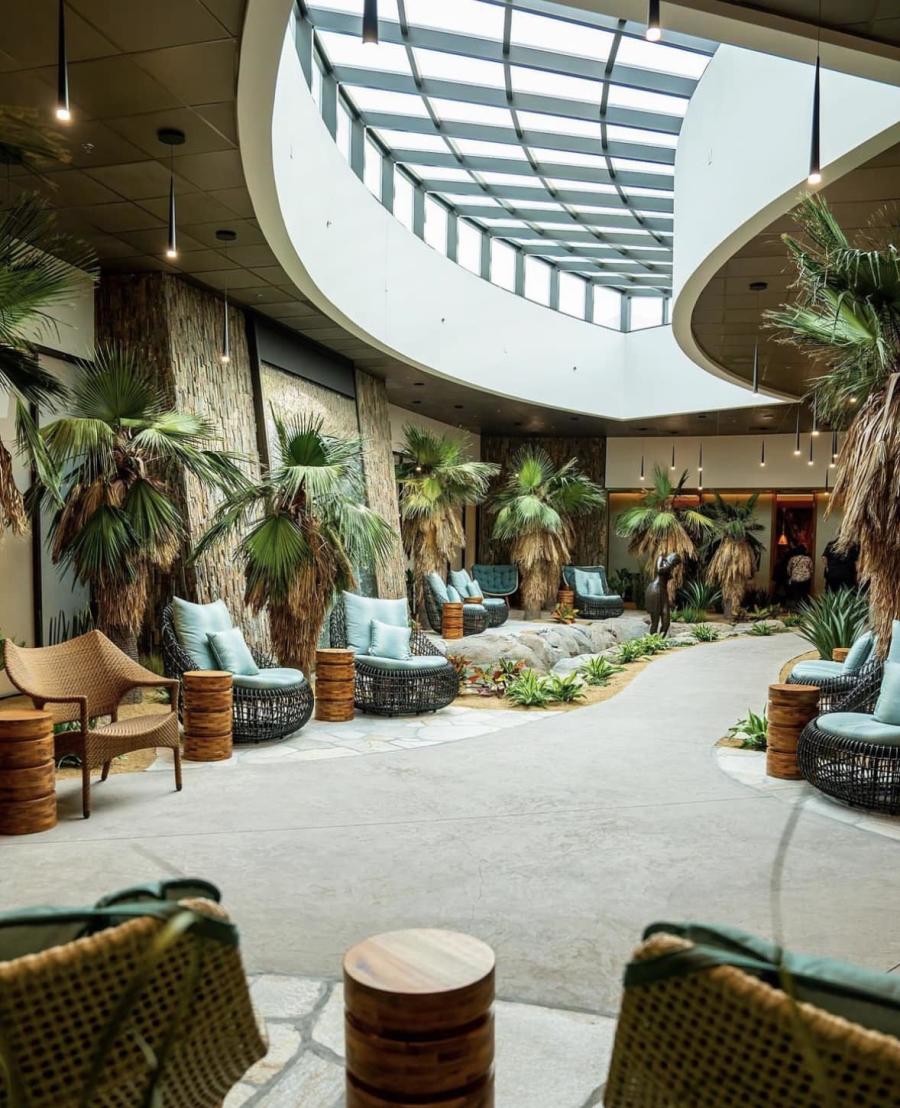
The new Agua Caliente Cultural Plaza features a new Agua Caliente Cultural Museum. The Spa at Séc-he celebrates the sacred Agua Caliente Hot Mineral Spring, a Gathering Plaza, gardens, and an Oasis Trail. Visitors can experience the mineral waters in a way that honors their cultural significance, while the museum shares the Tribe’s history, traditions, and ongoing contributions to the region.
Séc-he is more than the origin of Palm Springs. It is a reminder that this place has a deep, continuous history rooted in Indigenous stewardship.
It represents:
- 12,000 years of connection to the land
- A cultural legacy that predates the city by millennia
- A story that continues to evolve
For visitors, understanding Séc-he adds depth to every experience in Palm Springs — from walking downtown to exploring the canyons to visiting the Cultural Plaza.
Related Stories
- Palm Springs History
- Agua Caliente Band of Cahuilla Indians: A Historical Overview
- Palm Springs: A Living Museum of Mid-Century Modern Architecture
- Hollywood and Palm Springs: A Star-Studded History
- The Birth of Midcentury Modernism in Palm Springs
- The Early Resort Era: How Palm Springs Became a Desert Retreat (1900–1930)
Explore More: