
Palm Springs History

Palm Springs is often defined by its sunshine, architecture, and resort lifestyle, but its history runs far deeper. Long before it became an international destination, this desert landscape was sustained by water, shaped by Indigenous knowledge, and gradually transformed through settlement, tourism, and design.

To understand Palm Springs is to understand its layers of history, each building upon the last, each still visible in the city today.

Palm Springs History Timeline:

  • Pre-contact: The Agua Caliente Band of Cahuilla Indians thrived in the desert
  • 1870s: U.S. reservation system establishes the checkerboard land pattern
  • 1880s: John Guthrie McCallum settles; Welwood Murray opens first hotel
  • 1900–1930: Health tourism and early resorts emerge
  • 1930s–1960s: Hollywood era transforms Palm Springs into a national destination
  • 1940s–1960s: Midcentury modern architecture defines the built environment
  • 1970s–present: LGBTQ+ leadership and preservation movements shape identity
  • Today: Cultural resurgence and continued leadership by the Tribe

The First Stewards: Agua Caliente Band of Cahuilla Indians

The story of Palm Springs begins with the Agua Caliente Band of Cahuilla Indians, whose presence in the Coachella Valley extends back thousands of years. Life in this arid environment was made possible through deep ecological knowledge, careful resource management, and a cultural relationship to the land that emphasized balance and sustainability.

At the center of this world was Séc-he, the hot mineral spring that gave life to the area. More than a source of water, it was, and remains, a place of healing, ceremony, and community. The Tribe’s seasonal patterns, food systems, and oral traditions were all connected to this landscape, forming a sophisticated desert lifeway long before outside arrival.

Early Encounters and Shifting Landscapes

European and American contact began in the late 18th and early 19th centuries, as Spanish explorers and later Mexican authorities moved through the region. By 1823, the hot spring at Séc-he had been documented in written records, marking one of the earliest non-Indigenous accounts of the area.

Yet for much of this period, the Agua Caliente people maintained continuity in their way of life. The most significant changes would come later in the 19th century, as American expansion brought new land policies, transportation routes, and settlement patterns into the desert.

Reservation Era and the Checkerboard Land System

A defining moment in Palm Springs history came in the 1870s with the establishment of the Agua Caliente Reservation under President Ulysses S. Grant, later expanded under Rutherford B. Hayes. The resulting land distribution created the now-famous checkerboard pattern, in which alternating square-mile sections were assigned to the Tribe and to the Southern Pacific Railroad.

This system would profoundly shape Palm Springs' development. Land ownership, leasing, infrastructure, and urban growth all evolved within this framework, creating a unique relationship between Tribal land stewardship and non-Native development.

This framework influenced everything from transportation routes to development patterns, creating a lasting relationship between Tribal land stewardship and non-Native growth.

👉 How the Agua Caliente Tribe’s All-Woman Council Changed Palm Springs Forever

Settlement, Water, and the Beginnings of a Village

Permanent non-Native settlement began in the 1880s with figures such as John Guthrie McCallum, who arrived seeking a healthier climate for his ailing son. His efforts to bring water to the desert through early irrigation marked one of the first attempts to establish agriculture and sustained settlement in the area.

Soon after, Welwood Murray opened the village’s first hotel in 1886, signaling a subtle but important shift. Palm Springs was no longer only a place to live—it was becoming a place to visit.

These early years were defined by experimentation and resilience. Water systems failed and were rebuilt, small homesteads appeared alongside Tribal lands, and a modest community began to take shape around the natural advantages of climate and landscape.
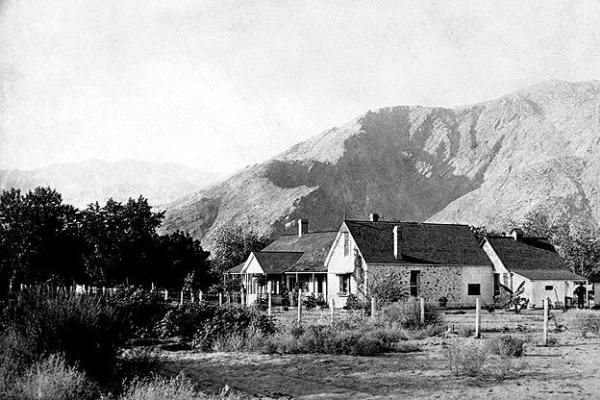
Welwood Murray Palm Springs Hotel

Welwood Murray's Palm Springs Hotel

Access and the Opening of the Desert

Palm Springs’ transformation would not have been possible without improved access. The expansion of rail service through the Coachella Valley, along with the influence of the Southern Pacific Railroad, connected the desert to the rest of California.

By the early 20th century, the rise of automobile travel and the development of regional roadways, including what would become Highway 111, made Palm Springs increasingly accessible. This growing connectivity laid the groundwork for tourism, seasonal residency, and eventually Hollywood’s arrival.

A Desert Retreat Emerges (1900–1935)

By the early 20th century, Palm Springs had begun to attract a steady stream of visitors. Drawn by sunshine, dry air, and the promise of health, travelers arrived seeking rest and recovery. Small bathhouses, guest cottages, and boarding houses developed near the hot springs and throughout the growing village.

The arrival of improved roads and rail access made the desert more accessible, while the vision of early hoteliers—most notably Nellie Coffman—helped define the destination's character. Her Desert Inn became the social and cultural center of early Palm Springs, establishing a tradition of hospitality rooted in comfort, intimacy, and connection to the landscape.
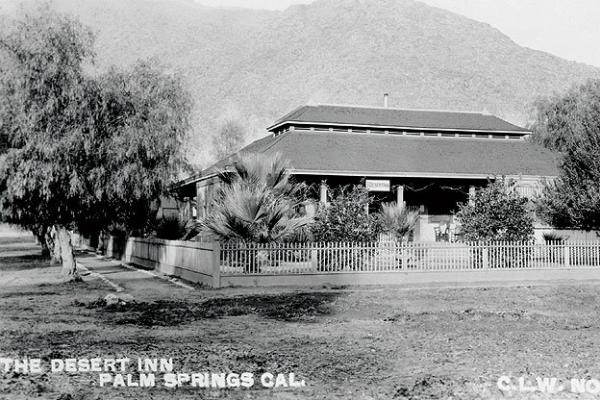
historic picture of the desert inn, palm springs

By the late 1920s, Palm Springs had evolved from a remote outpost into a recognized winter retreat, known for its tranquility and restorative environment.

👉 Discovering the Palm Springs Historical Society

👉 La Plaza: The Heart of Historic Palm Springs

👉 The Plaza Theatre: A Star Returns to the Spotlight

Hollywood’s Desert Escape (1930s–1960s)

Palm Springs entered a new phase of growth in the 1930s, when the American film industry began to embrace the desert as a nearby escape. Studio contracts—often referred to as the “two-hour rule”—required actors to remain within close proximity to Los Angeles, making Palm Springs an ideal retreat.

Stars such as Frank Sinatra, Marilyn Monroe, Lucille Ball, and Cary Grant helped define the city’s public image. Their presence brought national attention, while private estates, golf courses, and exclusive clubs reinforced Palm Springs’ reputation for glamour and leisure.

What had once been a quiet health retreat was now a cultural phenomenon—yet it retained the sense of privacy and escape that had drawn visitors from the beginning.


The Rise of Desert Modernism

From the 1940s through the 1960s, Palm Springs became one of the most important centers of modernist architecture in the United States. Architects such as Albert FreyE. Stewart WilliamsDonald WexlerDan Palmer, and William Krisel reimagined how buildings could exist within the desert environment.

Their work emphasized simplicity, functionality, and a seamless connection between indoor and outdoor space. Glass walls, clean lines, and climate-responsive design transformed neighborhoods into cohesive expressions of modern living.

Palm Springs did not simply adopt midcentury modernism—it helped define it.

👉 Palm Springs: A Living Museum of Mid-Century Modern Architecture

👉 Midcentury Modern Architecture Tours

👉 Preserving Palm Springs Architecture

A City of Inclusion and Cultural Expression

Beginning in the latter half of the 20th century, Palm Springs emerged as a center of LGBTQ+ life and culture. Its longstanding emphasis on privacy, acceptance, and individuality made it a natural destination for those seeking community and belonging.

Over time, LGBTQ+ residents and leaders played a central role in shaping the city’s identity, contributing to its political leadership, cultural institutions, and creative economy. Events, festivals, and preservation efforts further reinforced Palm Springs as a place where diversity and expression are not only welcomed but also celebrated.


Palm Springs Today: Living History in the Desert

Today, Palm Springs reflects all of these layers at once. The continued leadership of the Agua Caliente Band of Cahuilla Indians remains central, with projects like the Agua Caliente Cultural Museum offering deeper insight into the region’s enduring history.

At the same time, the city thrives as a destination for design, wellness, and cultural exploration, where architecture, landscape, and community intersect.

Palm Springs is not defined by a single era or identity. It is a continuum shaped by water, sustained by culture, and continually reimagined by those who live here and those who return.

It is a place where ancient springs still flow, where modern design still inspires, and where history is not simply preserved—but actively lived.