

At the heart of downtown Palm Springs, La Plaza brings together more than 90 years of history with the things visitors love about Palm Springs today: shopping, dining, architecture, and a leisurely stroll through an inviting outdoor setting.
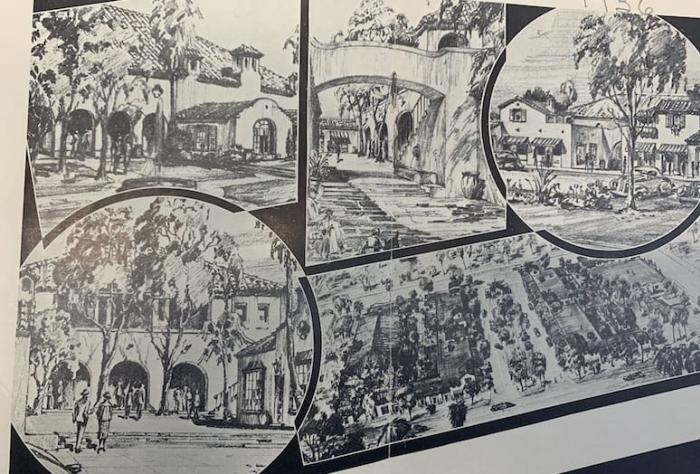
Completed in 1936, La Plaza was designed by architect Harry Williams as a mixed-use commercial and residential development. Its pedestrian promenade, courtyards, and collection of shops and restaurants made it an innovative destination for its time. Today, La Plaza remains a lively part of downtown Palm Springs, where visitors can experience a piece of the city's history while shopping, dining, and exploring.
The Vision of Julia Carnell
The story of La Plaza begins with Julia Carnell, a philanthropist and part-owner of the National Cash Register Company who began spending time in Palm Springs in the early 1930s.
Carnell was a friend of Nellie Coffman, the influential proprietor of the Desert Inn, and she quickly became interested in Palm Springs real estate. In 1934, she purchased property in the growing village and commissioned the Ohio architectural firm of Schenck & Williams to design the Carnell Building on North Palm Canyon Drive.
The project brought architect Harry Williams to Palm Springs. Williams would go on to play an important role in the city's architectural history, and Carnell soon turned to him for an even more ambitious project: a new commercial and residential center in the heart of the village.
La Plaza Opens in 1936
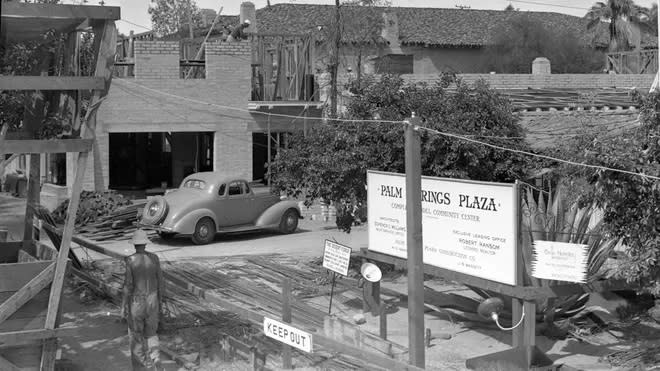
Construction of Carnell Village and the Palm Springs Plaza began in 1936. The approximately $500,000 development was conceived as a self-contained village where people could live, shop, dine and conduct business.
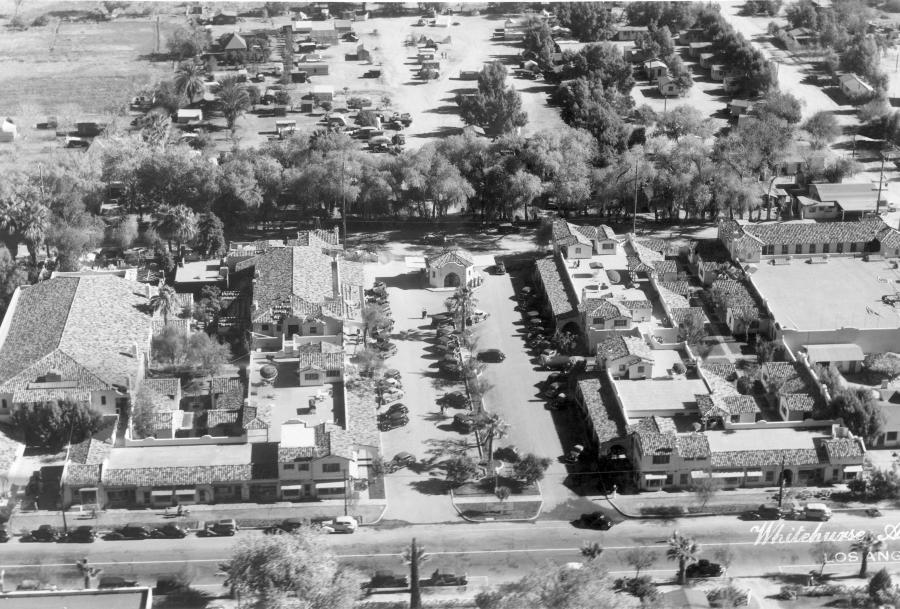
Williams' design was remarkably forward-thinking. Rather than creating a conventional enclosed commercial building, the development centered on an outdoor pedestrian promenade connecting Palm Canyon Drive and Indian Canyon Drive.
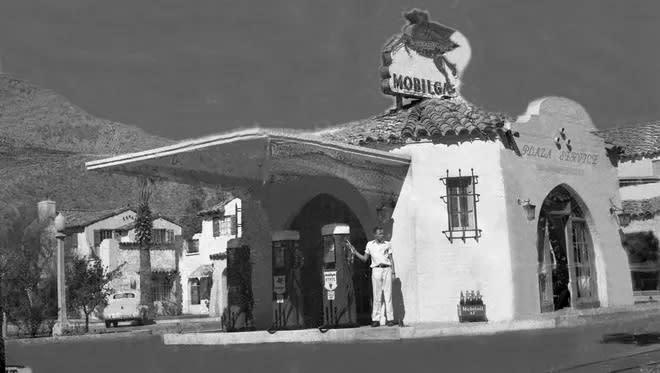
The original La Plaza included dozens of storefronts, apartments, bungalow residences, offices, a grocery store, pharmacy, restaurant and sidewalk café. There was even a large parking garage and a service station along Indian Canyon Drive.
In other words, La Plaza was designed to be more than a shopping center. It was a place where people could spend time.
La Plaza officially opened on November 1, 1936, following an extraordinarily fast construction period. Between 150 and 200 workers reportedly labored day and night through the summer heat to complete the project in just over three months. Mature trees were relocated to create shaded walkways and courtyards, helping establish the relaxed outdoor atmosphere that remains part of La Plaza's character today.
A Village Within a Village
From the beginning, La Plaza was a destination for everyday life.
Early businesses included clothing and specialty shops, a jewelry and antiques store, a pharmacy, a beauty shop, cleaners, a grocery market, and a service station. Carl's Rendezvous offered a place to dine and dance, while the Plaza Market stocked groceries, fresh produce, and baked goods.
The mix of businesses may sound familiar because the basic idea hasn't changed much. La Plaza was created to bring together shopping, dining, services, and entertainment in one walkable setting — an idea that still defines the experience today.
The difference is that the names and faces have changed over the decades while the setting has endured.
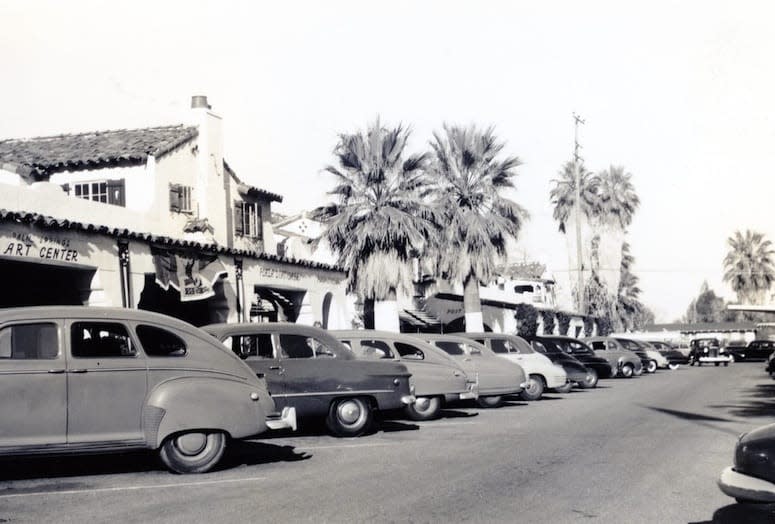
Rapid Construction and Grand Opening
Despite the intense summer heat, construction proceeded swiftly under the contractor, W.O. Warner. With 150–200 men working day and night, the Plaza was completed in just over three months. Landscape architect William C. Munchoff relocated mature trees to create shaded walkways and courtyards.
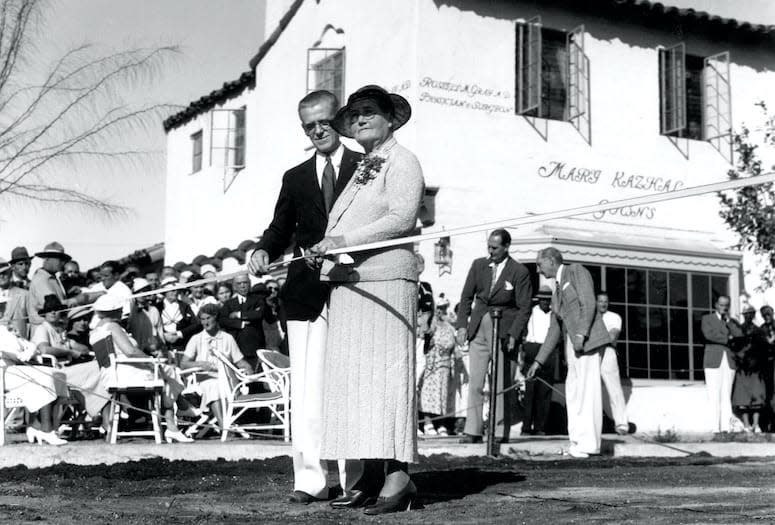
The Plaza officially opened on November 1, 1936, with a ribbon-cutting ceremony led by Nellie Coffman. Speakers included Dr. F.M. White, Cornelia White, Francis Crocker, and Katherine Fincy.
On Sunday afternoon, November 1, the Plaza was formally opened to the public. Beginning at 1:30 p.m., Mrs. Nellie N. Coffman, representing Palm Springs and honoring her friendship with Mrs. Carnell, cut the ribbon. At 1:30 p.m., a crowd gathered for music, community speeches, and the ceremonial launch of the Plaza's tree-lined promenade. Dr. White and her sister, Cornelia White, gave speeches, as did Francis Crocker (President of the Junior Chamber of Commerce and father of the Palm Springs tramway), and Katherine Fincy (Principal of the first Palm Springs school).
The Plaza Theatre: When Hollywood Came to Palm Springs
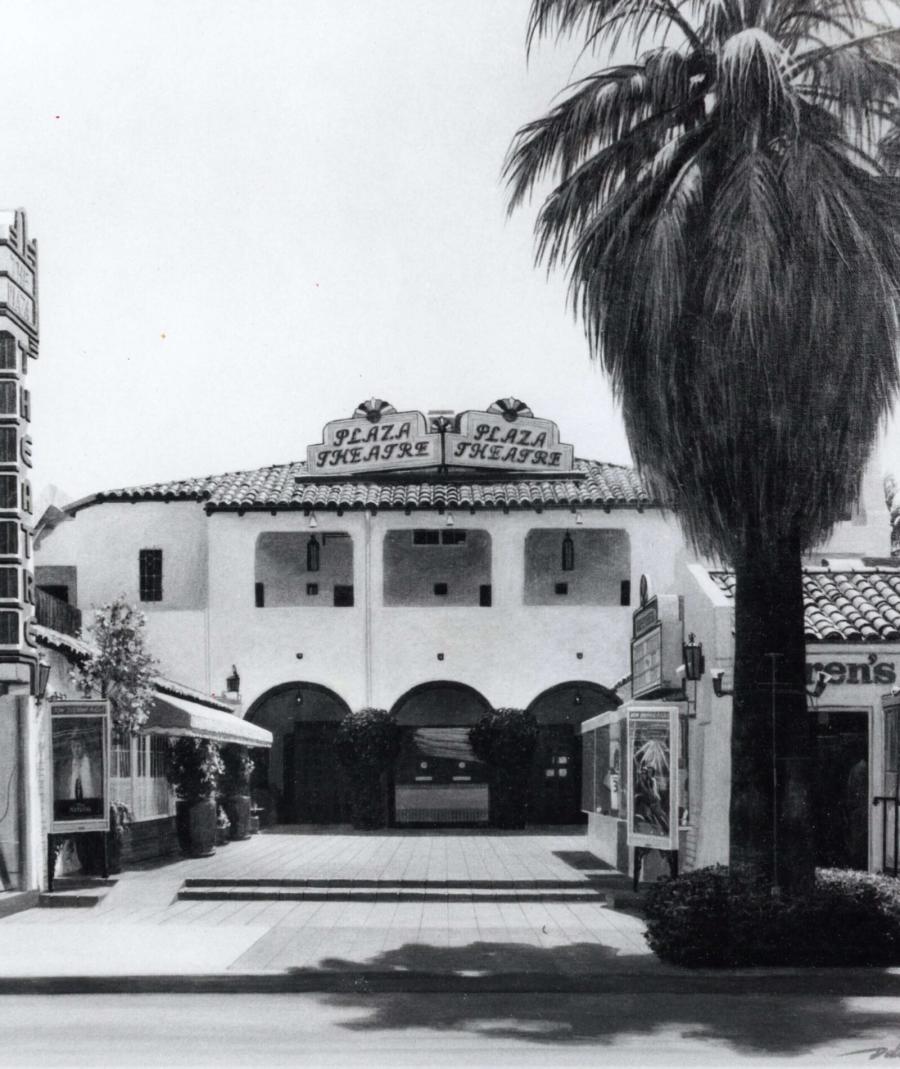
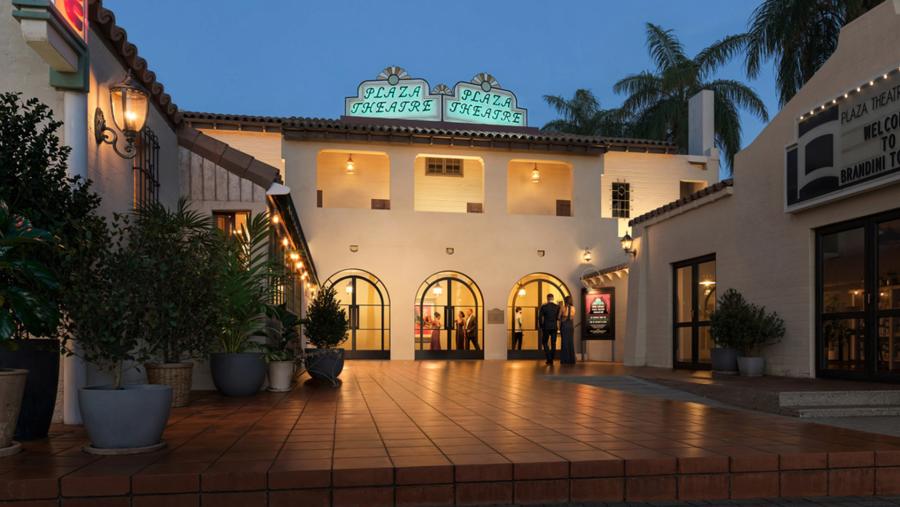
The Plaza Theatre quickly became the entertainment centerpiece of the development.
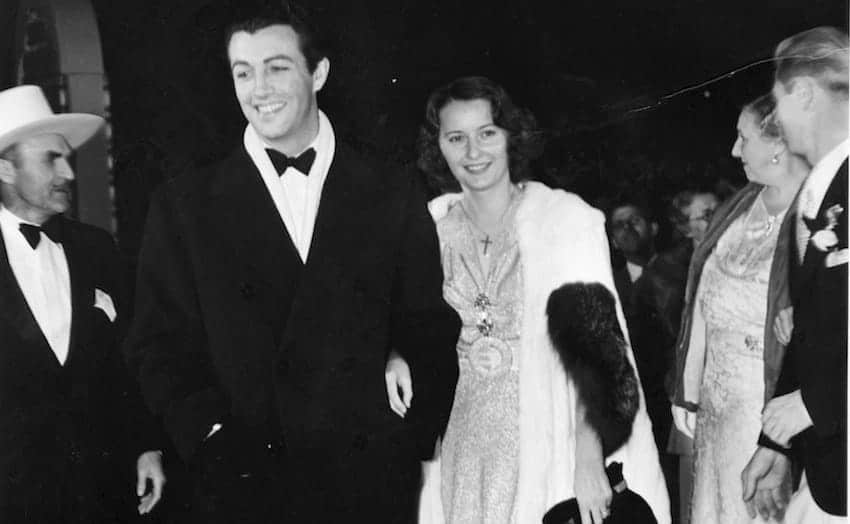
When it opened in 1936, the theater hosted the world premiere of Camille, starring Greta Garbo and Robert Taylor. The event put Palm Springs squarely in the national spotlight, with Hollywood celebrities and members of the press descending on the desert for the occasion.
The theater went on to host films, performances, and nationally broadcast radio programs. Entertainment legends including Jack Benny, Bob Hope, and others appeared at the Plaza, reinforcing Palm Springs' growing reputation as a glamorous desert retreat.
After decades of use and deterioration, the historic theater underwent an extensive restoration. The project incorporated modern theatrical technology and infrastructure while preserving important historic features, including elements of its original atmospheric design. The restored theater is once again positioned to serve as an entertainment venue in downtown Palm Springs.
The Birth of the Palm Springs Art Museum
La Plaza also played an important role in the cultural history of Palm Springs.
In 1938, Don Admiral founded the Palm Springs Desert Museum at La Plaza. The early museum featured natural science exhibits, Cahuilla artifacts, and programs that encouraged visitors to explore the surrounding desert.
The museum eventually moved to other locations before establishing a permanent home downtown. Today, the Palm Springs Art Museum is one of the city's leading cultural institutions, but its story begins in a small space at La Plaza.
Preserving a Palm Springs Landmark
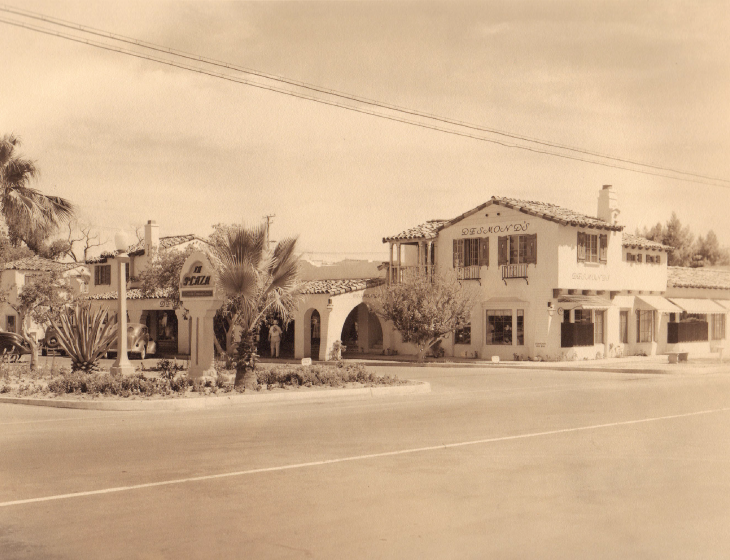
As Palm Springs grew and changed, La Plaza remained remarkably recognizable.
The property is designated a Class 1 Historic Site, reflecting its importance to the city's architectural and cultural heritage. Its historic pedestrian spaces, buildings and distinctive outdoor character continue to connect today's downtown with Palm Springs of the 1930s.
That continuity is part of what makes La Plaza worth exploring. You aren't simply looking at a historic building or reading a plaque about the past. You can walk through the same general setting that was designed nearly a century ago as a place for people to gather, shop and spend time.
La Plaza Today: Shop, Dine, and Explore
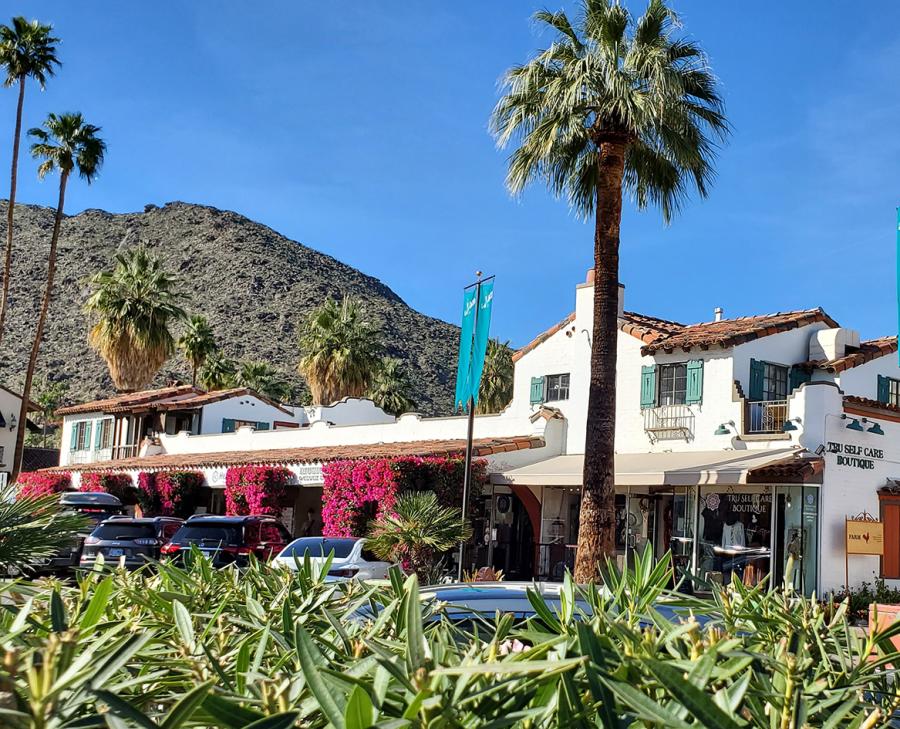
La Plaza is not a museum piece. It remains an active part of downtown Palm Springs with a mix of restaurants, shops, and services surrounding its historic outdoor spaces.
Dining at La Plaza
Food has been part of the La Plaza story since the beginning, when the original development included a restaurant, sidewalk café and market.
Today, dining remains one of the best reasons to linger. The current directory includes restaurants and cafés such as FARM, The Front Porch, Bill's Pizza, Casa Blanca, L'Atelier Cafe, Tyler's Bergers, and others.
That combination of dining and shopping makes La Plaza an easy place to incorporate into a day of exploring downtown. Stop for breakfast or lunch, browse the shops, wander through the courtyards, and continue on to Palm Canyon Drive, the Plaza Theatre or other nearby downtown attractions.
Shopping at La Plaza
Today's La Plaza offers a distinctly Palm Springs mix of shopping, from fashion and footwear to jewelry, art, gifts, and specialty goods.
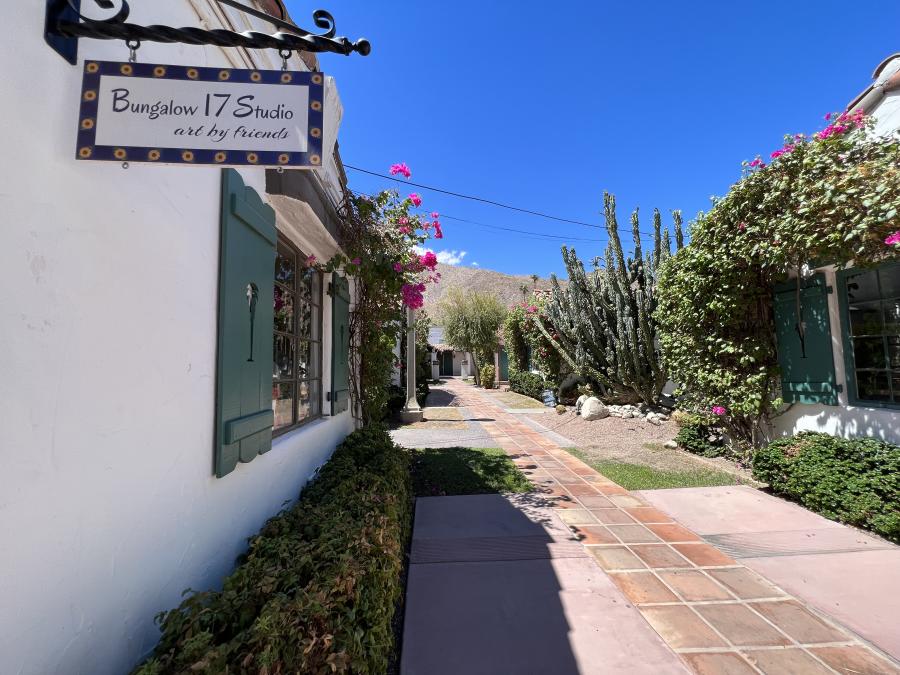
Among the businesses currently listed in the La Plaza directory are Bungalow 17, Birkenstock, Gallivant, Hephaestus Jewelry, Imageville, Palm Springs Rock Shop, , Thick As Thieves, and White Llama.
The selection makes La Plaza particularly appealing for visitors looking for something beyond the typical shopping-center experience. Many of the businesses are independently operated or specialty-focused, making it easy to spend some time browsing for a Palm Springs-inspired souvenir, a piece of art, something for your home, or simply something you didn't know you were looking for.
Why La Plaza Is Still Worth a Visit
Palm Springs is known around the world for midcentury modern architecture, but the city's architectural story reaches much further back.
La Plaza represents an earlier chapter — one shaped by Spanish Colonial Revival influences, outdoor living and the vision of people who saw Palm Springs as more than a seasonal desert retreat.
More than 90 years later, the original idea still works.
You can arrive for lunch, browse a boutique, admire the architecture, explore the courtyards, catch a performance, or simply take a leisurely walk through one of downtown Palm Springs' most historic settings.
That's what makes La Plaza special: the history isn't separate from the experience. It is the experience.
The same place that welcomed shoppers, diners, moviegoers, and residents in 1936 continues to welcome visitors today — with a new generation of businesses, restaurants, and experiences adding to its story.
FAQs
What is La Plaza in Palm Springs?
La Plaza is a historic open-air shopping and dining center in downtown Palm Springs that was completed in 1936. Designed by architect Harry Williams, it was created as a mixed-use development with shops, restaurants, residences, offices and entertainment. Today, it remains an active destination for shopping, dining and exploring downtown Palm Springs.
Why is La Plaza historically significant?
La Plaza is significant for its innovative 1930s design and its role in Palm Springs' commercial, cultural, and entertainment history. The development included one of the area's earliest planned outdoor shopping environments, and the Plaza Theatre and Palm Springs Desert Museum both became important parts of the city's history. La Plaza is also designated a Class 1 Historic Site.
What can you do at La Plaza today?
Visitors can shop at specialty stores and boutiques, dine at restaurants and cafés, explore the historic courtyards and architecture, and enjoy entertainment at nearby venues. La Plaza's current business directory includes restaurants, fashion and footwear shops, galleries, jewelry stores, personal services, and other specialty businesses.
Is La Plaza the first outdoor shopping center in the United States?
La Plaza is widely recognized as one of the earliest planned outdoor shopping centers in the United States, and its current owners describe it as the first of its kind. Completed in 1936, its pedestrian-oriented design brought shops, restaurants, and other businesses together in an open-air setting — an approach that would become much more common decades later.