

From a remote desert settlement to an emerging winter destination, the early decades of the 20th century established the cultural, economic, and physical foundations of modern Palm Springs. What began as a quiet village centered around water and survival evolved—gradually but decisively—into a place defined by hospitality, health, and escape.
A Village Rooted in Water and Tradition
At the turn of the 20th century, Palm Springs was still a small and relatively isolated settlement at the base of the San Jacinto Mountains. Its origins were inseparable from the presence of water in an otherwise arid landscape. For centuries, the Agua Caliente Band of Cahuilla Indians had lived in the area, centering life around the hot mineral spring known as Séc-he. This sacred site provided not only physical sustenance but also cultural and spiritual grounding.
Non-Native settlement in the late 19th century introduced new patterns of land use, yet the village remained modest well into the early 1900s. A few adobe and wooden structures, scattered homesteads, and unpaved roads defined the built environment. Access was difficult; travelers often arrived by train to nearby stations and completed their journey by wagon or early automobile across desert terrain.
Despite its remoteness, Palm Springs began to attract a small but steady stream of visitors. Drawn by the dry climate, abundant sunshine, and the perceived health benefits of desert air, these early guests reflected a broader national trend. At a time when tuberculosis and respiratory illnesses were widespread, climates like that of Southern California were promoted as therapeutic landscapes.
Early Hospitality and the Seeds of Tourism
The idea of Palm Springs as a destination began in earnest with modest accommodations. In 1886, Welwood Murray opened the Palm Springs Hotel, establishing the village’s first formal lodging for visitors. Though simple in its offerings, Murray’s hotel marked a conceptual shift: Palm Springs could serve not only as a place to live, but as a place to visit.
In the years that followed, small guest cottages and boarding houses appeared, often operated informally by residents. These early hospitality ventures catered to a niche clientele—health seekers, artists, writers, and adventurous travelers willing to endure the journey in exchange for quiet and recovery. The scale remained intimate, and the experience was personal. Guests were not simply customers; they were temporary members of a small desert community.
Yet the transformation from village to destination required more than scattered accommodations. It required vision, consistency, and an understanding of what made Palm Springs distinct.
Nellie Coffman and the Creation of a Destination
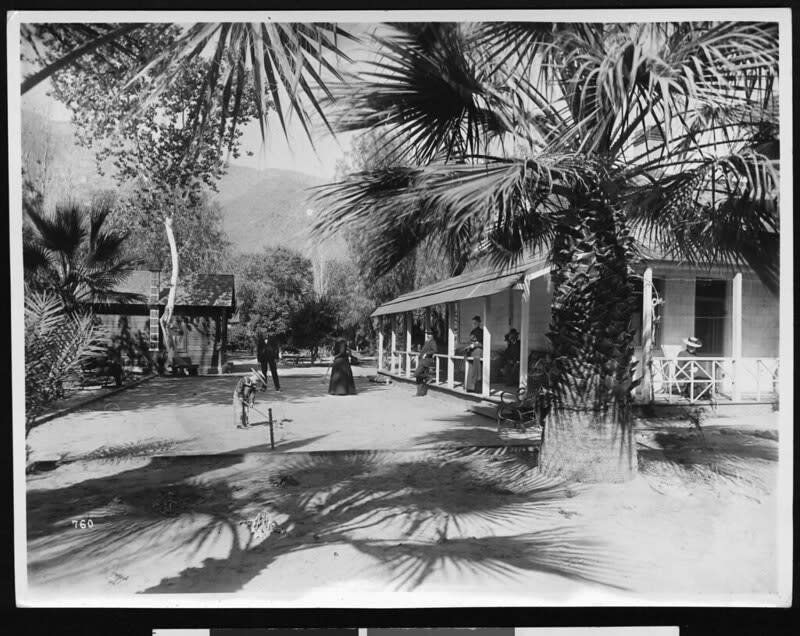
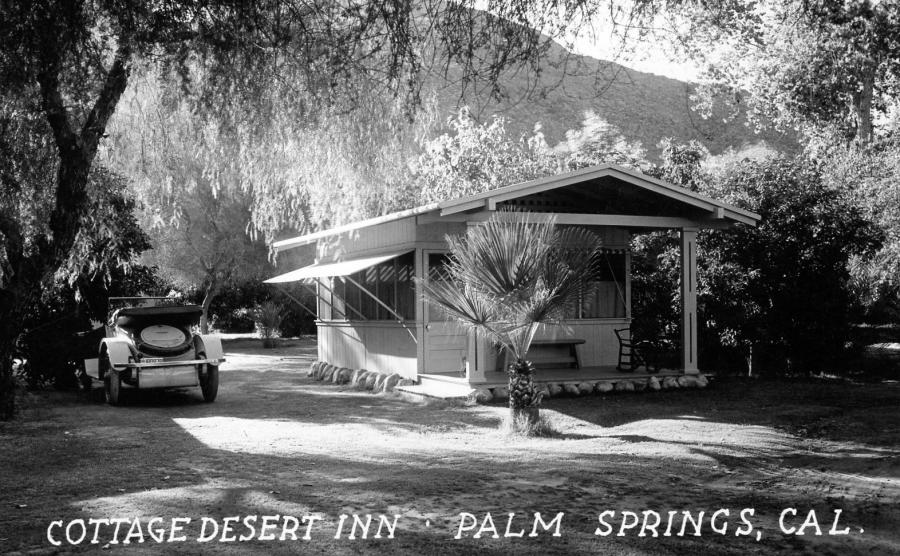
That transformation arrived with Nellie Coffman, whose influence on Palm Springs cannot be overstated. In 1909, Coffman purchased a modest property consisting of a few small cottages. Over the next two decades, she expanded this site into the Desert Inn, a resort that would become synonymous with Palm Springs itself.
Coffman’s approach to hospitality was both intuitive and deliberate. She understood that visitors were not merely seeking lodging; they were seeking an experience shaped by comfort, climate, and connection. Her management style emphasized personal attention, creating an atmosphere that felt simultaneously refined and welcoming. Guests returned year after year, not only for the setting but for the sense of belonging she cultivated.
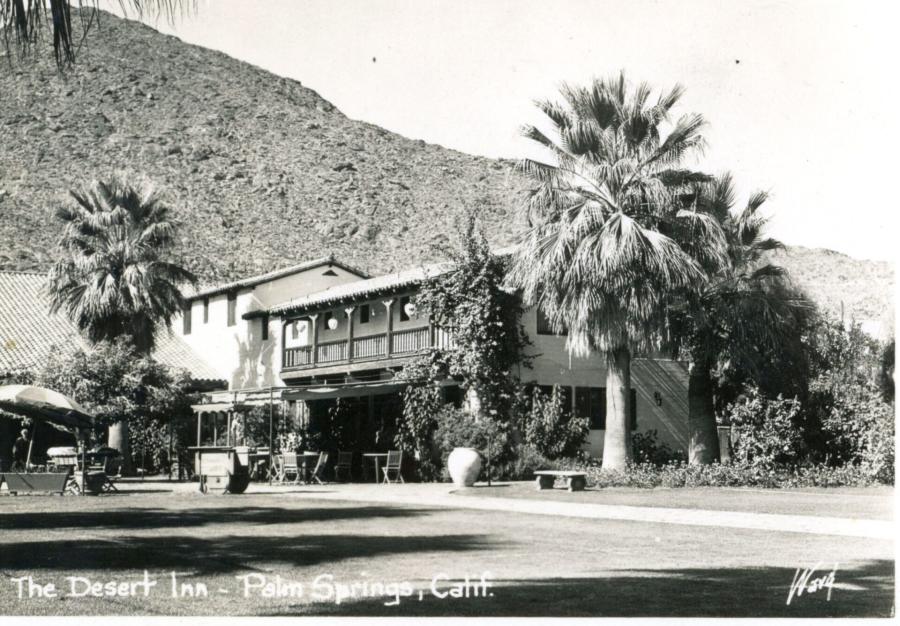
The Desert Inn grew incrementally, adding cottages, gardens, dining spaces, and shaded outdoor areas that embraced the natural landscape rather than competing with it. Its design reflected an early sensitivity to what would later define Palm Springs architecture: a blending of indoor and outdoor living, an appreciation for mountain views, and an emphasis on simplicity over ostentation.
The Desert Inn as Social and Cultural Center
By the 1910s and 1920s, the Desert Inn had become more than a hotel—it was the social and cultural center of the village. Visitors from across the United States began to include Palm Springs in their seasonal travel, often arriving in the winter months to escape colder climates.
Coffman’s guest list reflected a cross-section of early 20th-century American society. Artists and writers found inspiration in the stark beauty of the desert. Business leaders and professionals sought rest and recovery from the pressures of urban life. Early figures from the film industry, still in its formative years in nearby Los Angeles, began to appear, drawn by the promise of privacy and open space.
These visitors played an important role in shaping Palm Springs’ emerging identity. Through word of mouth, letters, and later media coverage, they helped transform the village’s reputation from obscure outpost to desirable retreat. The appeal was not based on spectacle but on atmosphere—quiet, restorative, and deeply connected to the landscape.
Growth Within a Unique Land System
As tourism increased, Palm Springs began to expand. Additional lodges and small hotels opened, roads improved, and basic commercial services developed to meet the needs of seasonal residents and visitors. Yet growth occurred within a distinctive framework shaped by land ownership.
The Agua Caliente Band of Cahuilla Indians retained significant landholdings through a checkerboard pattern established in the 19th century. This system, alternating between Tribal and non-Tribal sections, influenced every aspect of development, from where buildings could be constructed to how partnerships were formed. Leasing arrangements between Tribal landholders and non-Native developers became a defining feature of Palm Springs’ growth, creating both opportunities and complexities that would continue into the mid-20th century.
Importantly, the Tribal presence remained central to the village's identity. Even as tourism expanded, the cultural and geographic significance of Agua Caliente land endured, anchoring Palm Springs in a deeper history that predated its emergence as a resort destination.
From Health Retreat to Lifestyle Destination
By the late 1920s, Palm Springs had undergone a subtle but meaningful transformation. While health tourism remained a key draw, the village was no longer defined solely by convalescence. Visitors came not just to recover, but to relax, socialize, and experience a distinct way of life shaped by climate and community.
Seasonal residents began to return annually, forming social networks that extended beyond individual visits. Creative and intellectual communities took root, drawn by the desert’s quiet and isolation. The foundations of a hospitality-driven economy were firmly in place, supported by a growing reputation that extended far beyond Southern California.
The Transition to Larger Resorts: El Mirador and the Racquet Club
By the late 1920s and early 1930s, Palm Springs began to evolve beyond its origins as a small, intimate village of cottages and modest inns. A new scale of development emerged—one that reflected growing national interest in the desert as both a leisure destination and a place of social visibility.
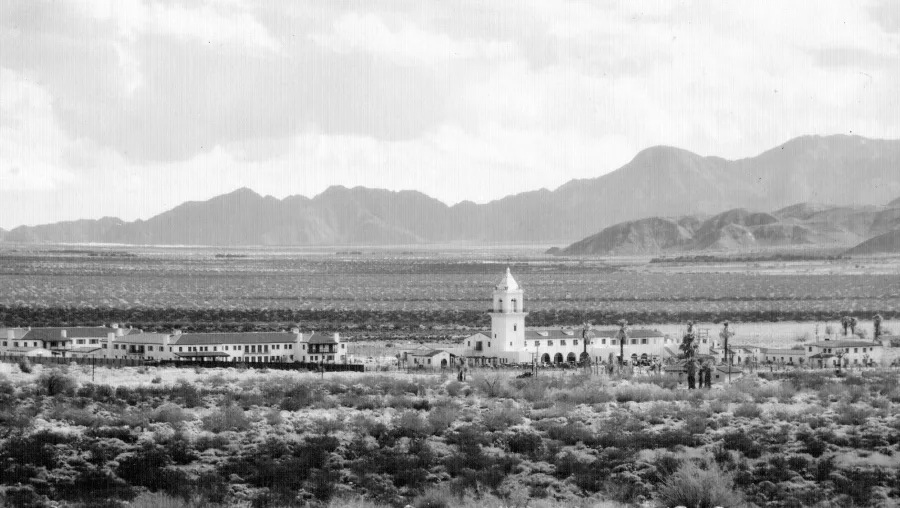
The most significant expression of this shift was the opening of the El Mirador Hotel in 1927. Developed as a luxury resort, El Mirador introduced a level of sophistication and architectural presence previously unseen in Palm Springs. Its grand scale, formal gardens, and iconic tower signaled a new era—one in which the desert could support not just rustic retreat, but refined, full-service resort life.
El Mirador quickly attracted a prominent clientele, including business leaders, social elites, and early figures from the film industry. Its presence helped elevate Palm Springs’ national reputation, positioning it as a destination capable of attracting a more upscale, socially connected audience.
A decade later, the opening of the Palm Springs Racquet Club in 1934 further defined the city’s trajectory. Founded by figures with close ties to Hollywood, the Racquet Club offered a more relaxed, recreational environment centered around tennis, swimming, and social gatherings.
Unlike the formality of El Mirador, the Racquet Club embodied a distinctly California sensibility—casual, private, and deeply social. It became a gathering place for film industry professionals, where relationships were formed away from studio oversight and public attention. In this setting, Palm Springs’ connection to Hollywood was not just incidental—it became embedded in the place's culture.
Together, these properties marked a turning point. They expanded the scale of hospitality, diversified the visitor experience, and introduced a level of visibility that would soon attract even greater attention. What had once been a quiet retreat was becoming something more dynamic: a destination where leisure, status, and emerging celebrity culture intersected.
Laying the Groundwork for the Hollywood Era
On the eve of the 1930s, Palm Springs stood at a pivotal moment. It possessed a well-established identity as a winter retreat, a small but thriving hospitality infrastructure, and a culture defined by privacy, comfort, and natural beauty. The elements that would later attract Hollywood were already present.
When the entertainment industry began to embrace Palm Springs in the following decade, the transition appeared rapid—but it was anything but accidental. The groundwork had been carefully laid by early settlers, Tribal stewardship, and, most notably, the vision of Nellie Coffman and her contemporaries.
The Palm Springs that would become internationally known in the mid-20th century was, in many ways, already formed. Its scale would change, its architecture would evolve, and its fame would grow—but its essence, rooted in hospitality, landscape, and a sense of escape, was firmly established in the early resort era.
📍 Plan Your Visit
You can explore early resort‑era history at:
- Palm Springs Historical Society
- Welwood Murray Memorial Library
- Agua Caliente Cultural Museum
- Palm Springs Historical Society walking tours
Related Stories
- Welwood Murray: The Man Who Built Palm Springs’ First Hotel
- John Guthrie McCallum and the First Non‑Native Settlement
- Palm Springs History
- Agua Caliente Tribe: A Brief History
- Hollywood and Palm Springs: A Star-Studded History
- The Birth of Midcentury Modernism in Palm Springs
- Palm Springs LGBTQ+ History