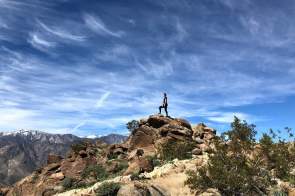
Hiking, Waterfalls & Cahuilla History
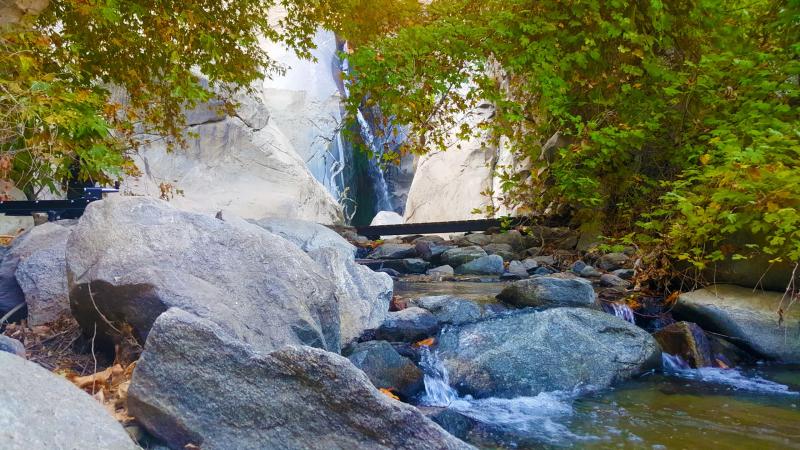
Just minutes from downtown Palm Springs, Tahquitz Canyon offers a remarkable combination of desert scenery, rugged hiking, and thousands of years of Indigenous history. Located on the Agua Caliente Band of Cahuilla Indians reservation, the canyon is home to ancient cultural sites, native plants and wildlife, historic irrigation features, and seasonal Tahquitz Falls, a dramatic 60-foot waterfall.
The canyon is more than a scenic outdoor destination. It is an ancestral homeland and a place of deep cultural significance to the Agua Caliente people. A visit offers a chance to experience the desert's natural beauty while learning about the people who have lived in and cared for this landscape for generations.
Legend of the Tahquitz
The canyon is named for Tahquitz, a powerful figure in Cahuilla oral tradition. According to legend, Mukat, the creator, created Tahquitz as the first shaman. Initially entrusted with great spiritual power, Tahquitz eventually turned that power toward destruction and was banished to the canyon that now bears his name.
Tradition holds that Tahquitz dwells in a cave beneath what is now known as Tahquitz Peak. People have associated his presence with thunder, lightning, and sudden winds.
The legend is central to the canyon's cultural identity and helps explain why this landscape is more than a recreational destination. Visitors can learn more through the interpretive exhibits and film at the Tahquitz Canyon Visitor Center.

Tahquitz Canyon Visitor Center
The Tahquitz Visitor Center, located at the canyon entrance, is your starting point for this cultural exploration. It offers educational exhibits, a collection of artifacts, an observation deck, and a small theater room to view The Legend of Tahquitz. This center is a gateway to the area's rich history and culture. Free parking is available in designated areas.
Located at 500 W Mesquite Ave.

Hiking the Tahquitz Canyon Trail
The main Tahquitz Canyon Trail leads hikers through a rugged desert landscape to the seasonal waterfall. Along the way, the scenery shifts from rocky canyon walls and desert vegetation to areas shaped by water. Look for native plants, wildlife, striking rock formations, and evidence of the area's long history of human habitation.
The route is relatively short, but the terrain makes it more challenging than the distance alone might suggest.
Tahquitz Canyon Trail at a glance
- Distance: 1.8 miles round trip
- Elevation gain: Approximately 350 feet
- Difficulty: Strenuous
- Destination: Tahquitz Falls
- Terrain: Steep, rocky sections and uneven natural steps
- Shade: Very limited
Some rock steps may be 12 to 15 inches high, requiring good balance and the ability to climb over uneven terrain. The trail may not suit visitors with limited mobility or those who have difficulty navigating steep, rocky surfaces.
Wear sturdy hiking shoes or boots with good traction, carry plenty of drinking water, and protect yourself from the sun. The trail has no water fountains or restroom facilities.
Allow sufficient time to complete the hike and return before the last-hiker cutoff. Visitors who prefer additional context can join a ranger-led interpretive hike when available.
Tahquitz Falls: A Seasonal 60-Foot Waterfall
The trail's highlight is Tahquitz Falls, a 60-foot waterfall tucked into the canyon's rocky landscape. The contrast between flowing water, granite walls, and the surrounding desert makes this one of Palm Springs' distinctive natural attractions.
The waterfall is seasonal, and its flow varies with weather and water conditions. It can be especially impressive after seasonal rainfall, but visitors should not assume the falls will be flowing at full strength during their visit.
The hike itself is worthwhile even when water flow is limited. The canyon's geology, vegetation, cultural history, and dramatic scenery offer plenty to discover along the route.
Tahquitz Falls is part of a culturally significant landscape. Follow all posted rules and canyon staff guidance, and do not assume swimming or entering the water is permitted.
Ancient Cultural Sites and Historic Features
Tahquitz Canyon preserves physical evidence of the generations of Cahuilla people who lived in, traveled through, and relied on the canyon. Water, native plants, wildlife, and natural shelter made this landscape central to community life.
As you explore, you may encounter or learn about several kinds of historic and cultural features:
- Rock art and bedrock mortars: These features offer evidence of traditional activities and the long history of Indigenous presence in the canyon.
- Historic irrigation systems: Remnants of water-management features demonstrate the importance of directing and using water in the desert.
- Rock shelters and village sites: Archaeological discoveries offer insight into how people used the canyon's natural landscape.
- Geological formations: The canyon's cliffs and boulder-strewn terrain reveal the area's complex geological history.
These are not simply scenic attractions or relics of a distant past. They are part of the Agua Caliente people's enduring cultural landscape. Stay on designated trails, respect all archaeological features, and leave rocks, artifacts, and other natural materials undisturbed.
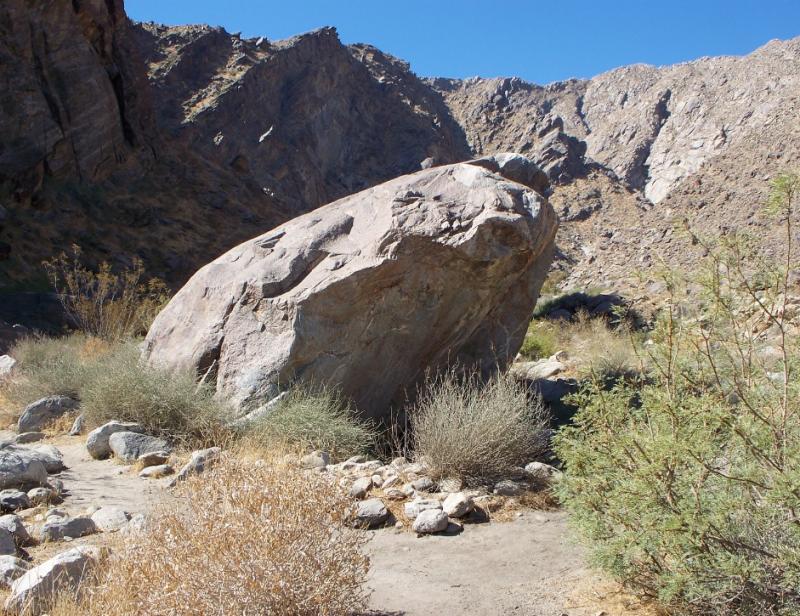
Kak wa wit (mouth of the canyon)
This is the entrance to Tahquitz Canyon, named more than 3,000 years ago by great chief Evon ga Net. Look up into the canyon from this point. The path is not much different from what ancient people would have walked. Artifacts found here date back 3,000 years or more.

Mi as kalet (A grey top)
The leader of the Fox Tribe, the first to settle in the canyon, named a large, white-tipped rock in the middle of the month of Tahquitz Canyon.

Sacred Rock
One of the oldest Agua Caliente Indian dwelling sites. Rock art and bedrock mortars mark this sacred place. Some artifacts found include rock-lined storage bins, arrow points, grinding stones, beads, and bones.
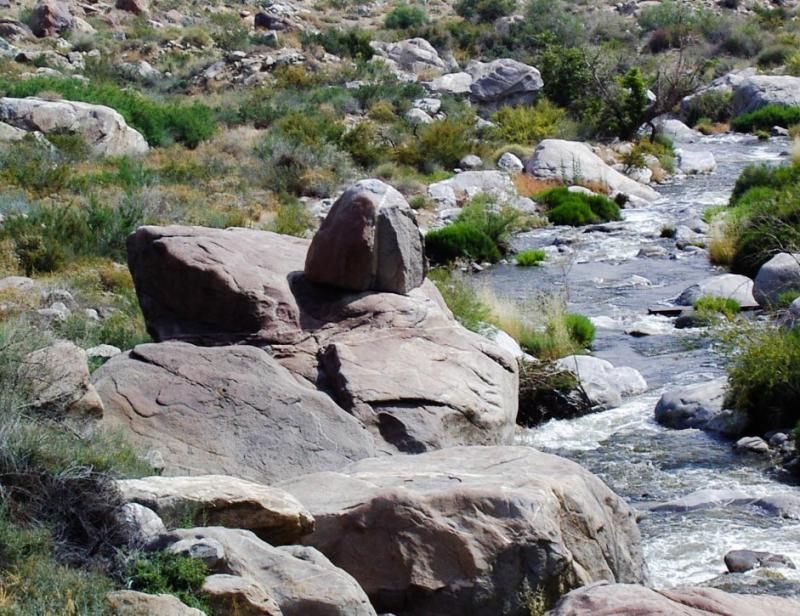
Cow is ic ela
The phrase Cow is ic ela refers to a large rock that sits on an even larger boulder. Agua Caliente legend tells of a young maiden who had the power to turn herself into stone, which now bears her name.
Ton wen neval (place of wasted mescal)
Remnants of the Lebacho-Tahquitz Creek ditch mark this area. The Agua Caliente Indians wanted to bring water from Tahquitz Canyon to the village in what is now downtown Palm Springs. It was originally built in 1830 by a man named Jose Lebacho. By 1906, the Tribe had lined the ditch with rock to prevent seepage. Eventually, when the U.S. government wanted to increase and improve the flow, the ditch was lined with mortar and cobblestone, and a diversion dam was created and used between 1914 and 1926. A flash flood destroyed the ditch in 1926.

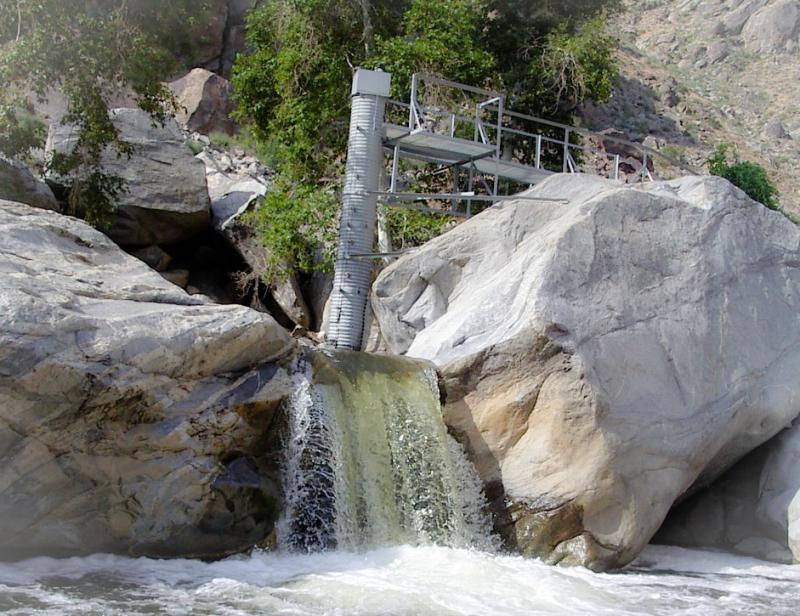
U.S. Geological Survey Gaging Station
Built by USGS in 1947, this water-measuring station is still in use today.
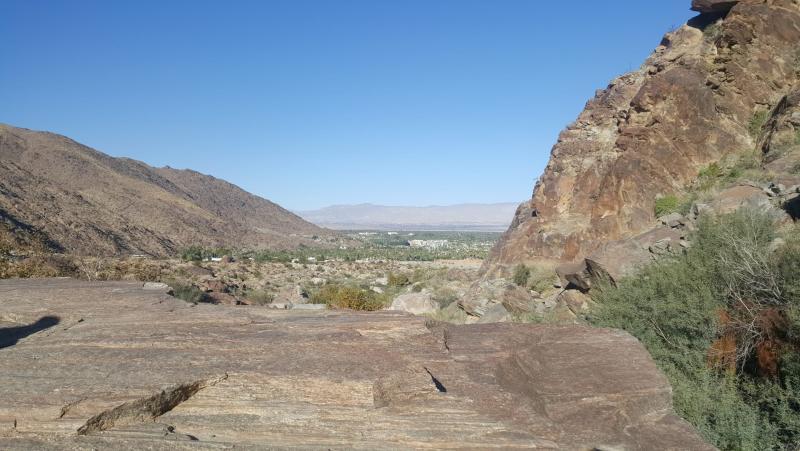
Lookout Rock of Kak wa wit (mouth of the canyon)
This rock overlooks the village of Sec he (sound of boiling water) and the Agua Caliente Hot Mineral Spring site downtown.
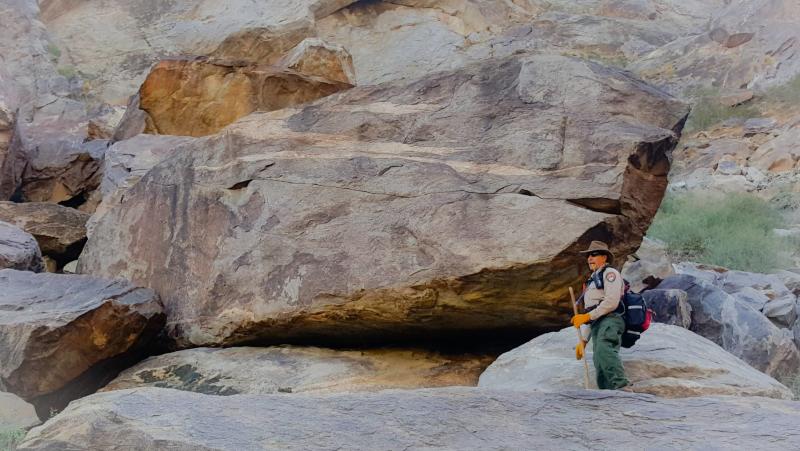
Coc wo wit (piled boulders)
An ancient rock shelter where archaeologists have found artifacts dating back thousands of years.

Echo Cliff
A large cliff area to the left of the mouth of Tahquitz Canyon is estimated to be 92 million years old. Different fault lines caused an uplift that created them. You will see minerals that are pushed out horizontally rather than vertically.

Ranger-Led Interpretive Hikes
A ranger-led interpretive hike is an excellent way to experience Tahquitz Canyon with additional insight into its natural and cultural history. These guided hikes are included with paid admission and generally last approximately 2.5 hours.
Depending on the tour and conditions, visitors can learn about the canyon's geology, native plants, wildlife, cultural traditions, and historic features.
Schedules vary seasonally. During the cooler months, the park may offer multiple departures throughout the day, while the summer schedule is more limited. Check the official Tahquitz Canyon hours and admission page before visiting to confirm current tour times.
Planning Your Visit to Tahquitz Canyon
A little preparation will help you make the most of your visit. The canyon is in the desert, where temperatures can rise quickly, and shade is scarce. Plan your hike around the weather, carry enough water, and allow time to complete the trail safely.
Admission
The official website currently lists the following general admission prices:
- Adults: $15
- Children ages 6–12: $7
- Children age 5 and under: Free
- Eligible U.S. military members: Free with valid military identification
Prices and eligibility are subject to change. Check the official admission page before your visit.
Hours
- Oct. 1 - July 4: Open Daily, 7:30 am - 5 pm. The last hiker in is at 3:30 pm.
- July 5 - Sept. 30: Friday - Sunday only, 7:30 am - 5 pm.
Parking
The Visitor Center is the starting point for your visit, with cultural exhibits and information before you head onto the trail. Free parking is available in designated areas.
What to Bring
For a more comfortable and safer hike, bring:
- Plenty of drinking water; water is required on the trail.
- Sturdy hiking shoes or boots with good traction.
- A hat, sunscreen, and sun-protective clothing.
- A fully charged phone and a plan to finish before the last-hiker cutoff.
- Snacks if needed for your outing.
The trail has very little shade, and conditions can become dangerous during extreme heat. Check the forecast and any official heat advisories before visiting. If temperatures are excessive, postpone the hike.
Visitor Rules
Tahquitz Canyon is a protected natural and cultural area. Visitors must remain on designated trails and follow all posted instructions. Animals are not allowed, and visitors should respect archaeological features, native vegetation, wildlife, and the canyon's cultural significance.
Visitors under 18 must be accompanied by an adult, and visitors 18 and older may enter the canyon alone. Check current regulations with canyon staff before your visit.
Experience a Different Side of Palm Springs
Tahquitz Canyon lets you step beyond Palm Springs' restaurants, shopping, and architecture to experience a landscape shaped by water, geology, and generations of Indigenous stewardship.
Whether you're drawn by the seasonal waterfall, the challenge of the rocky trail, or the opportunity to learn about Cahuilla history, take time to appreciate the canyon as a living cultural landscape. A thoughtful visit reveals a deeper connection to the desert and to the people whose ancestral homeland it remains.
Explore More: