

Clark Moorten shares a kinship with the desert plants he’s spent a lifetime cultivating: resilient, dry (witted), and firmly rooted in fascination. The longtime steward of Moorten Botanical Garden and Cactarium in Palm Springs opens our conversation with a chuckle and a dose of honesty.
“Anything you ask, I’ll talk about. If I don’t know something, I’ll make something up. That’s how you tell stories.”
And what stories he has.
From Silent Films to Succulents: The Moorten Origin Story
Clark’s father, Chester “Cactus Slim” Moorten, first arrived in California in the 1920s. With his tall frame and expressive face, he found work in Hollywood as one of the original Keystone Cops — silent film stars known for slapstick and mischief.
But Hollywood wasn’t the final act.
Slim’s life took a dramatic turn in the late 1930s when he was diagnosed with tuberculosis, a serious and often fatal disease at the time. Told he didn’t have long to live, he did what many great desert pioneers did: he went against medical advice and headed into the dry air of the California desert.
Clark recalls, “He just camped under a tree in what’s now Joshua Tree National Park and eventually built a house. He reopened an old gold ore mill, took over some mining claims, and started collecting desert plants.”
And then came the turning point.
“After a few years, he decided that cactus paid better than gold.”
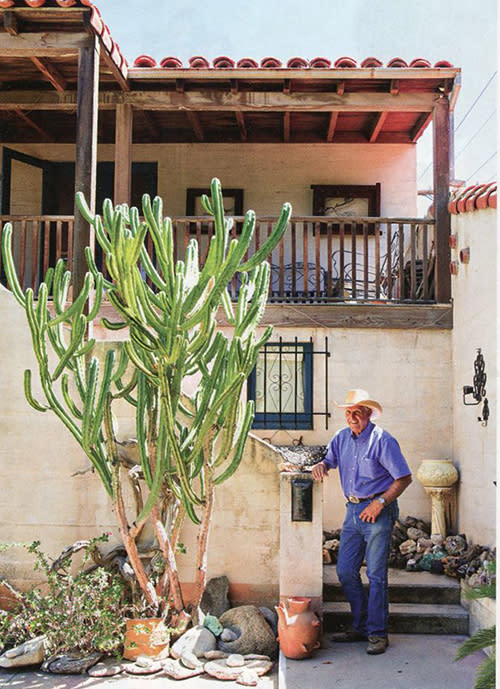
From Gold Rush to Green Thumbs: The Birth of a Botanical Landmark
That’s when the Moortens relocated to Palm Springs and began their family’s botanical journey. Clark jumped in early, helping package up tumbleweeds for shipment to department stores like Saks Fifth Avenue and Neiman Marcus, which used them in East Coast window displays. The desert was officially in vogue.
By the mid-1950s, the family acquired their now-famous property on South Palm Canyon Drive. There was only a 1929 house and a few palm trees. The rest—the rocks, the rare plants, the towering cactus—were hauled in and planted by hand.
“We created the whole garden,” says Clark. “By the late ’50s, my dad was doing a lot of landscaping, and people would stop by just to see what you could do with desert plants.”
One of those people? Frank Sinatra.

Frank Sinatra and Sammy Davis Jr.
Sinatra, Disney & Desert Stars
Slim first landscaped a Palm Springs home for Jimmy Van Heusen, Sinatra’s friend and songwriter. That led to work on Sinatra’s estate at Tamarisk Country Club, and young Clark was along for the ride.
“I met Frank several times. He was an amazing gentleman — unless he was mad. But usually, he had good reason,” Clark says with a laugh. “He was a proud Italian. You didn’t insult his family.”
Sinatra’s mother, Dolly, lived at the estate and liked Slim. “She’d see my dad and say, ‘Oh, Slim, you look like you need something to eat.’ She’d fix him a sandwich and give him a glass of tequila.”
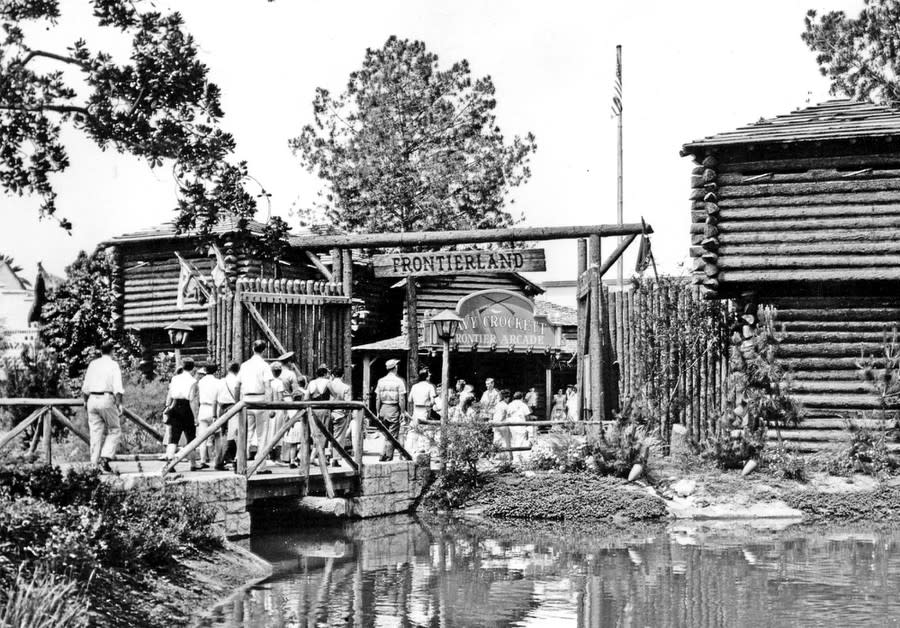
And Sinatra wasn’t the only legend to stop by the Moortens’ corner of the desert. In the early 1950s, Walt Disney visited their garden and introduced Slim to his landscape architect. Why? "They were building a little amusement park down in Orange County,” Clark says casually.
“Walt Disney had a home at Smoke Tree Ranch, and my dad landscaped that one as well. When Disneyland was being built, all the desert plants in Frontierland — the Joshua trees, cactus, agaves — they came from Moorten’s.”
Yes, the desert garden in the Happiest Place on Earth got its magic from Palm Springs.
A Living Desert Museum in the Heart of Palm Springs
Over six decades later, Moorten Botanical Garden remains a beloved Palm Springs institution. More than 3,000 varieties of desert plants from around the world grow here, many of them towering specimens older than the garden itself.
The showstopper? The Cactarium, a whimsical, photo-friendly greenhouse filled with rare succulents, spiny wonders, and plenty of selfie-takers.
“We’ve probably had 50,000 selfies taken in there,” Clark laughs. “Thanks to social media, we’ve become quite popular. Instagram has been my true friend.”

A Personal Garden with a Global Following
Despite its fame and followers, Moorten Botanical Garden remains what it has always been: a family garden, planted by hand and nurtured with love.
“I was born and raised in Palm Springs. My parents started all this. I’ve never thought of it as a business — it’s just an amazing garden. My mother felt that way too. She instilled it in me.”
This family-run garden isn’t just a business — it’s a labor of love.
“I was born and raised in Palm Springs. This is our personal garden. We planted it. My mom always said, ‘This place has a lot of positive energy.’ And I believe it does.”
And visitors feel it. Every inch of the garden pulses with history, humor, and heart, from the towering cacti to the cozy paths. “It’s got a lot of positive energy because it’s a labor of love,” says Clark.
Visit Moorten Botanical Garden and Cactarium
1701 S. Palm Canyon Drive
📞 (760) 327-6555
Hours: Thu - Tue., 10 am - 4 pm. Closed on Wednesday.
Note: Check the website for summer hours
Notes:
- Perfect for photographers, plant lovers, and curious kids
- On-site nursery with plants for sale
- Popular for weddings and events
- Free on-site parking is available.
- Family-Friendly
Explore More:
- Most Popular Attractions in Palm Springs You Can't Miss
- Family Fun in Palm Springs: Exciting Outdoor Tours and Activities for All Ages!
- Discover the Most Unique Wedding Venues in Palm Springs
- Palm Springs Arts & Culture Guide
Frequently Asked Questions About Moorten Botanical Garden
What can I see at Moorten Botanical Garden?
Moorten Botanical Garden and Cactarium is a family-owned desert garden featuring more than 3,000 varieties of cacti, succulents, desert trees, and other arid-region plants from around the world. Visitors can explore geographically themed plant collections, walk a nature trail, and see the historic family residence known as Cactus Castle.
What is the Cactarium at Moorten Botanical Garden?
The Cactarium is a greenhouse exhibit featuring unusual and rare cacti and other desert plants. Moorten Botanical Garden describes it as the world's first Cactarium, a name coined by the Moorten family.
How long should I plan to spend at Moorten Botanical Garden?
Plan about an hour to explore the garden's winding paths and plant collections. Visitors interested in learning about individual plants and browsing the nursery may want to allow additional time.
Can I buy plants at Moorten Botanical Garden?
Yes. The on-site nursery sells desert plants, including cacti and succulents, so visitors can take home a living reminder of Palm Springs. If you are traveling outside California, check applicable regulations before purchasing plants to transport home.
When is Moorten Botanical Garden open?
Moorten Botanical Garden has seasonal hours. From October 1 through May 31, it is generally open from 10 a.m. to 4 p.m. and closed Wednesdays. From June 1 through September 30, summer hours are 9 a.m. to 1 p.m. Friday through Sunday. Check the garden's official website before visiting for current hours.
Are guided tours available at Moorten Botanical Garden?
Yes. Guided tours are available for visitors who want to learn more about the garden's plant collections and history. Advance booking is recommended; contact the garden for current tour availability.