

When you visit the Palm Springs Air Museum, the aircraft is the star of the show. More than 75 historic aircraft fill the museum's hangars, telling stories of World War II, Korea, Vietnam and other chapters in American aviation history.
But look beyond the airplanes, and you'll discover another important part of the experience: aviation art.
Throughout the Palm Springs Air Museum, paintings and murals bring aircraft, pilots and historic moments to life in a different way. Created by some of the world's best-known aviation artists, these works offer a visual interpretation of the history preserved inside the museum.
For visitors who appreciate art, history, aviation—or all three—the museum's aviation art collection is an unexpected part of the experience.
Aviation Art at the Palm Springs Air Museum
The museum features the work of artists whose careers have focused on capturing aviation and military history. Their paintings range from detailed depictions of aircraft in flight to historical scenes that tell the stories of the people who flew them.
Here are some of the artists you'll encounter at the Palm Springs Air Museum.
Stan Stokes
One of the most recognizable names associated with aviation art at the Palm Springs Air Museum is Stan Stokes, whose work appears in several parts of the museum.
Stokes is best known for depicting military aviation and the people who served. His art combines historical research with detailed portrayals of aircraft, creating images that help place the planes in their historical context.
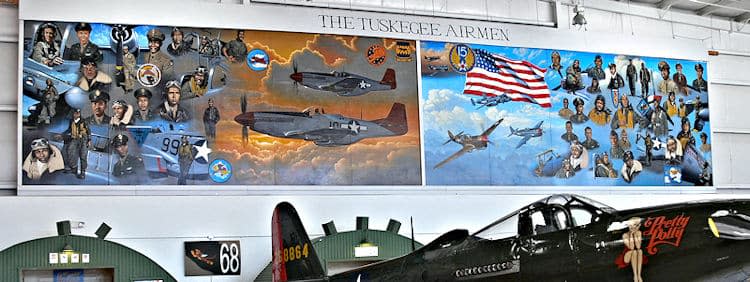
His work at the Air Museum includes the Tuskegee Airmen mural, which was created from photographs of actual Tuskegee Airmen. Stokes interviewed and painted numerous members of the famed African American fighter group as part of the project. The mural is located in the museum's European Hangar.
Stokes also created the “History of the Skunkworks” mural, located in the F-117A Hangar. The mural complements the museum's exhibits about the F-117A Nighthawk, stealth technology, and the history of the Skunk Works program.
For visitors, these murals do more than decorate the hangars. They provide a visual connection to the people and technological achievements represented by the aircraft nearby.
Robert Taylor
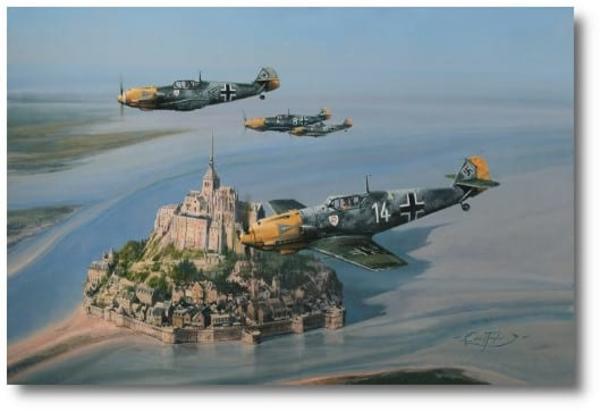
The museum's Pacific Hangar features aviation artwork by Robert Taylor, one of the best-known names in aviation art.
Taylor is renowned for his highly detailed paintings of military aircraft and historic aviation scenes. His work is particularly notable for its technical accuracy and attention to the details that aviation enthusiasts appreciate.
At the Palm Springs Air Museum, Taylor's artwork is displayed alongside aircraft and exhibits from the Pacific Theater of World War II, offering a chance to see the machines represented in both physical and artistic form.
Roy Grinnell
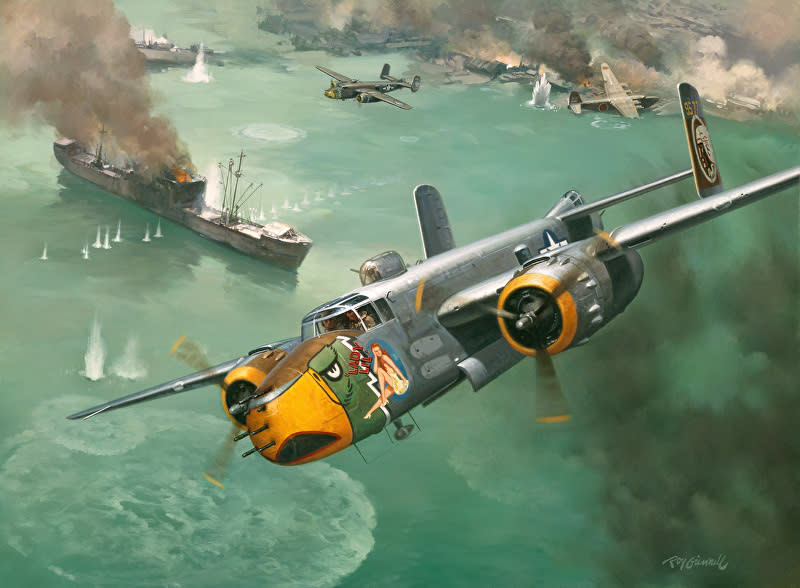
Roy Grinnell (1933–2019) developed a lifelong fascination with airplanes that eventually became a distinguished career as an aviation and historical artist.
Born in Santa Barbara, California, Grinnell served in the U.S. Navy before studying at the Art Center School of Design in Los Angeles. He later worked as an illustrator in New York before becoming a freelance artist. Although aviation was a major focus of his career, Grinnell's artistic interests extended to Western, Native American, and wildlife subjects.
As the Official Artist of the American Fighter Aces Association, Grinnell created 51 original paintings depicting aerial combat from major wars. His work earned numerous awards, including the R.G. Smith Award for Excellence in Naval Aviation Art.
At the Air Museum, his work offers another perspective on the drama and history of military aviation.
James Dietz
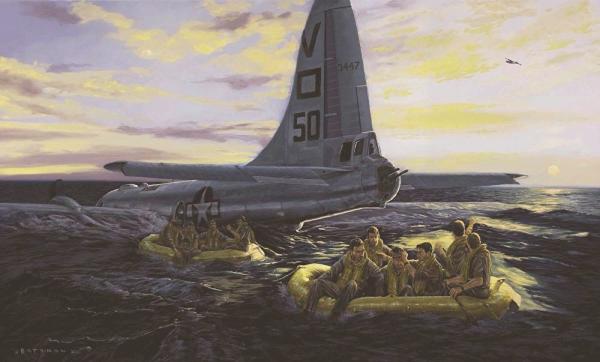
For James Dietz, historical painting is about more than accurately reproducing an aircraft or uniform. His work combines people, action, atmosphere, and historical research to create scenes that tell a story.
Born in San Francisco, Dietz graduated from the Art Center College of Design in 1969 and initially built a successful career as an illustrator. By the late 1970s, he had shifted his focus toward historical aviation, military and automotive subjects. His paintings are known for their historical detail and narrative quality. His work has been collected by organizations including Boeing, the U.S. Air Force and military units around the world.
At the Palm Springs Air Museum, Dietz's work reinforces the idea that aviation history is ultimately about people—their experiences, challenges and accomplishments.

Jack Fellows
Jack Fellows has spent more than 35 years working as both a commercial artist and fine art painter, with much of his career devoted to military aviation. His interest in the history of the Pacific air war led him to create the Cactus Air Force Art Project, which documents historical information from that important period of aviation history.
Although military aviation is a major focus of his work, Fellows also paints landscapes, maritime subjects, and figurative art. His aviation paintings have earned numerous awards, including the R.G. Smith Award for Excellence in Naval Aviation Art.
Fellows has also served as president of the American Society of Aviation Artists and participated in the U.S. Air Force Art Program.
His work at the Air Museum reflects the importance of art in preserving the history of aviation's Pacific theater.

Brian Bateman
Brian Bateman approaches historical art as a way of keeping the past alive. His work is based on extensive research and conversations with historians, allowing him to recreate historical people, places, and events with a strong emphasis on authenticity. Although his interests also include Native American and Western subjects, military aviation has been an important part of his work for more than three decades.
Bateman has served as Vice President of the American Society of Aviation Artists and has received numerous awards for his work. His aviation paintings connect historical research and visual storytelling, giving viewers a chance to imagine the people and circumstances behind the aircraft they see in the museum.
.
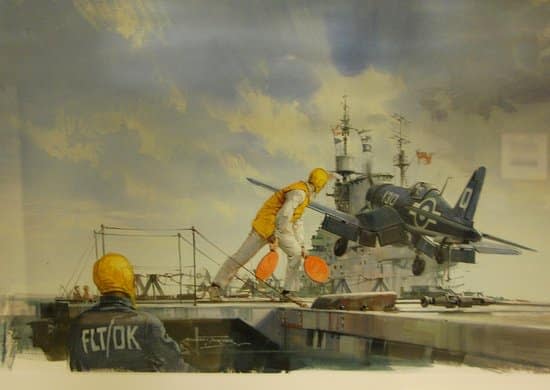
Michael Turner
British artist Michael Turner has been creating aviation art for more than half a century and is widely recognized as one of the foremost artists in the genre. His interest in aviation began when he was a schoolboy sketching aircraft during World War II. That early fascination eventually developed into a career that has taken him into the air in many different aircraft, including the Tiger Moth, Spitfire, Lancaster, Harrier and Tornado.
Turner's firsthand experience flying in military aircraft—including aerobatic flights with the Red Arrows—helped him develop a unique understanding of the machines and environments he paints. That experience is evident in his aviation artwork, which captures not only the aircraft themselves but also the atmosphere and excitement of flight.
John Young
John Young (1930–2015) became fascinated with aviation as a child after seeing Sir Alan Cobham's Flying Circus. After studying at the High Wycombe School of Art and serving in the Royal Air Force, Young began a career that combined aviation illustration with fine art. He eventually became a prominent member of Britain's aviation art community.
Young was known for the technical accuracy of his paintings and his ability to capture the atmosphere of a particular aircraft, location, and period. He was a founding member of the Guild of Aviation Artists and received its Gold Medal in 1983. His career included work illustrating books and working with aircraft manufacturers and air forces.
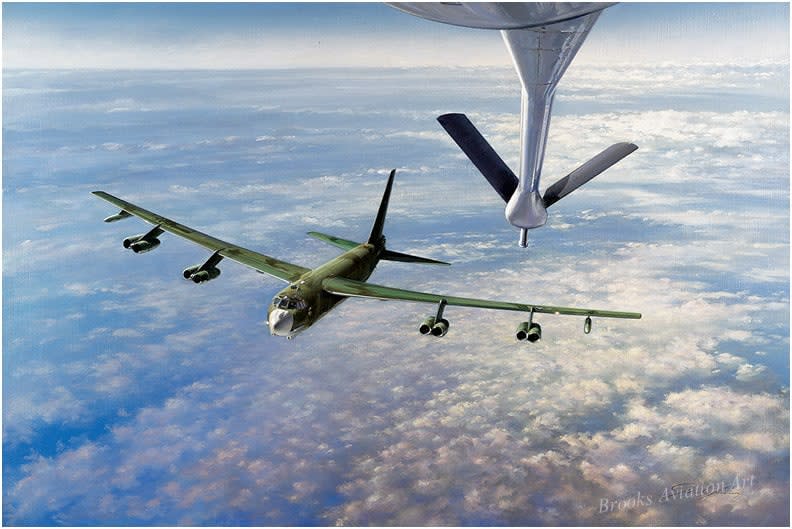
One of the works represented at the Palm Springs Air Museum depicts a B-52 Stratofortress, a massive bomber that became the centerpiece of the U.S. Strategic Air Command during the Cold War.
Where Aviation and Art Meet
What makes the aviation art at the Palm Springs Air Museum particularly interesting is its relationship to the aircraft surrounding it. A historic airplane can tell visitors about engineering, technology, and military history. A painting can put that same airplane into the sky, show it in combat or introduce the people who flew it.
Together, the aircraft and artwork offer two different ways to experience the same history.
For aviation enthusiasts, the paintings offer another level of detail to appreciate. For art lovers, they provide a fascinating introduction to a specialized genre of historical painting. And for everyone else, they help transform names, dates, and machines into stories that are easier to understand and remember.
So on your next visit, don't just look at the planes. Look at the walls, too.
Plan Your Visit to the Palm Springs Air Museum
The Palm Springs Air Museum is located at 745 N. Gene Autry Trail in Palm Springs and is open daily from 10 a.m. to 5 p.m. The museum's air-conditioned hangars house more than 80 aircraft and cover approximately 91,000 square feet. While the aircraft are the obvious stars of the collection, take time to look at the walls and exhibits around them. You may discover an entirely different side of aviation history through the museum's collection of paintings and murals.
For aviation enthusiasts, history buffs, and art lovers alike, the Palm Springs Air Museum offers a unique opportunity to experience aviation history from both the cockpit and the canvas.
Frequently Asked Questions
Does the Palm Springs Air Museum have aviation art?
Yes. Aviation artwork is incorporated throughout the Palm Springs Air Museum, including paintings by aviation artists Stan Stokes and Robert Taylor and murals depicting important chapters in aviation history.
What aviation art can I see at the Palm Springs Air Museum?
Artwork includes aviation paintings by Stan Stokes and Robert Taylor, the Tuskegee Airmen mural in the European Hangar, and Stokes' “History of the Skunkworks” mural in the F-117A Hangar.
Where can I see aviation art in Palm Springs?
The Palm Springs Air Museum is a unique place to experience aviation art. Artwork and murals are displayed alongside historic aircraft and exhibits throughout the museum's hangars.
Explore More: