

September 15 - October 15
Each fall, Palm Springs celebrates Hispanic Heritage Month, a time to recognize the history, culture, traditions, and contributions of Hispanic and Latino communities.
Observed nationally from September 15 through October 15, Hispanic Heritage Month began as Hispanic Heritage Week in 1968 and was expanded to a month-long observance in 1988. September 15 marks the independence anniversaries of Costa Rica, El Salvador, Guatemala, Honduras, and Nicaragua, while Mexico celebrates its independence on September 16.
In Palm Springs, Hispanic heritage is woven into the city's and the Coachella Valley's story. You can experience that heritage through family-owned restaurants, local arts and culture, community celebrations, music, dance, and the stories of generations of residents who have helped shape the desert.
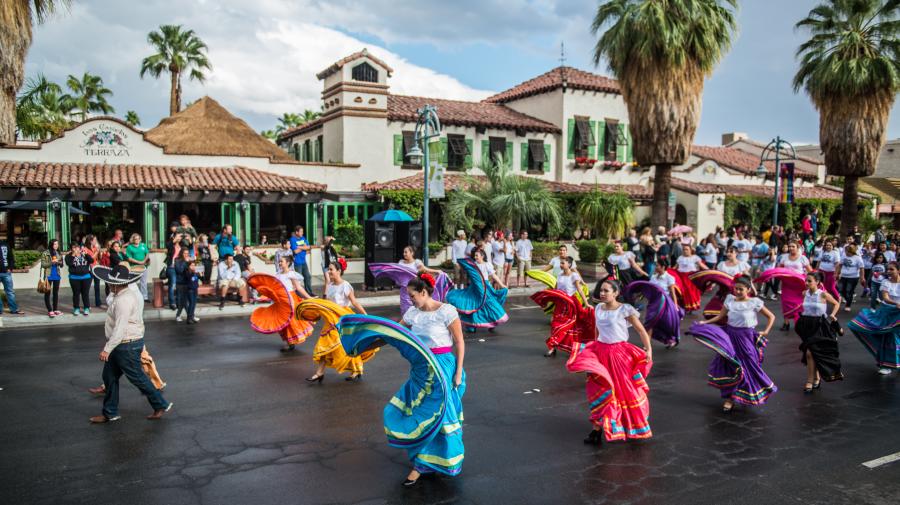
Hispanic Heritage and History in Palm Springs
Hispanic heritage is deeply woven into Palm Springs history. By the early 20th century, Mexican families were living and working in the community, and generations of Mexican American residents helped build the homes, roads, hotels, and businesses that transformed Palm Springs into a resort destination.
Early Mexican American Families in Palm Springs
During the Mexican Revolution (c. 1910-1920), Mexican families came to the Coachella Valley seeking work and opportunity. Some of the first Mexican families in Palm Springs worked on the road climbing the mountain behind the Desert Inn, according to Renee Brown of the Palm Springs Historical Society, establishing a temporary camp in what is now the O'Donnell Golf Club area.
The 1920 Census documents Mexican American residents in Palm Springs, including Ernesto Palico, a cement mason, his wife Adela, and their three sons. The City's historic research also identifies Pasqual Quiroz, born June 30, 1925, as the first known Mexican American child born in Palm Springs. His family lived in the early tent community near the Desert Inn.
Refugio "Cuco" Salazar arrived in Palm Springs in the early 1920s and built a gardening and landscape business. He rose in prominence within the Latino community. In 1942, he became owner of the Pioneer Club, which was on the corner of E. Andreas Road and N. Indian Canyon. The Club offered food, beer, and wine.
In 1936, Arturo Arguelles opened Pedro and Arturo's retail store and sold leather goods from Mexico, one of the first Latino-owned businesses in Palm Springs.
As Palm Springs grew, Mexican American residents became an important part of the city's workforce and community. Latino residents worked in construction, gardening, and the hospitality industry, helping build and maintain the resort destination that visitors came to enjoy.
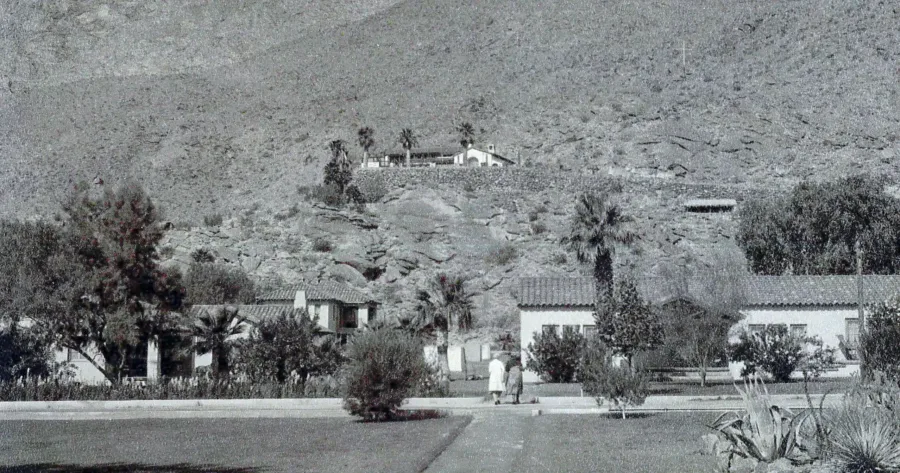
Desert Inn below and O'Donnell House above.
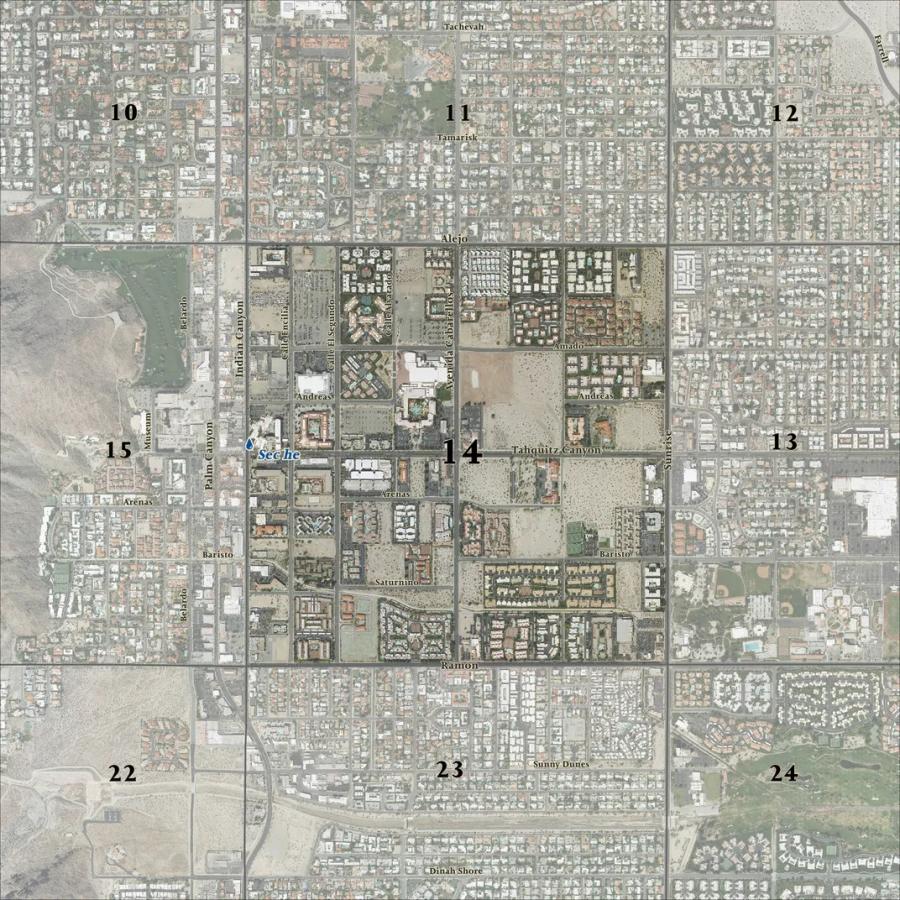
Section 14: A Home and Community
Section 14 became an especially important part of this history. Located on Agua Caliente tribal land just east of downtown, the neighborhood housed working-class families who faced discrimination and restrictions that limited where they could live elsewhere in Palm Springs. Many Latino families moved to Section 14 in the 1930s. Initially, they lived in tents and later helped each other build homes. The neighborhood's story therefore intersects with the valley's much larger Indigenous history.
Merced Rasario Ortego was a carpenter and adobe builder who found a lot of work in Palm Springs. Other early Mexican American families included the Salazar, Quiroz, Fontes, Salazar, Chacon, Ayala, Marquez, Martinez, Mendoza, Reyes, Torres, and Herrera families. Section 14 was a diverse neighborhood that also included Black, Native American, and other families.
Section 14's story also reflects a difficult chapter in Palm Springs history. Beginning in the late 1950s and continuing into the 1960s, the neighborhood was cleared, displacing hundreds of families. Mexican American residents were among those affected.
Today, the history of Section 14 reminds us of the communities that helped shape Palm Springs but whose stories were not always included in traditional accounts of the city's rise as a resort destination.
Explore more: [Section 14: The Untold Story of Palm Springs' Heart and Heritage]
Taste Generations of Mexican Heritage
Food is one of the most delicious ways to experience cultural heritage in Palm Springs, and several local restaurants have stories that span generations.
Las Casuals Terraza
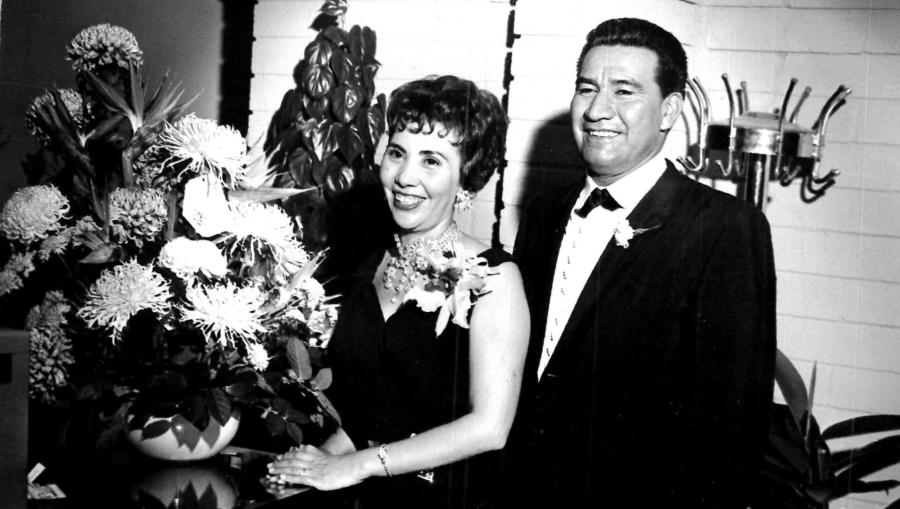
The Delgado family's culinary story began with Maria Fajardo, who cooked for copper miners in Arizona using the earthenware pots and pans known as cazuelas. Her son, Florencio Delgado, and his wife, Maria, brought those family recipes to Palm Springs in 1958 when they opened the Original Las Casuelas. Maria Fajardo's recipes, passed to her son Florencio and his wife Maria, are still served by the family's fourth generation today.
Four generations later, those recipes remain part of the Las Casuelas Terraza experience. The restaurant's colorful outdoor setting and long history have made it a Palm Springs institution—and a particularly delicious example of how family traditions can become part of a city's identity.
👉 Learn more about the history of Las Casuelas and the Delgado family.
El Mirasol
Another Palm Springs favorite, El Mirasol Cocina Mexicana has served Mexican cuisine in the city since 1985.
Founded by Felipe Castañeda, El Mirasol grew from his connection to Mexican food and traditions into a family business that still involves multiple generations. Its recipes, hospitality, and colorful atmosphere reflect the role that family-owned restaurants play in preserving and sharing cultural traditions.
👉 Explore More: Best Mexican Food in Palm Springs
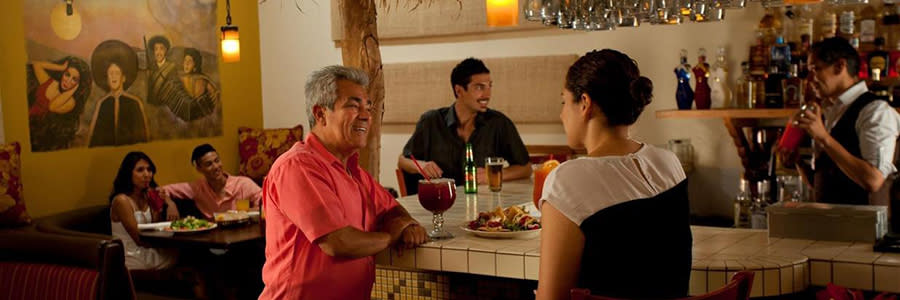
Experience Latin Arts & Culture
Hispanic Heritage Month is about much more than food. Palm Springs offers opportunities to experience Latin and Latine culture through art, music, dance, and year-round community programming.
Explore Latine Art
The Palm Springs Art Museum's Historias initiative celebrates the depth and diversity of Latine arts and culture, focusing on amplifying regional Latine artists and creatives from Southern California. Through exhibitions, public programs, and collection development, Historias creates opportunities to experience work that explores identity, heritage, memory, and contemporary Latine life.
Explore more: Palm Springs Art Museum
Enjoy Latin Music and Dancing
Music and dance are an important part of Palm Springs' nightlife and cultural scene. Look for Latin music, dancing, and special cultural performances taking place throughout the year at local venues and during community celebrations.
During Hispanic Heritage Month, check the Palm Springs events calendar for current performances, festivals, and cultural programs.

Hispanic Heritage Month at VillageFest
Thursday, September 17, 2026 - VillageFest will celebrate Hispanic Heritage Month with an evening of live music, cultural art, local history, and food along Palm Canyon Drive.
VillageFest takes place every Thursday evening in downtown Palm Springs and is a great way to celebrate while shopping, dining, and exploring downtown.
Support Local Latino-Owned Businesses
One of the best ways to experience Hispanic heritage in Palm Springs is to support the people and businesses in the community today. Enjoy a meal at a family-owned Mexican or Latin restaurant, shop with local makers and artists, attend a cultural event, or simply take time to learn more about the people and stories that have shaped Palm Springs.
Heritage lives not only in the past, but in the businesses, artists, families, and traditions that continue to shape the city today.
Plan Your Hispanic Heritage Month Visit
Planning a Palm Springs getaway during Hispanic Heritage Month? Build your experience around food, culture, history, and the city's vibrant fall season.
Explore more Palm Springs experiences:
- Things to Do in Palm Springs
- Palm Springs History & Heritage
- Mexican & Latin Restaurants
- Arts & Culture
- Palm Springs Events Calendar
- Best Places to Stay in Palm Springs
Hispanic Heritage Month in Palm Springs FAQ
How is Hispanic Heritage Month celebrated in Palm Springs?
Palm Springs celebrates with cultural events, live music, art, food, dancing, library programs, and community gatherings. Events change each year, so check the city's events calendar for current programming.
Where can I experience Mexican food in Palm Springs?
Palm Springs has a variety of Mexican and Latin restaurants. Historic family-owned favorites include Las Casuelas Terraza and El Mirasol, both with deep ties to generations of Mexican culinary traditions.
Is Hispanic heritage part of Palm Springs history?
Yes. Hispanic and Latino residents and workers have played an important role in developing the Coachella Valley and Palm Springs, contributing to agriculture, construction, hospitality, business, arts, and community life for generations.
Can I experience Hispanic and Latino culture in Palm Springs year-round?
Absolutely. You can experience Hispanic and Latino culture year-round through restaurants, arts and cultural programming, music, dance, community events, and local businesses. Hispanic Heritage Month is an opportunity to highlight and celebrate those ongoing contributions.