

How Charles Du Bois helped define Palm Springs Desert Modernism
Palm Springs’ architectural identity was shaped by a small group of visionary architects who responded to the desert with innovation, restraint, and imagination. Among them, Charles Du Bois (pronounced “do bwah”) stands apart for his ability to integrate modernism with popular culture, creating residential designs that were both experimental and widely appealing.
Best known for the iconic Swiss Miss Houses, Du Bois brought dramatic rooflines, post-and-beam construction, and indoor–outdoor living into neighborhoods that helped define midcentury Palm Springs. His work reflects a unique intersection of architecture, climate, lifestyle, and postwar optimism, making him a central figure in the story of Desert Modernism.
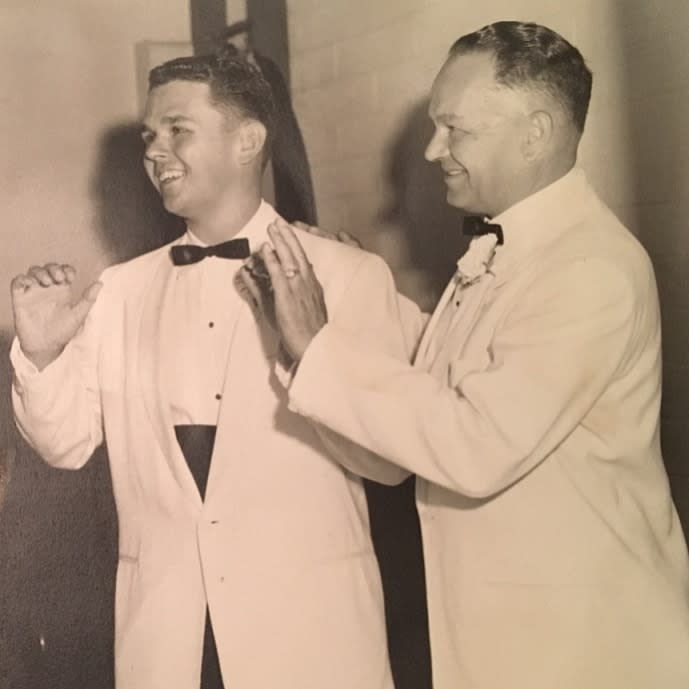
Charles Du Bois with son Charles Jr.
Early Life and Architectural Training
Charles was born in Rochester, NY. An uncle in Glendale, California, raised him and his sister Gertrude, where he graduated from High School in 1921. He attended UCLA for a year and then transferred to MIT (1922 – 1930, intermittently). During this period, he also worked as a draftsman for several prominent architecture firms, including Walker & Eisen (1923-1931), Gogerty & Weyl (1926-1929), and Horatio W. Bishop (1929).
Du Bois was exposed to many of these early designs, including Spanish Baroque, Spanish Colonial, and Mediterranean Revival. Walker & Eisen went on to build the El Mirador Hotel in Palm Springs (now Desert Regional Medical Center). This may have been a connection between Du Bois and Palm Springs, but it remains speculative.
From Hollywood to Housing: Du Bois Postwar Designs
Charles passed the California and national exams in the 1930s. In 1938, he opened his office at 5143 Sunset Boulevard in Hollywood, as shown by the AIA records. When housing construction slowed during World War II, he worked as a Senior Set Designer for MGM. After the war, he lived in Encino, and as housing began to recover, he returned to designing and working with developers across Southern California.
A partial list of his work in Southern California includes:
Hollywood Riviera Estates and Palos Verdes Riviera Beach Estates (Torrance)
Fairwood Estates (Granada Hills)
Santa Anita Estates (East Pasadena)
Woodland West (Woodland Hills)
Woodland West offered a glimpse of several Du Bois design hallmarks, namely Palos Verdes stone cladding, double entry doors, and “casket-pull” door handles.
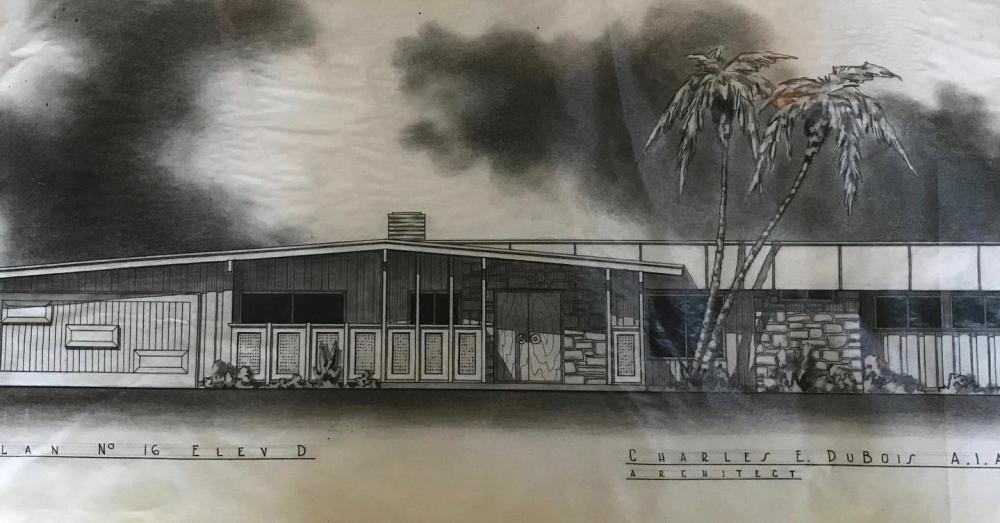
Woodland West drawing.
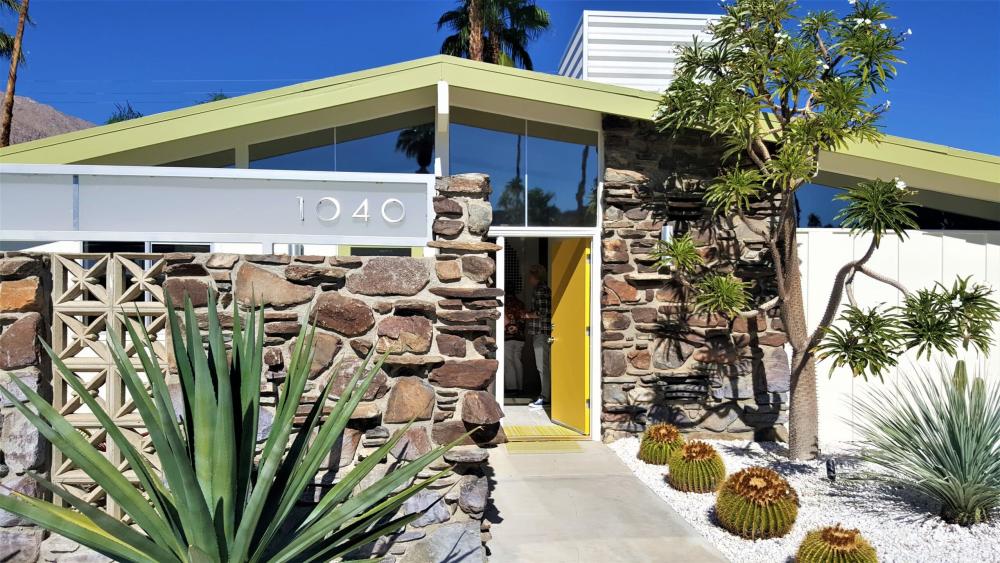
Charles Du Bois in Palm Springs
Du Bois’ move into Palm Springs coincided with a moment of rapid growth and architectural experimentation. Working closely with developers and builders, he helped shape neighborhoods that balanced mass appeal with architectural distinction.
Swiss Miss Houses: Iconic Rooflines in the Desert (1958 - 1962)
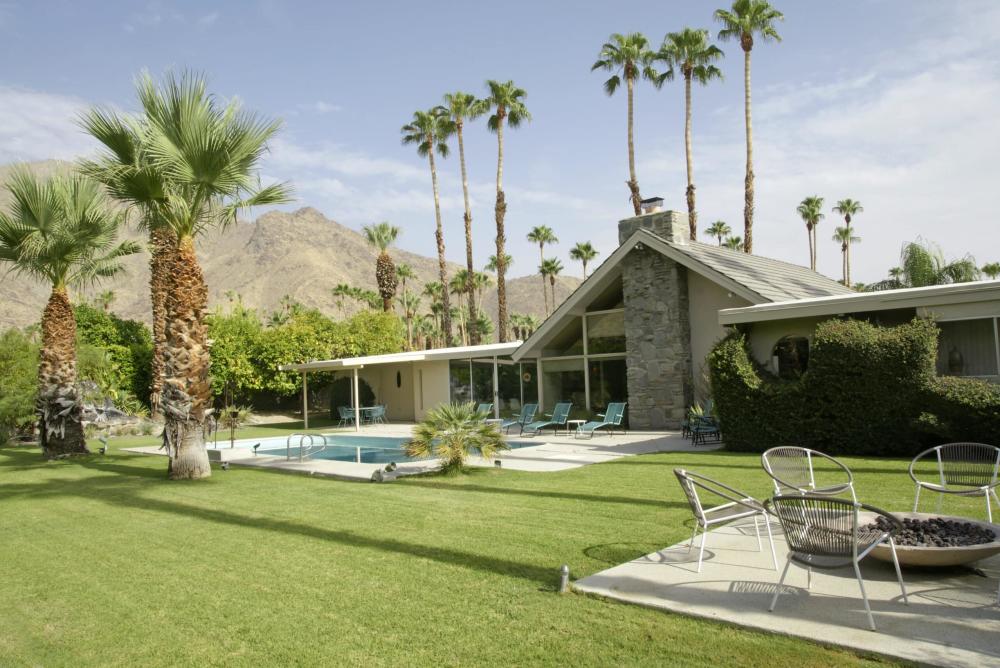
The Swiss Miss Houses are among the most recognizable residential designs in Palm Springs. Conceived as a visual counterpoint to the flat and butterfly roofs popularized by other Desert Modern architects, Du Bois’ A-frame entry became a bold architectural signature, simultaneously playful, dramatic, and functional.
Examples include:
- 1133 Vista Vepero, 1958
- 1110 Abrigo Road, 1958
- 775 W Crescent Drive, 1958
- 700, 855 Via Las Palmas, 1959
- 1355 N Rose Ave, 1961
15 Swiss Miss Houses remain.
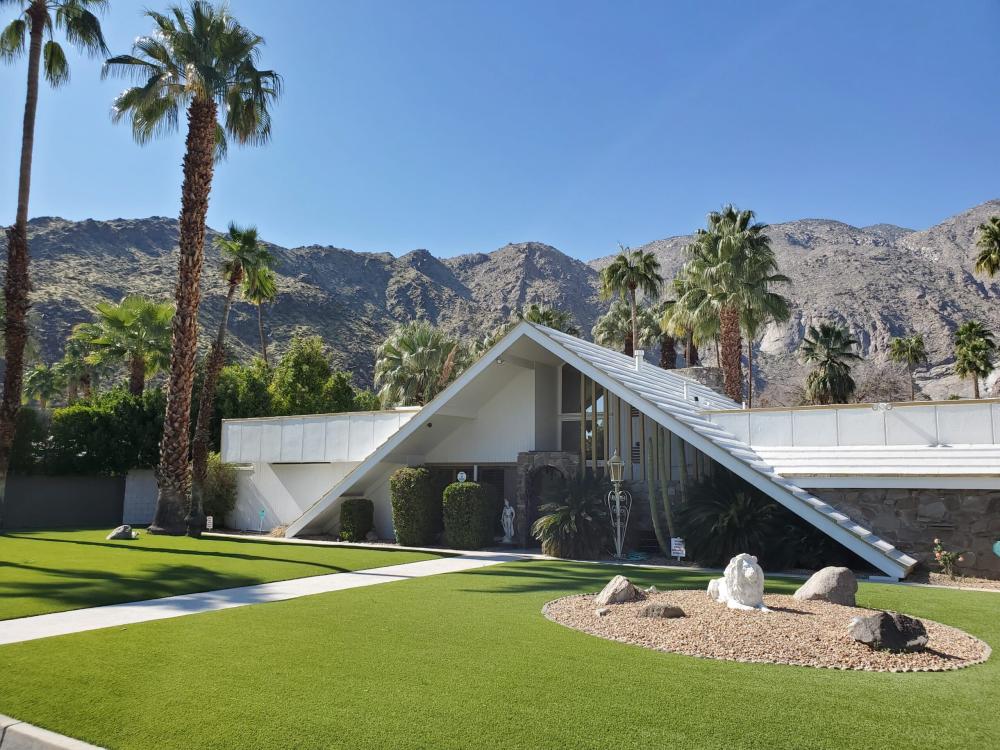
These homes were built in the Vista Las Palmas neighborhood, which builder Joe Dunas and the Alexander Construction Company were developing. William Krisel had completed a number of homes with the “butterfly” and flat roofs that had become more typical of the Palm Springs Desert Modern style. The builder turned to Charles Du Bois to find something that would distinguish them from this trend.
Du Bois designed his collection of Swiss Miss Houses as low-lying, one-story residences with a dramatic A-frame entry. The pitch can span the width of the residence, creating covered porch areas in both the front and back of the pool. The name originated from its resemblance to the gable roofs commonly found at ski chalets in Switzerland.
Another interpretation is that the roofline followed a trend for Polynesian-influenced designs, which had become popular in America and increasingly common in bars and restaurants. It would later take on the name “Tiki” as the military returned from their service in the South Pacific.
Sunrise L’anai (1962 - 1964)
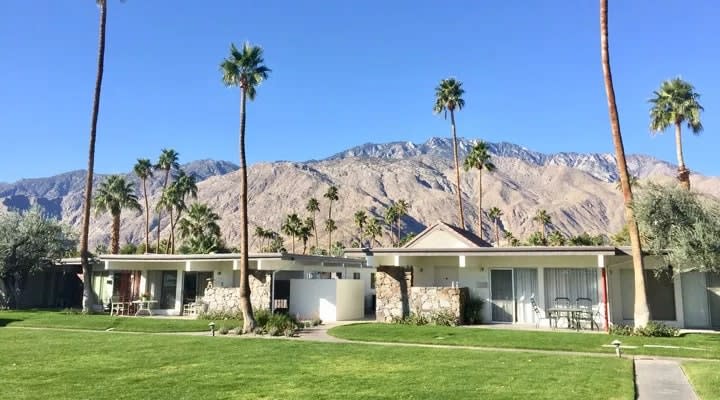
Du Bois and builder Joe Dunas partnered with the Alexanders on this project, as they had on the Swiss Miss Homes. The complex comprises 22 units across six floor plans, clustered in six buildings. Many characteristics of the residences are shared stone walls beside the interior courtyard and entranceways. The design featured prominent, shingled, two-story A-frame gables with eaves that descended almost to the ground, partially open living areas, and post-and-beam construction.
Las Palmas Summit (1962 - 1963)
Las Palmas Summit is a small development immediately adjacent to Vista Las Palmas. The district comprises a single northwest street (Los Robles Dr.) and two cul-de-sacs (W Capistrano Ct., W Friar Ct.). Charles Du Bois was the architect, and Joseph Dunas was the developer and partner of Alexander Construction Company.
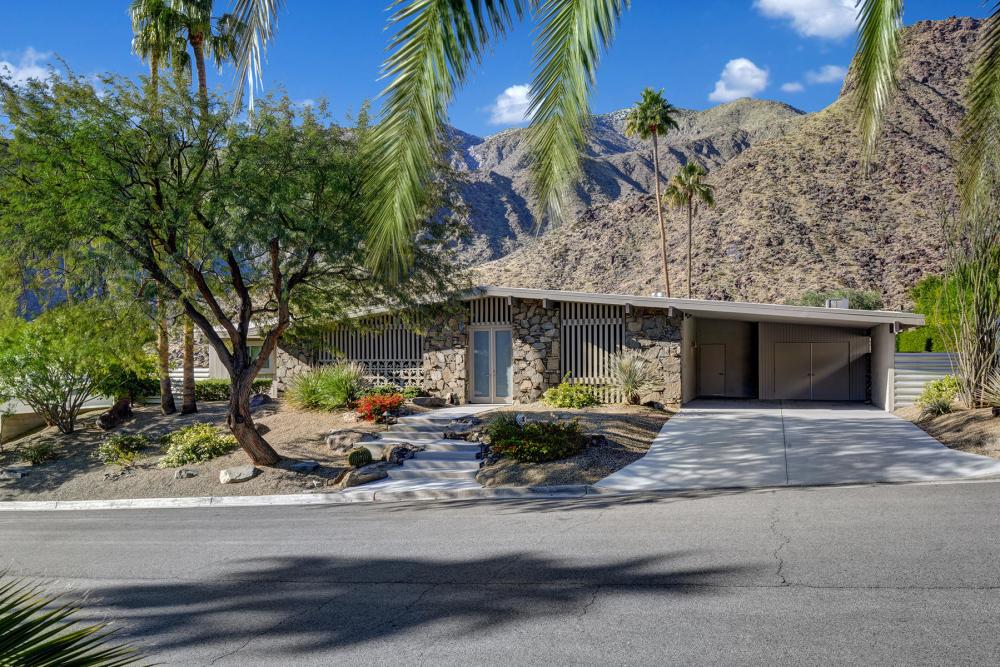
Du Bois on Robles Dr.
Advertisements for the homes differentiated them from other Palm Springs offerings at the time by evoking popular culture’s increasing interest in Hawaii as a vacation destination: “Where island living meets desert living, the 'all seasons' home designed for year-round living.” Sales agent, “Aloha-Bob Paine,” was on hand to provide “Hawaiian Hospitality.”
Canyon Estates (1968 - 1973)
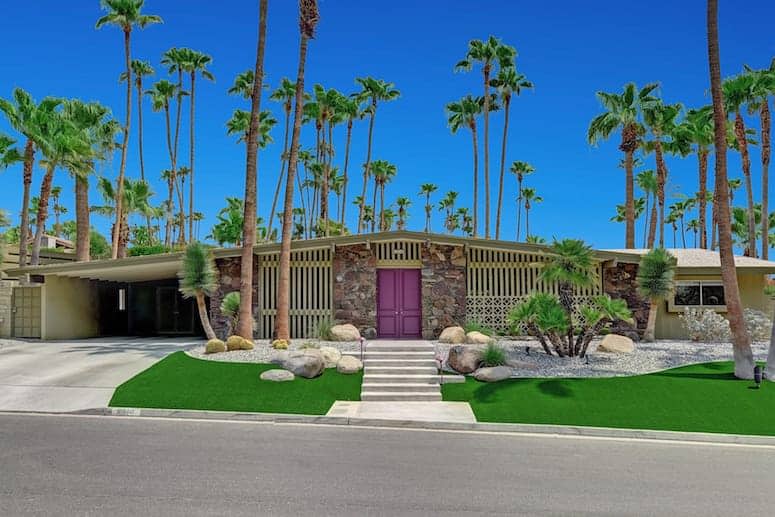
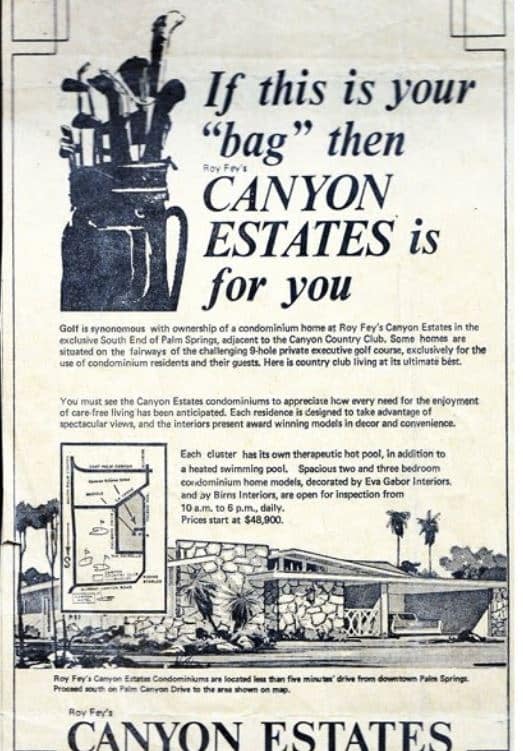
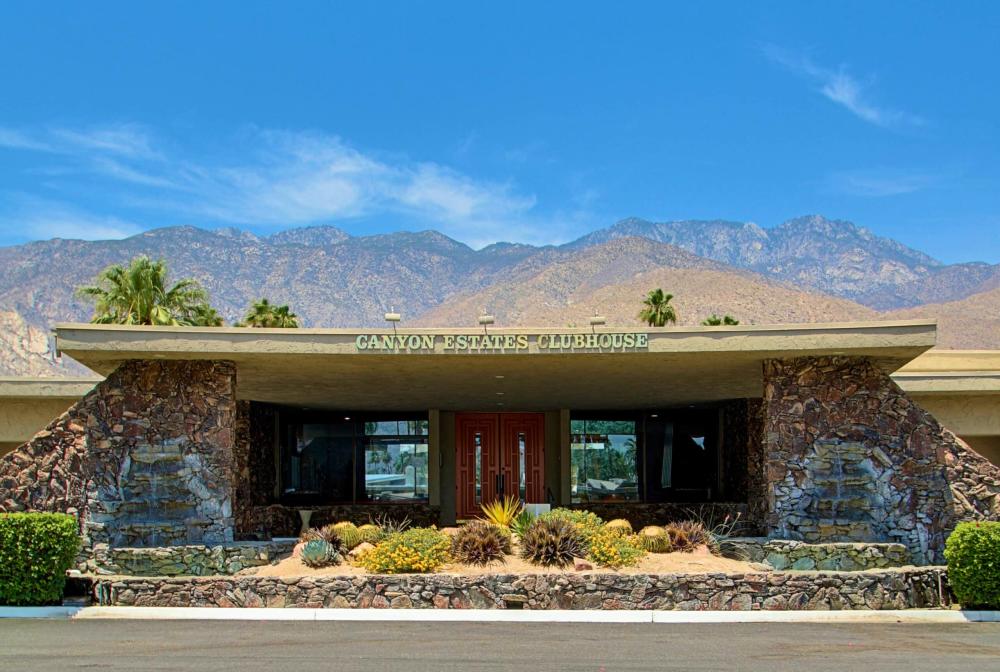
DeBois collaborated with developer Roy Fey and Great-West Life Assurance Company of Canada. Construction began in the late 1960s on the raw desert next to the Indian Canyons golf course. Canyon Estates represents Du Bois’ most ambitious Palm Springs project, blending modernist planning with resort-style amenities at a scale rarely attempted in desert residential architecture.
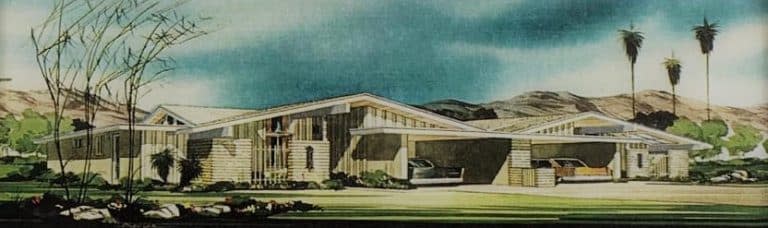
1969 Ad, Du Bois, Indian Canyons
Du Bois was tasked with building 254 single-story family residences and a central clubhouse. His design included low-lying roofs, Palo Verde stone accents, and expansive glass windows. His plans offered six floor plans and contemporary, Spanish, Polynesian, and desert contemporary designs. In addition, each home offered a spacious entry, a breakfast room, a wet bar, a choice of two or two bedrooms, a convertible den, two baths plus a powder room, and a double garage.
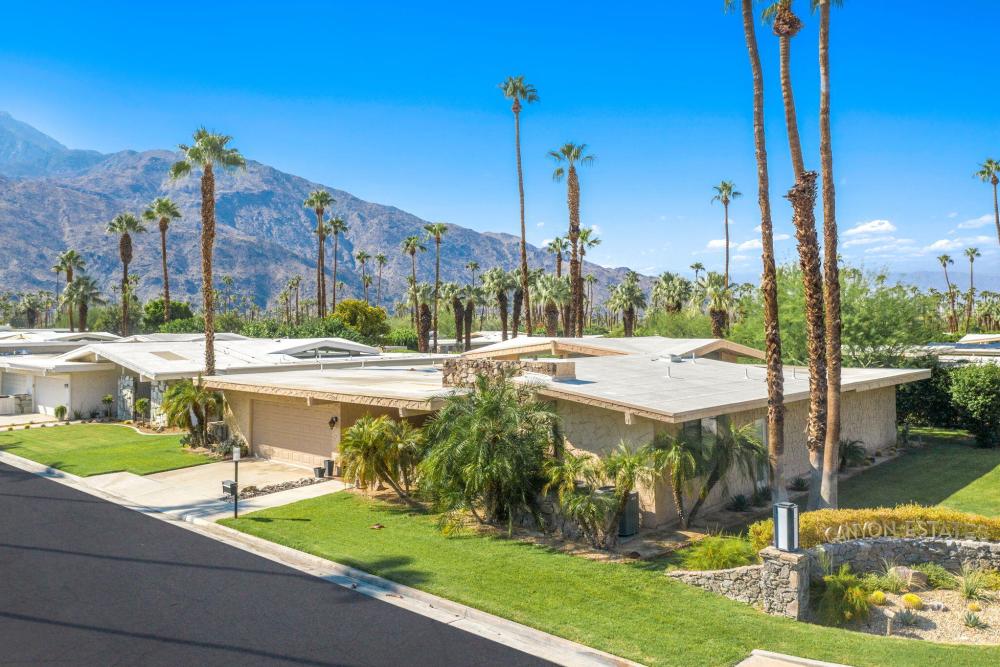
Canyon Estates was advertised as condominium homes. At the ribbon-cutting in April 1970, the Desert Sun reported that it was a $25 million project on 110 acres. It included a Country Club that provided homeowners with magnificent and luxurious clubhouses. Roy Fey hired designer Vern Harlow and manager Ford Munn to decorate and furnish the clubhouse.
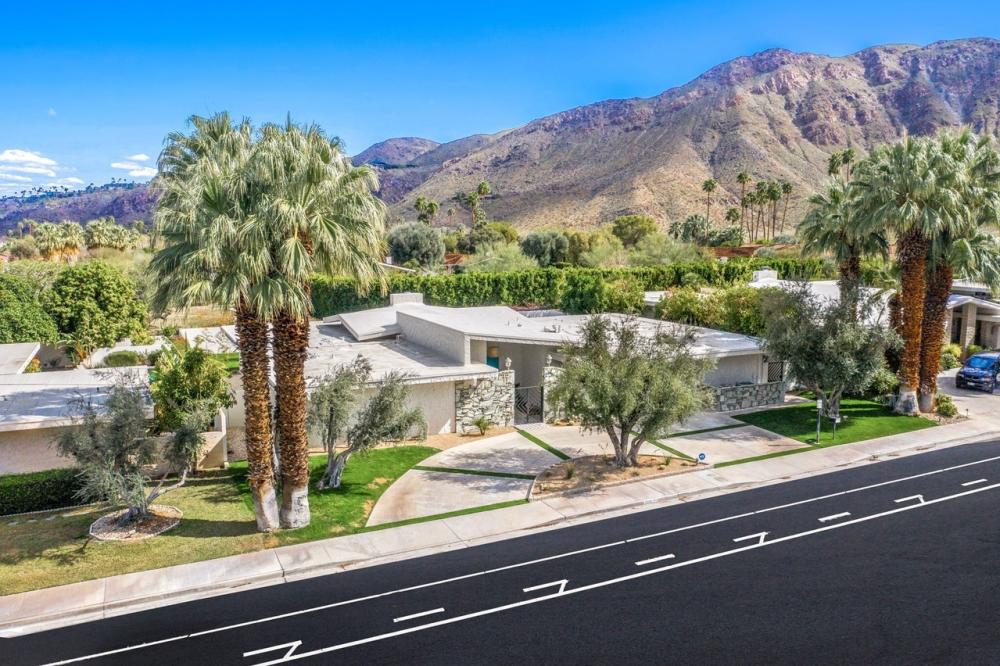
The clubhouse featured a nicely furnished lounge, complete spa and gym facilities for both men and women, card rooms, private party rooms, a 9-hole executive golf course, two tennis courts, and 15 pools.
When the homes hit the market in the early 1970s, prices started at $48,900, higher than the typical price of a residence. By the mid to late 1970s, prices had skyrocketed to $145,000.
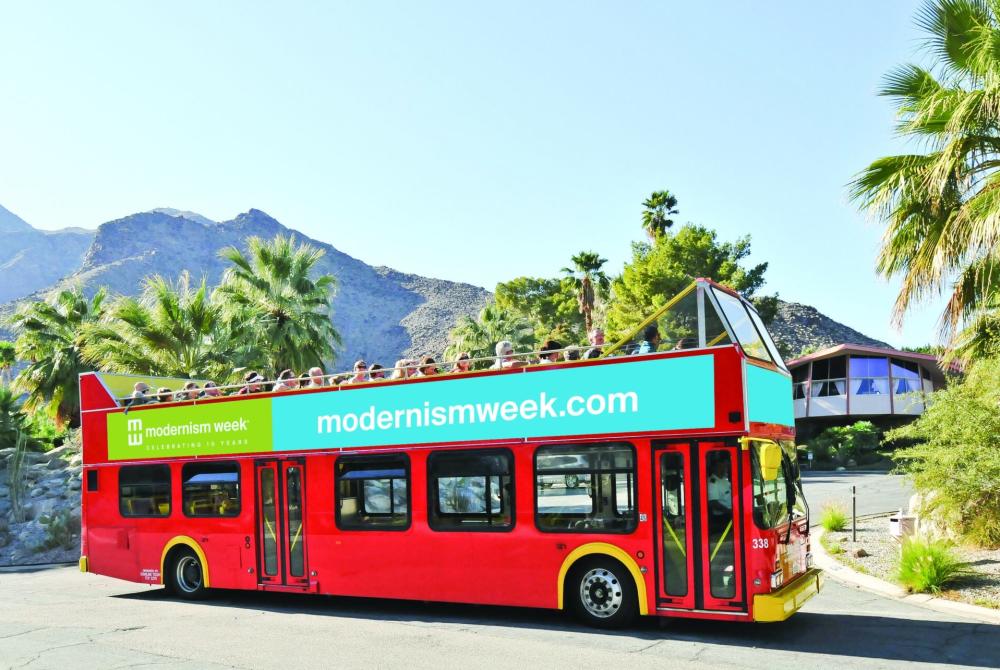
Modernism Week
Modernism Week’s signature February Event is an annual celebration of midcentury modern design, architecture, art, fashion, and culture. Modernism Week features more than 350 events, including the Palm Springs Modernism Show, Signature Home Tours, films, lectures, Premier Double Decker Architectural Bus Tours, nightly parties and live music, walking and bike tours, fashion, classic cars, modern garden tours, a vintage travel trailer exhibition, and more.
In addition to the events in February, Modernism Week hosts Modernism Week — October, which has grown to become its signature fall event. Today, many of Du Bois’ Palm Springs neighborhoods are featured in Modernism Week tours, offering rare opportunities to experience his work in its original context.
- Palm Springs Architect – William Cody
- Palm Springs Architects & Developers
- Palm Springs Architect – E. Stewart Williams
Charles Du Bois: Architectural Timeline
1903
Charles Du Bois was born in Rochester, New York.
1910s–1921
Raised in Glendale, California, by his uncle. Graduated from high school in 1921.
1922–1930
Studies architecture at UCLA and later MIT (intermittently), while working as a draftsman for major Southern California firms.
1923–1931
Works for Walker & Eisen, gaining exposure to large-scale commercial and hospitality projects, including those in the Spanish Colonial and Mediterranean Revival styles.
1926–1929
Draftsman for Gogerty & Weyl, further refining residential and revival-style design experience.
1929
Works with architect Horatio W. Bishop, rounding out pre-modernist training.
1930s
Passes California and national architectural licensing exams.
1938
Opens his own architectural office at 5143 Sunset Boulevard, Hollywood, according to AIA records.
1941–1945 (World War II)
Housing construction slows; Du Bois works as a Senior Set Designer at MGM, which influences his dramatic use of form and visual storytelling.
Late 1940s
Resides in Encino and returns to residential architecture as postwar housing demand surges across Southern California.
1950s
Designs master-planned communities including Woodland West (Woodland Hills), establishing hallmarks such as stone cladding, double entry doors, and indoor–outdoor layouts.
1958–1962
Designs the iconic Swiss Miss Houses in Palm Springs’ Vista Las Palmas neighborhood, introducing dramatic A-frame rooflines to Desert Modernism.
1962–1964
Completes Sunrise L’Anai, a clustered residential complex featuring large A-frame gables and shared courtyards.
1962–1963
Designs Las Palmas Summit, marketed with Hawaiian-inspired lifestyle themes blending desert and island living.
1968–1973
Serves as architect for Canyon Estates, one of Palm Springs’ largest condominium developments, featuring 254 residences and a resort-style clubhouse.
1970
Canyon Estates opens; reported as a $25 million development spanning 110 acres near Indian Canyons Golf Course.
1970s
Du Bois’ Palm Springs work gains recognition as prices and interest in midcentury architecture rise.
1996
Charles Du Bois passes away, leaving a lasting legacy across Palm Springs and Southern California.
Explore More:
The Palm Springs Architects & Developers Who Shaped The City's Architecture