

How the Desert Became a Laboratory for Modern Architecture
By the late 1930s, Palm Springs was already known as a retreat—an escape from Los Angeles where Hollywood’s elite could rest, recover, and remain just out of view. But alongside its growing reputation as a playground for stars, another, quieter transformation was underway.
What began as a response to climate and landscape would evolve into one of the most influential architectural movements in the United States. In Palm Springs, desert modernism was not simply imported—it was reinvented.
A Landscape That Demanded Innovation
The desert did not accommodate traditional architecture easily. Early builders quickly discovered that styles suited to coastal California or the East Coast were ill-equipped for the Coachella Valley’s extremes—intense sun, wide temperature swings, seasonal winds, and a stark, exposed terrain.
Rather than resist these conditions, a new generation of architects chose to engage with them directly.
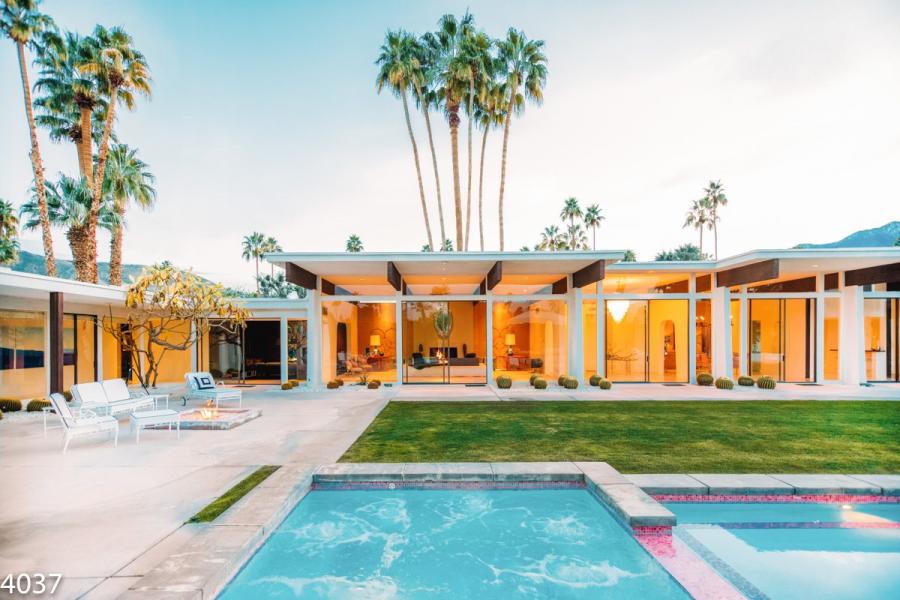
They experimented with orientation, shade, and airflow. Rooflines extended outward in deep overhangs. Glass walls opened interiors to the landscape while carefully placed clerestory windows reduced heat gain. Breezeways and courtyards blurred the boundary between indoors and outdoors.
In Palm Springs, modernism became not just an aesthetic choice, but a functional response to place.
Hollywood Patronage and Creative Freedom
At the same time, Palm Springs offered something rare: clients willing to take risks.
Hollywood figures—accustomed to reinvention and image-making—were drawn to bold, unconventional design. Their desert homes were not meant to replicate tradition, but to express a new kind of leisure: informal, private, and deeply connected to the environment.
When Frank Sinatra commissioned a home in 1947, he initially envisioned a Georgian-style residence. Architect E. Stewart Williams instead proposed something radically different—a low-slung, glass-walled modern home that would later become known as Twin Palms.
Sinatra agreed. The result marked a turning point, signaling that modernism had arrived in Palm Springs not as an experiment, but as an identity.
The Architects Who Defined the Movement
Over the following decades, a small but influential group of architects would define what is now recognized as desert modernism.
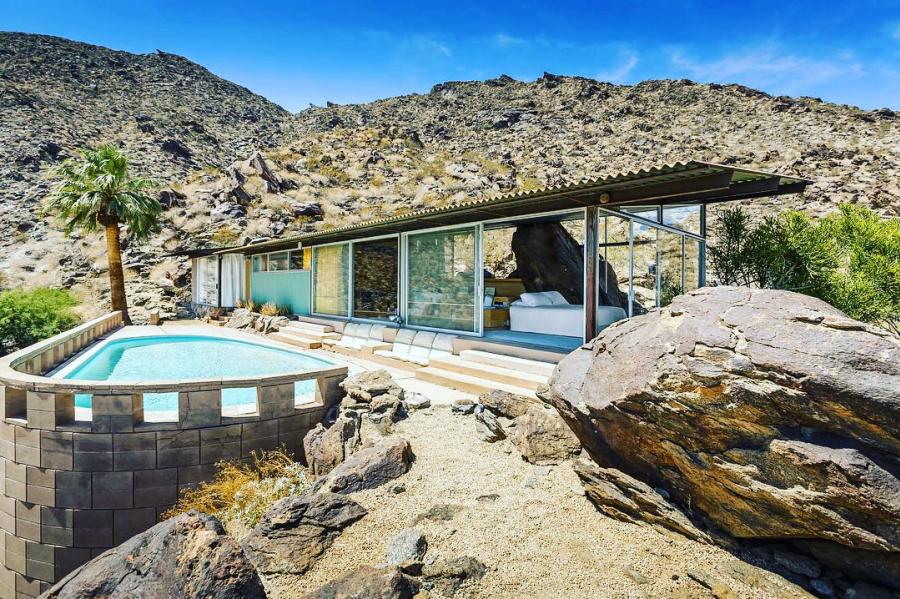
Albert Frey approached the desert with restraint and sensitivity, often embedding structures into the natural terrain. His Frey House II, perched against the San Jacinto Mountains, exemplifies this philosophy—minimal, adaptive, and inseparable from its surroundings.
E. Stewart Williams convinced Frank Sinatra to build a modern home (Twin Palms Estate) instead of a Georgian mansion. He later helped expand the Palm Springs Art Museum.
Donald Wexler explored the potential of industrial materials, most notably in his Steel Development Houses, which experimented with prefabrication and mass production in a desert context.
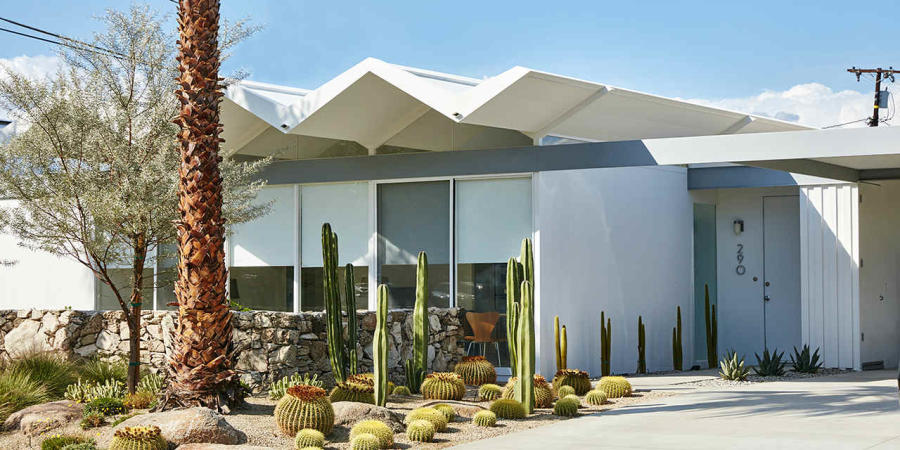
William Krisel, working with developer George Alexander, translated modernist principles into entire neighborhoods, bringing clean lines and open plans to middle-class buyers.
Meanwhile, John Lautner pushed modernism toward the sculptural. His Elrod House, with its dramatic concrete dome, demonstrated how architecture in Palm Springs could be both experimental and cinematic.
These architects didn’t just design buildings — they shaped a lifestyle.
The Postwar Boom and the Democratization of Design
Following World War II, Palm Springs entered a period of rapid expansion. Returning veterans, a growing middle class, and increased mobility transformed the city from a seasonal retreat into a year-round community.
It was during this period that modernism moved beyond custom homes for the wealthy.
Developments such as Twin Palms, Racquet Club Estates, and Vista Las Palmas introduced modernist design at scale. Built efficiently yet thoughtfully, these homes featured open floor plans, carports, glass walls, and seamless integration of indoor and outdoor spaces.
What had once been avant-garde became attainable.
Modernism in Palm Springs was no longer confined to architectural journals—it became part of everyday life.
Form, Function, and the Desert Aesthetic
By the mid-20th century, a distinct visual language had emerged.
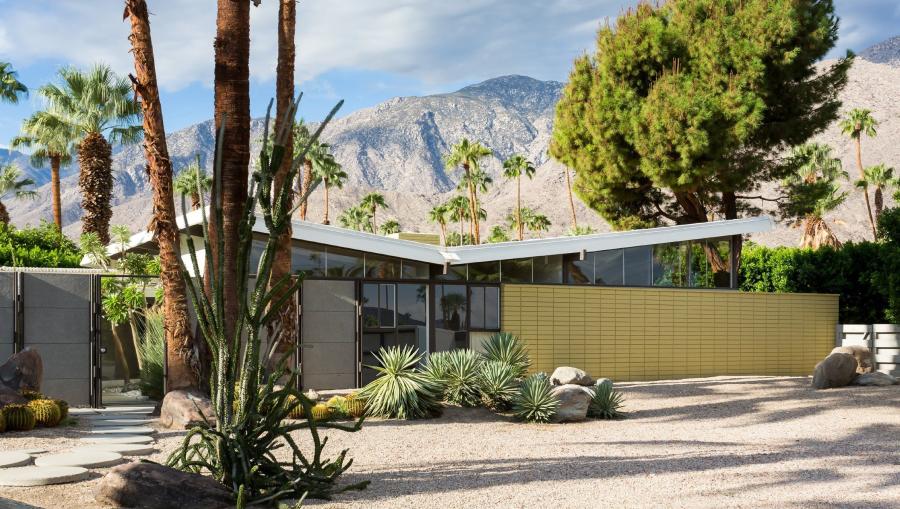
Flat planes and geometric clarity replaced ornamentation. Butterfly roofs angled upward toward the sky, while breeze block walls filtered light and air. Interiors extended outward to patios and pools, dissolving the boundary between structure and landscape.
Unlike earlier architectural styles that sought to dominate their surroundings, Palm Springs modernism emphasized harmony—aligning buildings with mountain views, sun paths, and desert textures.
It was, in many ways, an architecture of adaptation.
Visibility, Media, and Cultural Influence
Palm Springs modernism did not remain local for long.
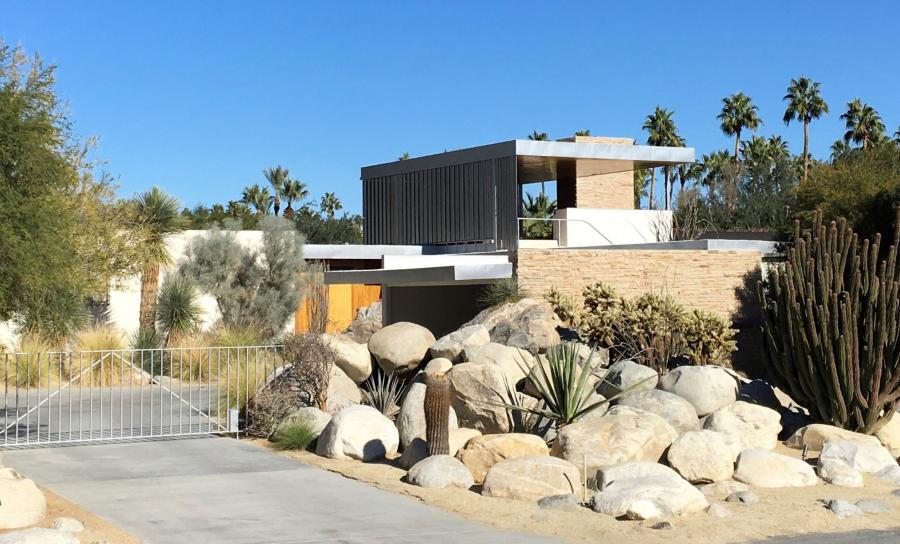
Homes like the Kaufmann Desert House by Richard Neutra and the residences of celebrities such as Sinatra and Bob Hope appeared in national magazines, photography spreads, and films.
These images circulated widely, positioning Palm Springs as the epicenter of a new American lifestyle—modern, relaxed, and aspirational.
Architecture became part of the city’s identity, as recognizable as its palm trees and mountain backdrop.
Decline and Rediscovery
By the 1970s and 1980s, tastes began to shift. Many midcentury homes were altered, neglected, or demolished as new styles took hold.
What had once been cutting-edge was, for a time, overlooked.
The revival began in the 1990s, led by preservationists, architects, and new homeowners who recognized the historical and design significance of these structures. Restoration efforts gained momentum, and appreciation for midcentury modernism grew—both locally and internationally.
Events like Modernism Week emerged from this renewed interest, transforming preservation into celebration.
A Living Architectural Legacy
Today, Palm Springs stands as one of the most intact collections of midcentury modern architecture in the world.
But more importantly, it remains a living environment. These homes are not confined to museums—they are lived in, restored, reinterpreted, and continuously appreciated.
Modernism continues to shape the city’s hotels, neighborhoods, and cultural identity. It informs everything from interior design to branding, reinforcing Palm Springs’ place as a global design destination.
What began as a practical response to climate and clientele has become something far greater: a defining legacy.
📍 Plan Your Visit
Experience modernism firsthand at:
- Frey House II (Palm Springs Art Museum Architecture & Design Center)
- Twin Palms Estate
- Kaufmann Desert House (exterior only)
- Vista Las Palmas
- Racquet Club Estates
- Modernism Week tours
Related Stories
- Hollywood’s Palm Springs: The Golden Age
- Early Resort Era: The Birth of a Desert Retreat
- Welwood Murray: The Man Who Built Palm Springs’ First Hotel
- Early Palm Springs Pioneers: John Guthrie McCallum
- Palm Springs History (Landing Page)