A Historic Gem of Palm Springs Designed by Albert Frey
The Palm Springs Visitor Information Center is one of the city’s most iconic and recognizable landmarks. The Palm Springs Visitor Center is often the first landmark for travelers entering Palm Springs from the north or heading to the Palm Springs Aerial Tramway.
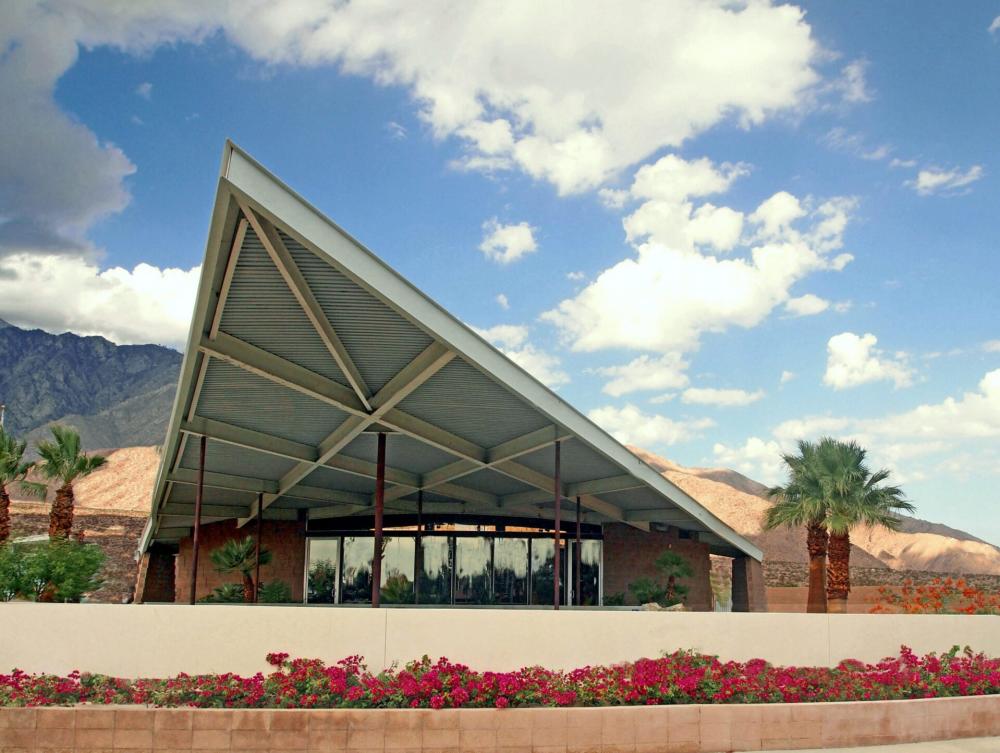
Originally built in 1965 as the Tramway Gas Station, the building was designed by renowned architect Albert Frey (with Robson C. Chambers), a leading figure in desert modernism. Today, the Palm Springs Visitor Center is celebrated not only for its architecture but also as the official hub for visitor services, maps, travel info, and local tips.
Architectural Significance of the Palm Springs Visitor Center
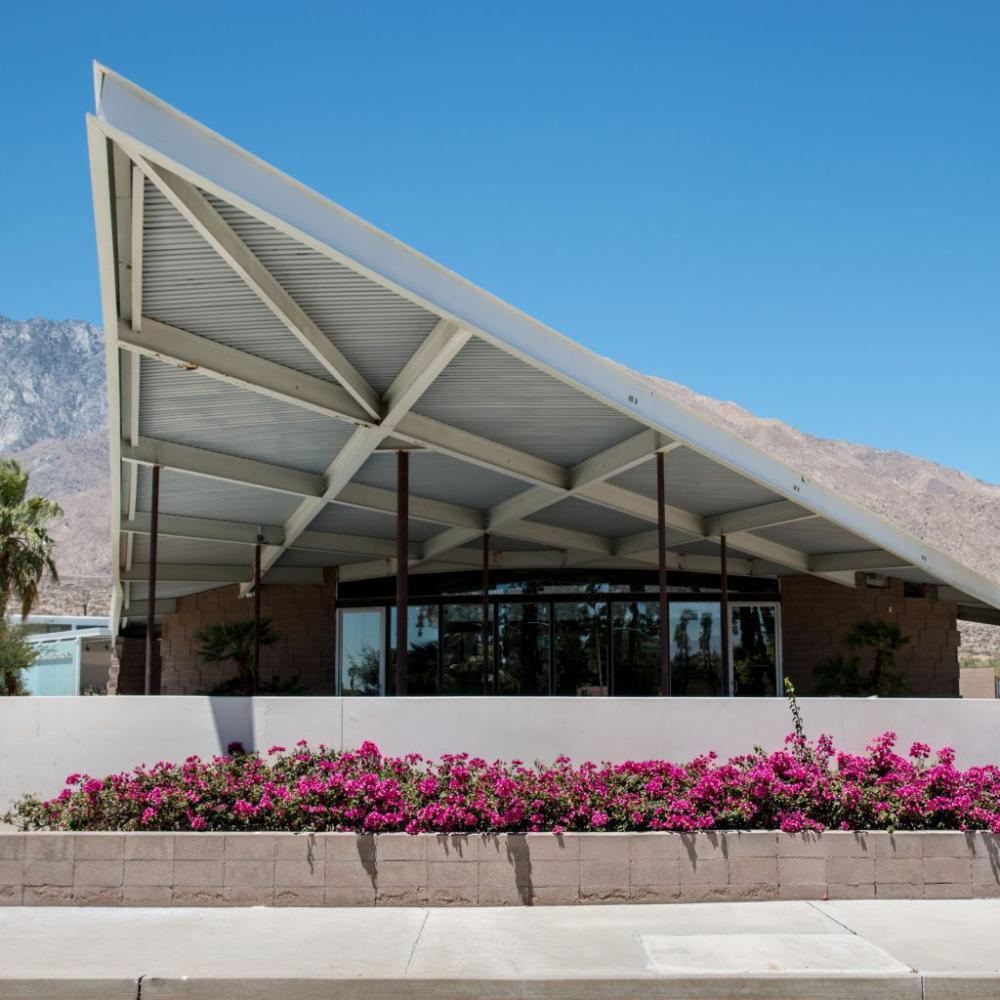
As one of the most photographed buildings in the Coachella Valley, the Palm Springs Visitor Center showcases Albert Frey’s modernist vision through dramatic form and refined simplicity.
Key Architectural Features Include:
- A striking cantilevered hyperbolic-paraboloid steel canopy, the structure’s signature silhouette
- Diagonal-cut concrete block corners and crisp desert-modernist geometry
- A steel roof originally designed to shelter gas pumps and service bays
- Clean lines that embody Frey’s balance of form, function, and the desert landscape
After decades as a gas station and a period of closure in the early 1990s, the City of Palm Springs purchased the property in 2002. Following restoration and renovation, the building reopened in November 2003 as the official Palm Springs Visitor Center.
In 2015, the building’s architectural and historical significance was federally recognized, and it was added to the National Register of Historic Places.
What the Palm Springs Visitor Center Offers
The Palm Springs Visitor Center is more than an architectural landmark; it's a helpful and welcoming resource for travelers planning their stay.
Visitor Services Include:
- Current information on hotels, vacation rentals, and resorts in Palm Springs
- Recommendations for dining, shopping, nightlife, and attractions
- Free maps, brochures, and guides to help craft the perfect itinerary
- A curated gift shop with souvenirs, books, apparel, and Palm Springs merchandise
- Helpful staff offering real-time suggestions based on weather, events, and visitor plans
- Tickets to Indian Canyons and Tahquitz Canyon
Hours: 10 am to 5 pm daily
Address: 2901 N. Palm Canyon Drive
Please note: The Palm Springs Visitor Center does not sell tickets for the Palm Springs Aerial Tramway, but the team can provide directions, parking details, and operating updates.
Why Visit the Palm Springs Visitor Center?
- It’s the perfect orientation spot when arriving in Palm Springs
- The architecture alone is worth the visit—especially for fans of mid-century modern design
- It’s one of the most popular Instagram photo stops in town
- You can get quick help with last-minute planning, event updates, and route information
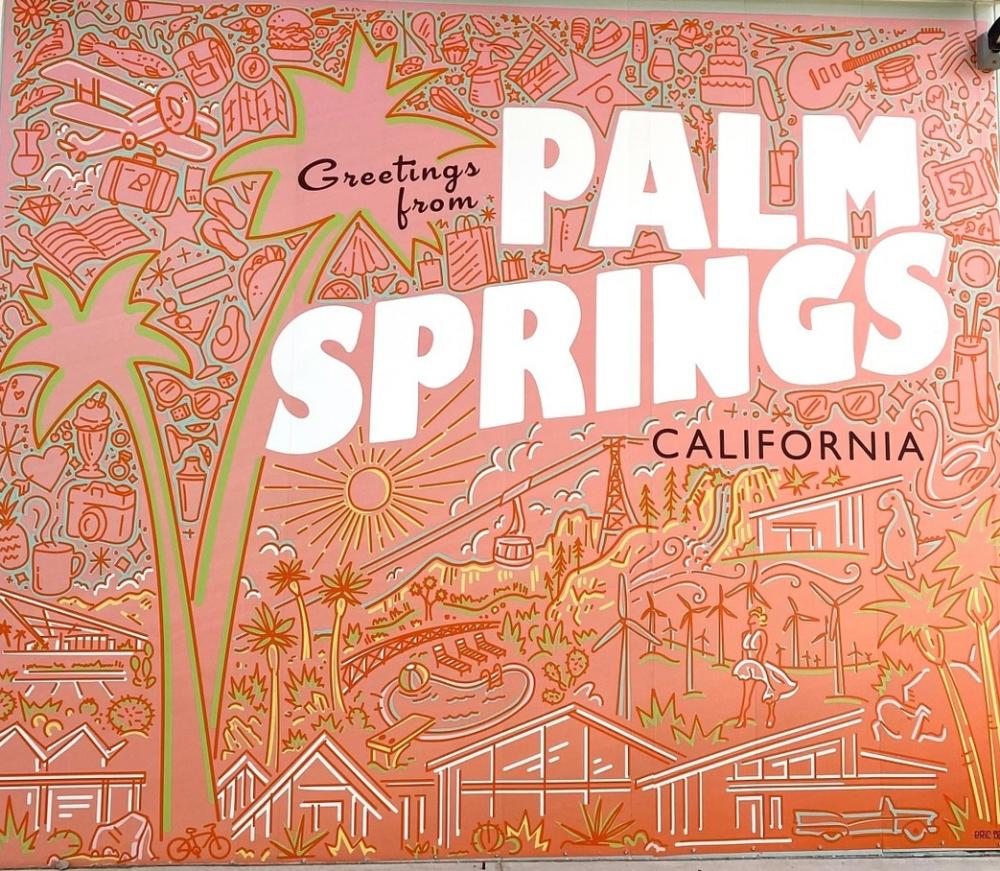
Plus, the “Greetings from Palm Springs” mural near the Visitor Center is a must for a selfie.
Visitor Tips
Parking: Free on-site parking is available directly in front of the Visitor Center, with easy in/out access from both Tramway Road and N. Palm Canyon Drive.
Accessibility: The Visitor Center building and parking lot are fully accessible, with wide entrances and interior space for mobility devices. Here is more information about accessible travel throughout the city.
Restrooms: Public restrooms are available outside the Visitor Center, open 10 am to 5 pm.
Tramway Note: The Visitor Center does not sell Palm Springs Aerial Tramway tickets, but staff will provide route info, shuttle updates, and current operating conditions.
The Palm Springs Visitor Center & Albert Frey
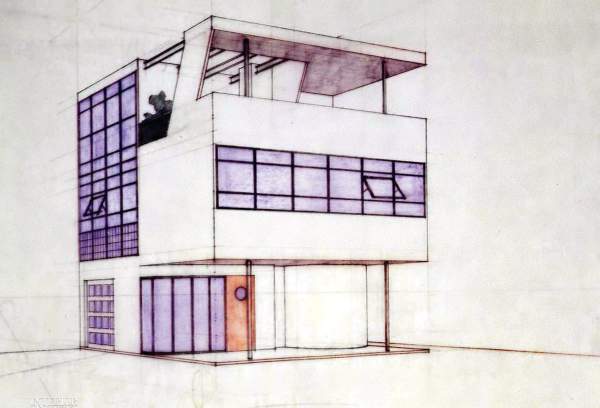
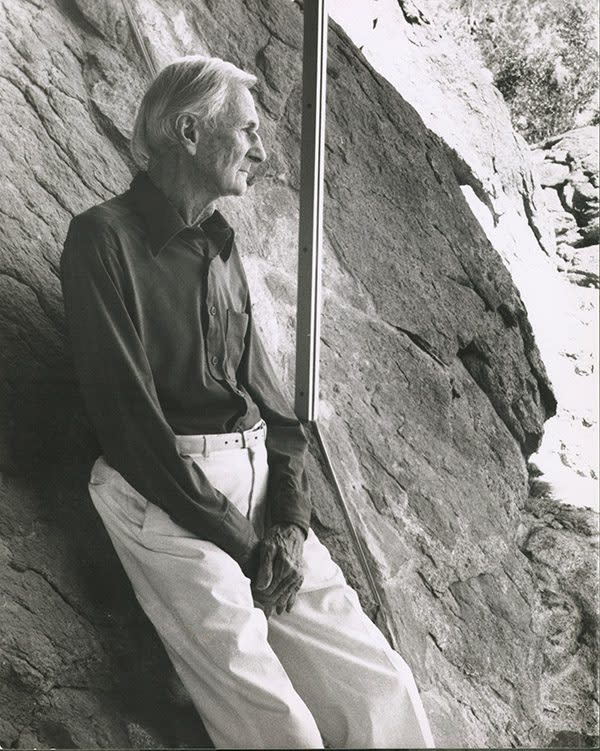
The Palm Springs Visitor Center's history dates back to Albert Frey. He is one of the earliest modern-style architects in Palm Springs. His first project was in the summer of 1934. Dr. Kocher commissioned him for an office/apartment dual-use building on Palm Canyon. Frey and Kocher began designing the Aluminaire House in 1930. Frey visited the desert for the first time and fell in love. The building was the beginning of what would be “desert modernism.” He eventually moved to Palm Springs and began his long career.
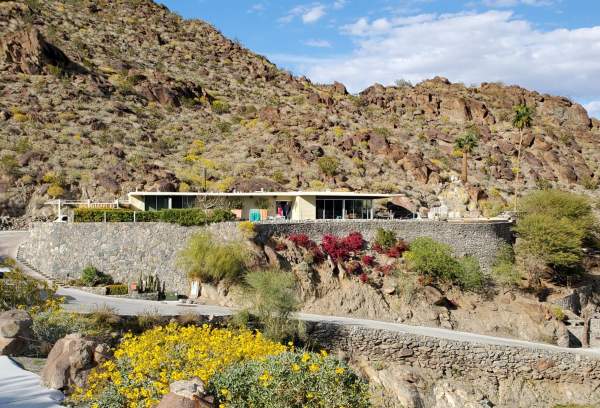
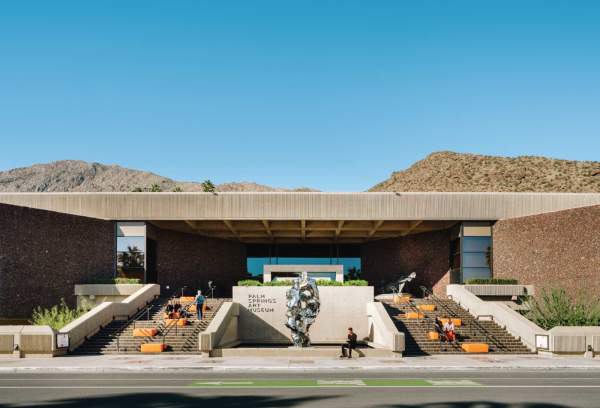
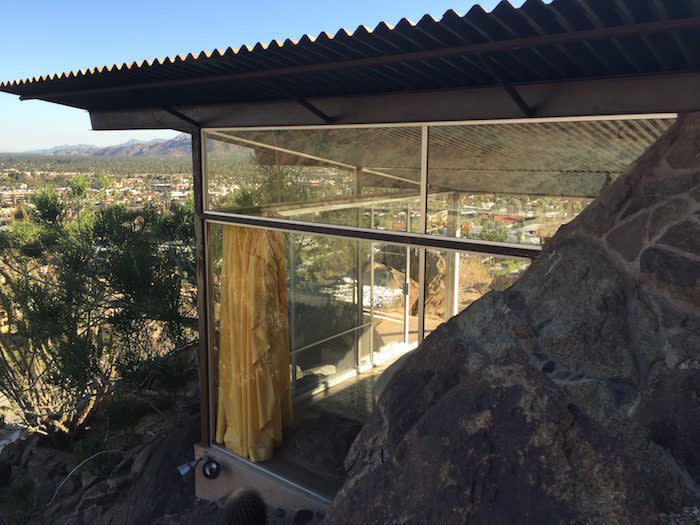
His other local works include the Palm Springs City Hall, the Monkey Tree Hotel, and the Palm Springs Aerial Tramway Valley Station. His home, known as Frey House II, is perched above the Palm Springs Art Museum. He bequeathed it to the Art Museum upon his death, and it is now open for tours.
Source: Palm Springs Historical Society
Frey House II
Palm Springs Visitor Center History: From Gas Station to Cultural Landmark
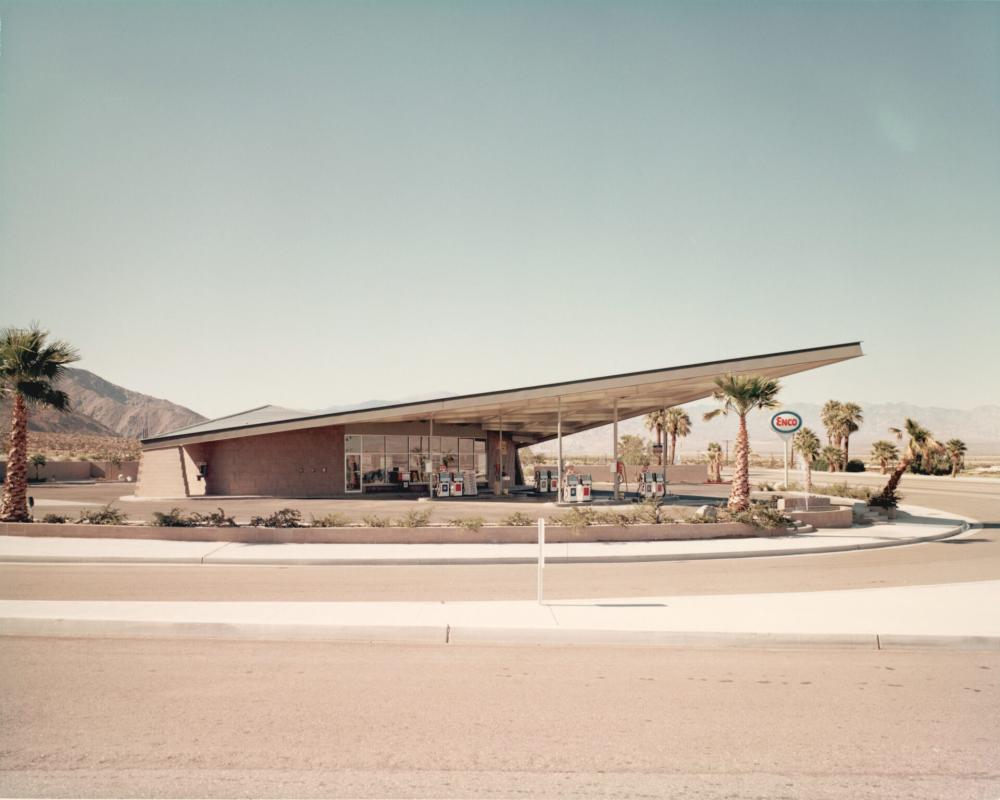
The Palm Springs Visitor Center began as a gas station. Frey, who collaborated with Robson Chambers, was commissioned to design a new Tramway Gas Station in North Palm Springs at the base of the Palm Springs Aerial Tramway. For this project, Albert Frey chose a roof form that would come to symbolize mid-century design, the hyperbolic paraboloid. The program for the service station was minimal: shelter for six gasoline pumps, an office, two storage rooms, two restrooms, and three automobile service bays. The roof is constructed of ribbed galvanized steel panels supported on steel beams and anchored by six steel pipe posts. The main building features his signature corner treatments, in which the concrete blocks are cut diagonally at every other paired row.
It opened in 1965 as an ENCO service station, with manager Harold Barnes as the first tenant. Frey had just completed work on the Palm Springs Aerial Tramway Valley Station, which opened in 1963.
It did well for many years; however, business had slowed, and by the early 1990s, the station was closed and boarded up.
Palm Springs City Council designated the property as a Class 1 Site on January 6, 1999.
Source: Palm Springs Historical Society
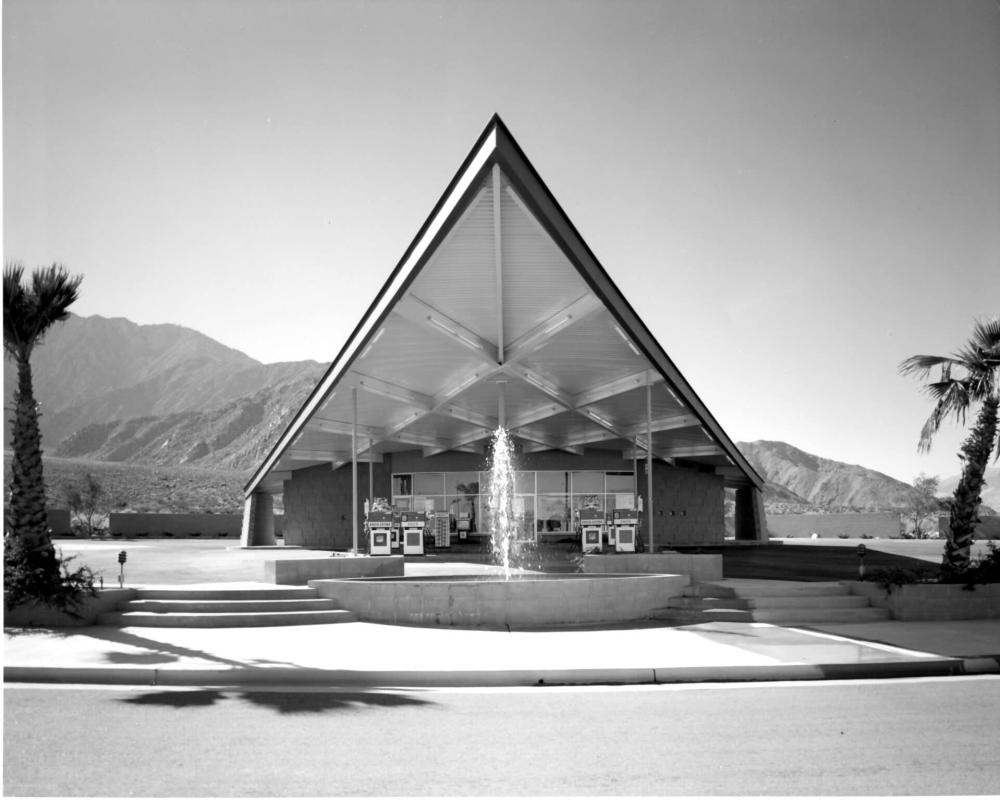
Photo: Bill Anderson