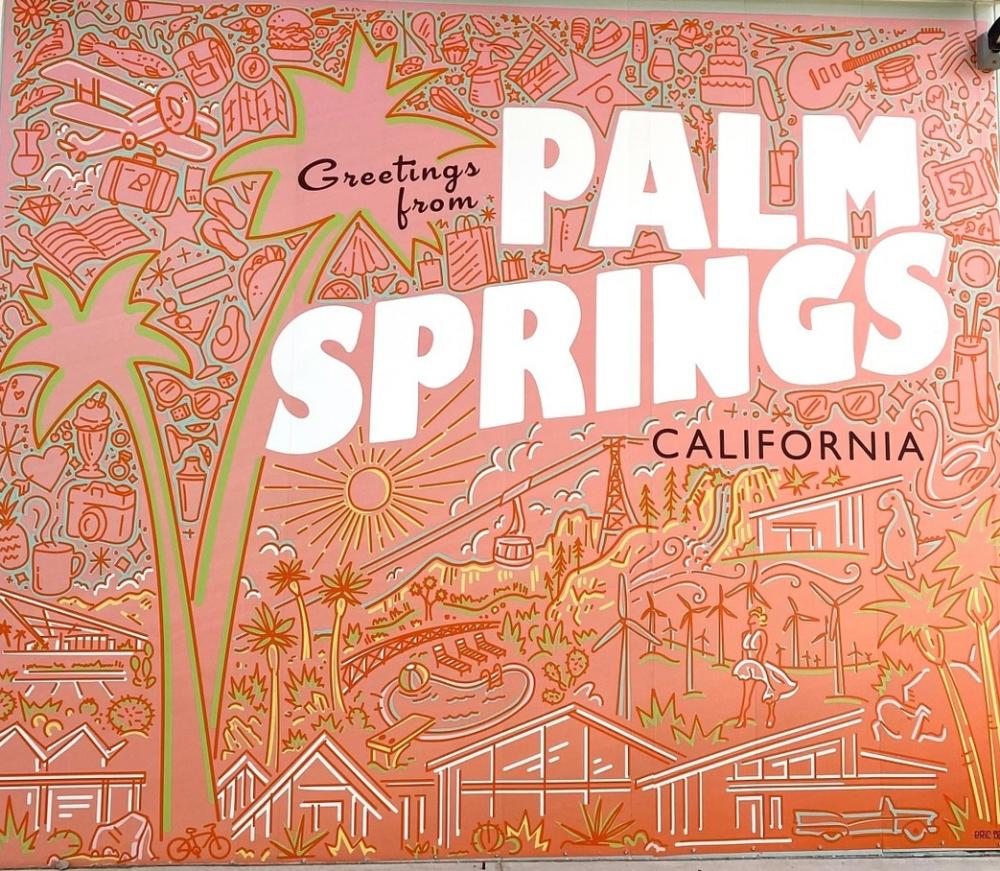
Palm Springs has always been a mood — sun‑drenched, design‑obsessed, and effortlessly photogenic. Whether you’re here for midcentury lines, colorful doors, canyon trails, or poolside glamour, the city gives you endless ways to fill your feed with that unmistakable Palm Springs vibe.

Here are the most iconic, most loved, and most Palm Springs photo spots to capture on your next visit.

The Palm Springs Welcome Experience

Palm Springs Visitor Center. + Welcome Sign + Mural

Start your photo journey where the city greets you in full midcentury glory.
The Palm Springs Visitor Center — a former Tramway Gas Station designed by Albert Frey — is one of the most photographed buildings in the desert.

  • The soaring hyperbolic roof = instant architectural drama
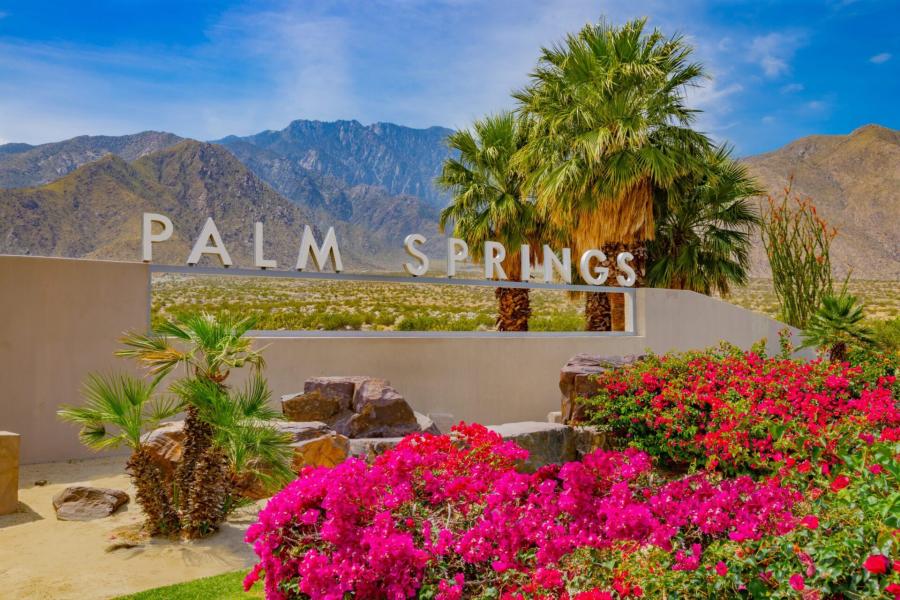
  • The Palm Springs Welcome Sign next door is a classic “you made it” shot
  • Behind the center, the Palm Springs mural adds a bold, colorful backdrop

Perfect for: arrival posts, outfit shots, architecture lovers, and that first “hello, Palm Springs” moment.
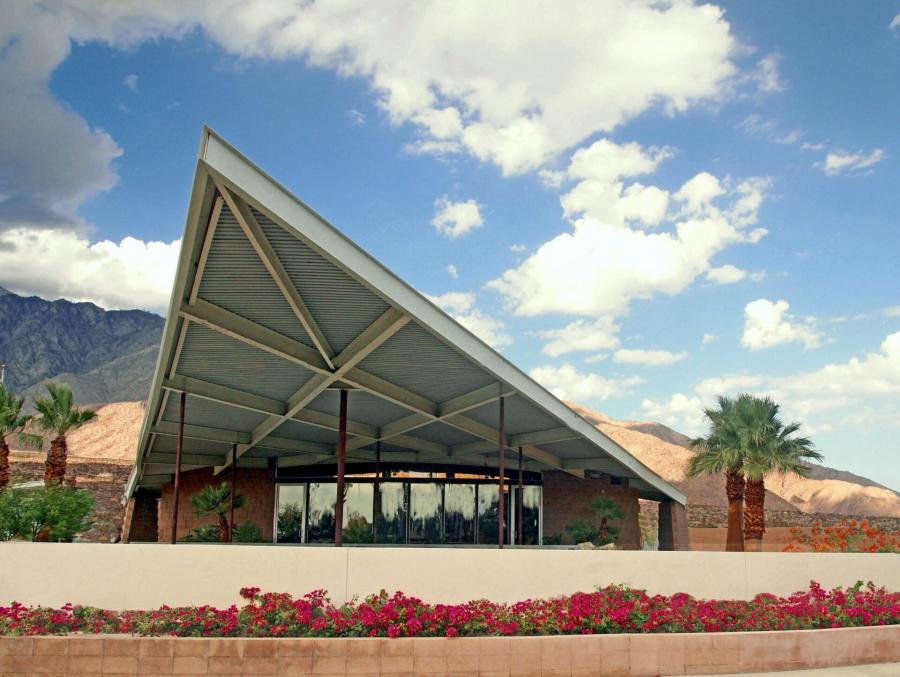
visitor center

palm springs sign

palm springs welcome sign mural

Color Everwhere

The Famous Colored Doors

The rainbow of midcentury doors — from the iconic #ThatPinkDoor to citrus‑bright oranges, yellows, and blues — remains one of the city’s most beloved visual signatures.

You’ll find them throughout South Palm Springs, especially in Indian Canyons and Twin Palms neighborhoods.
Please remember: these are private homes. Be respectful, stay on public sidewalks, and snap quickly.

Perfect for: color lovers, fashion shots, and that classic Palm Springs pop.

Best time to shoot: Mid‑morning or late afternoon.
Direct midday sun can blow out the colors; softer, angled light keeps the hues rich and shadows clean.

Palm Springs Self-Guided Colored Door Tour
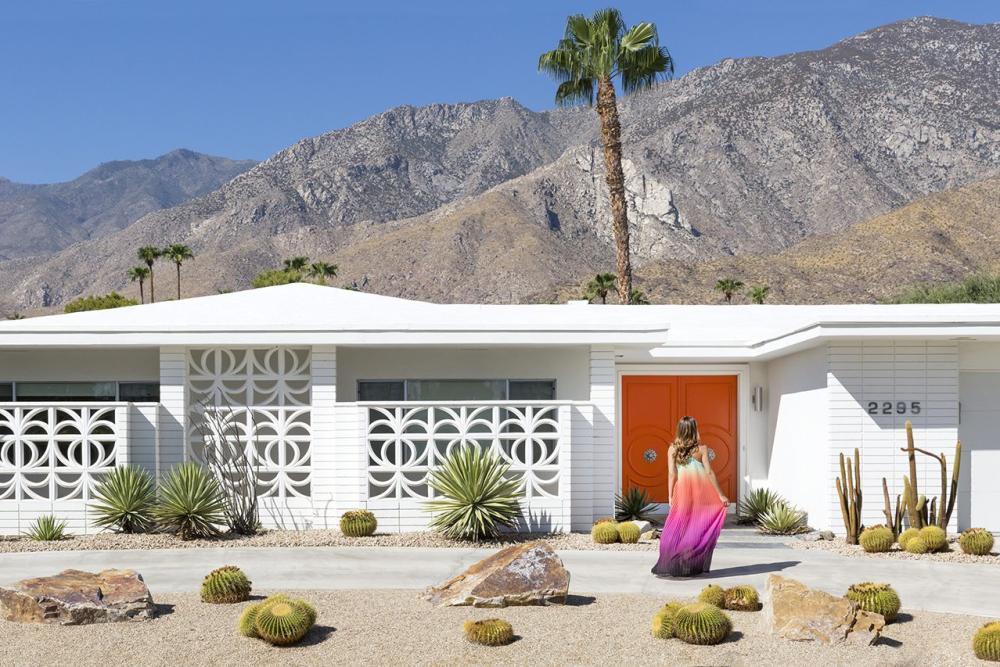
orange door

Saguaro Hotel Palm Springs

If you like color, you'll want to stay at Saguaro Hotel Palm Springs. Not only is it known for its pool parties, but there are also photo opportunities throughout the property.

Best time to shoot: Midday.
Bright sun makes the rainbow balconies pop. For pool shots, aim for late morning when the water sparkles.
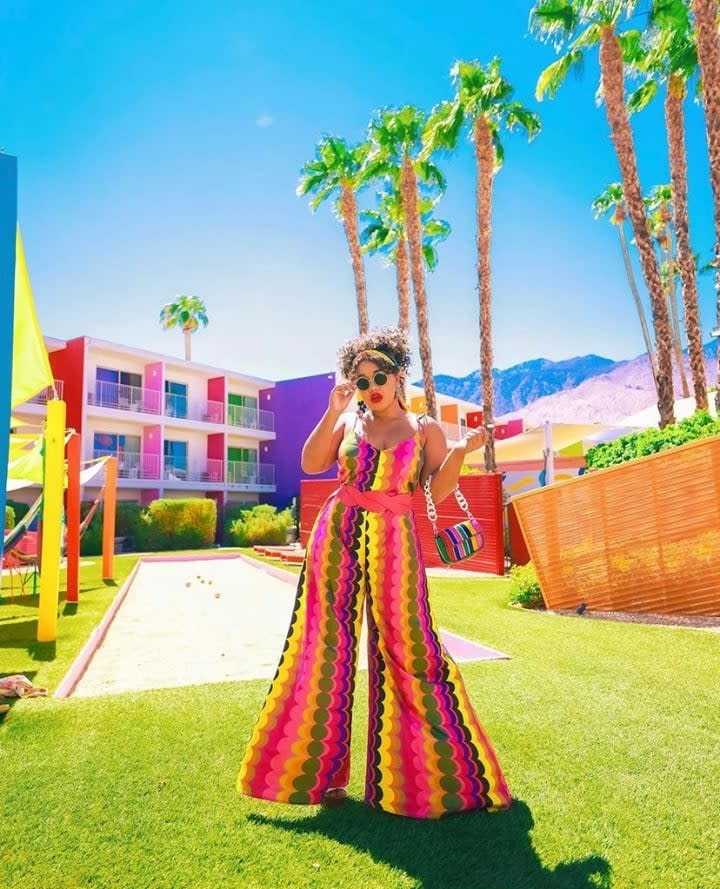
saguaro credit @colormecourtney

Credit @colormecourtney

The Parker Palm Springs

Jonathan Adler’s iconic white‑lattice entryway and bold orange doors are a must‑capture.

The Parker - It’s chic, playful, and unmistakably Palm Springs.

Perfect for: bold aesthetics, pool party vibes, and editorial‑style portraits.

Best time to shoot: Late afternoon.
The orange doors and white lattice get a gorgeous contrast as the sun drops, without harsh overhead shadows.
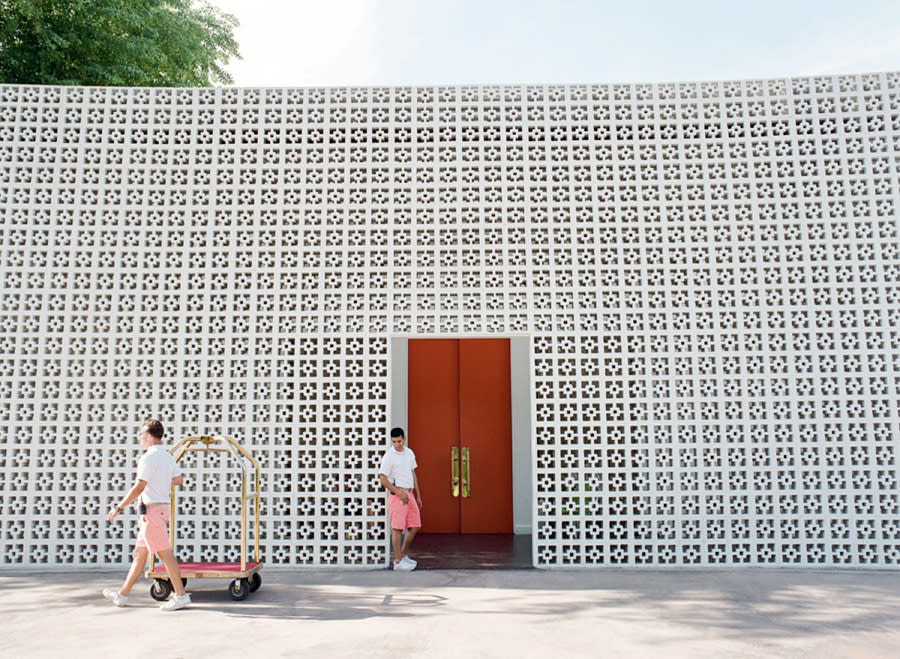
Parker Palm Springs

Downtown Icons

PS I Love You Sign + Angel Wings + Public Art

Downtown Palm Springs is packed with vibrant, walkable photo ops.

  • PS I Love You Sign — become the “I” in the city’s love letter
  • Colette Miller’s Angel Wings — part of the global Angel Wings Project
  • Rotating public art installations — murals, sculptures, and colorful benches by local and visiting artists

Perfect for: couples, solo travelers, and anyone who loves playful, interactive art.

Man in patterned shirt taking a photograph of a woman in an orange dress posing among large red heart sculptures outdoors.

Best time to shoot: Morning.
The wings face light early in the day, giving you even illumination and fewer crowds.
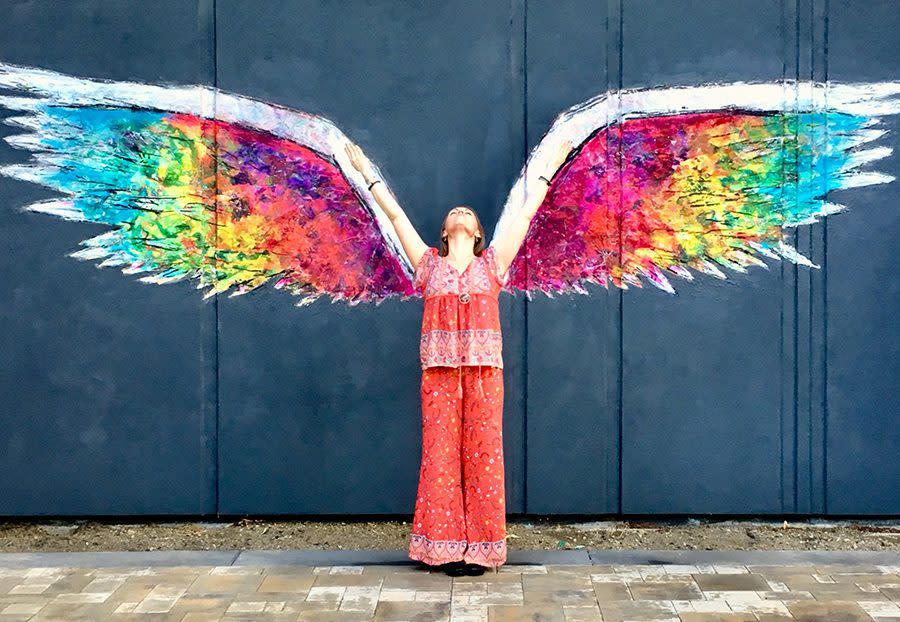
art wings

Forever Marilyn (Downtown Park)

The 26‑foot‑tall Forever Marilyn statue is a Palm Springs showstopper — bold, playful, and instantly recognizable. Set in the downtown park near the Palm Springs Art Museum and the Rowan corridor, she’s surrounded by mountains, palm trees, and open space that make framing your shot effortless.

Visitors love capturing her from every angle:

  • Full‑height portraits with the mountains behind
  • Close‑ups of Marilyn’s iconic pose
  • Wide shots that include the surrounding park and skyline
  • Creative low‑angle compositions for dramatic scale

Best time to shoot: Golden hour.
The soft, warm light highlights Marilyn’s features and creates beautiful shadows in the surrounding park. Evening also brings cooler temps and fewer crowds.
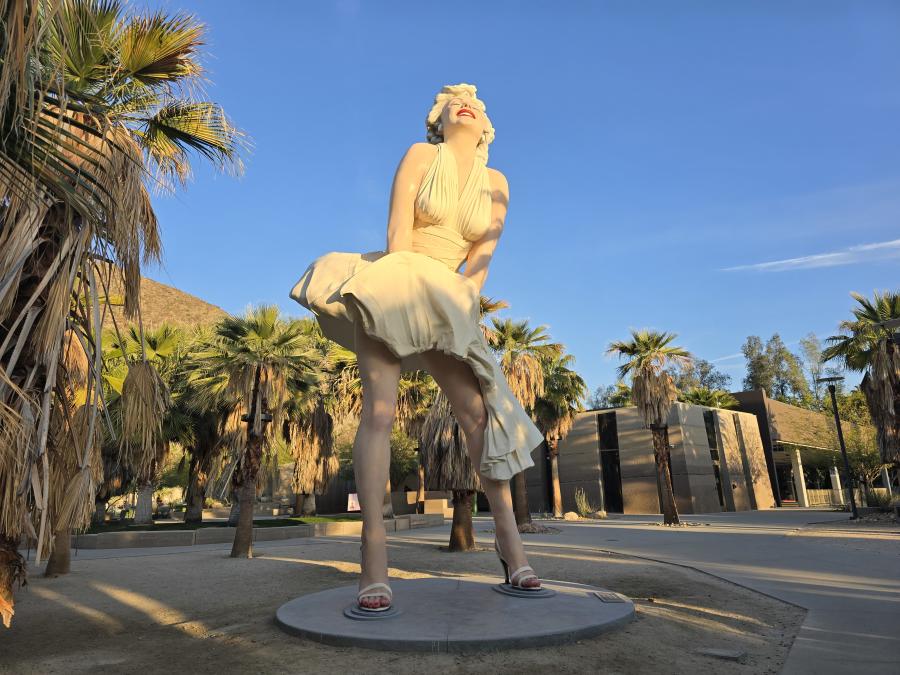
Forever Marilyn Statue in downtown Palm Springs park

Nature That Stuns

Indian Canyons

Indian Canyons offers towering palms, flowing streams, ancient rock formations, and sacred Cahuilla landscapes.

Every trail feels cinematic.

Best time to shoot: Morning.
Palm groves glow beautifully with backlight, and temperatures are cooler for hiking.

Tahquitz Canyon

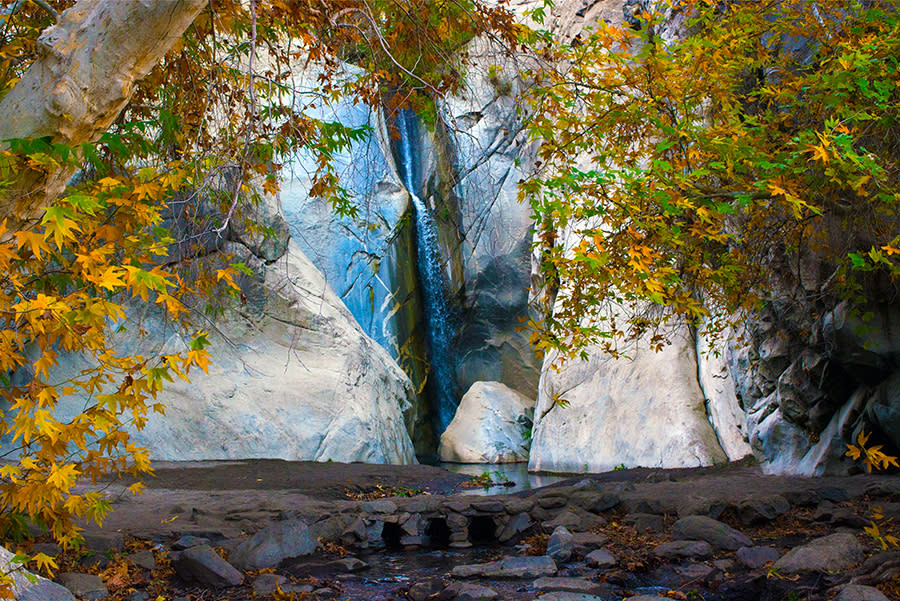
Tahquitz Canyon is home to a 60‑foot seasonal waterfall and dramatic canyon walls.

Best time to shoot: Morning to early afternoon.
The waterfall is best lit when the sun is high enough to reach into the canyon.
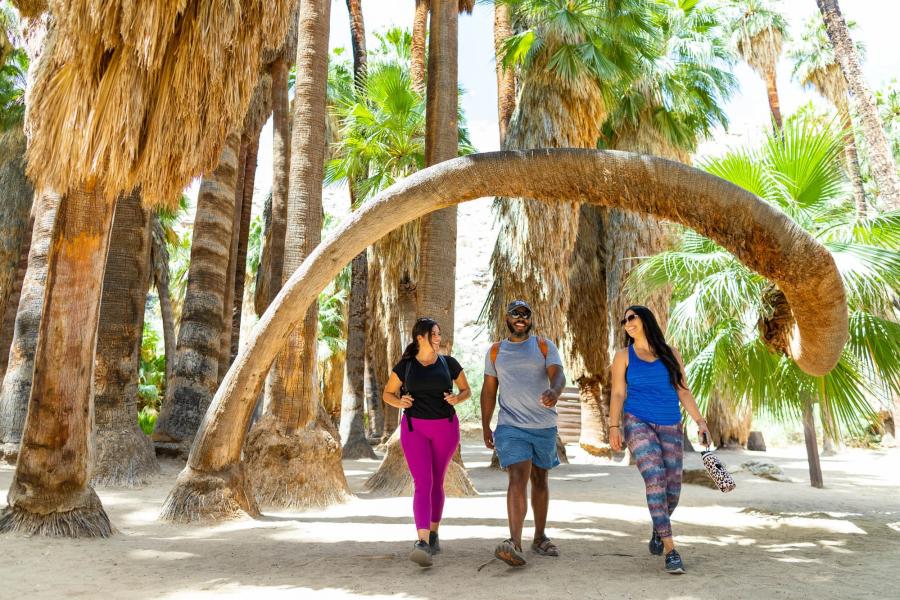
Three people hiking in Indian Canyons


Tahquitz Canyon waterfalls

The Windmills

The iconic turbines north of town are a desert signature.
Whether you join a tour or capture them from designated public areas, the windmills deliver that surreal, cinematic Palm Springs energy.

Perfect for: editorial shots, sunset silhouettes, and dramatic desert backdrops.
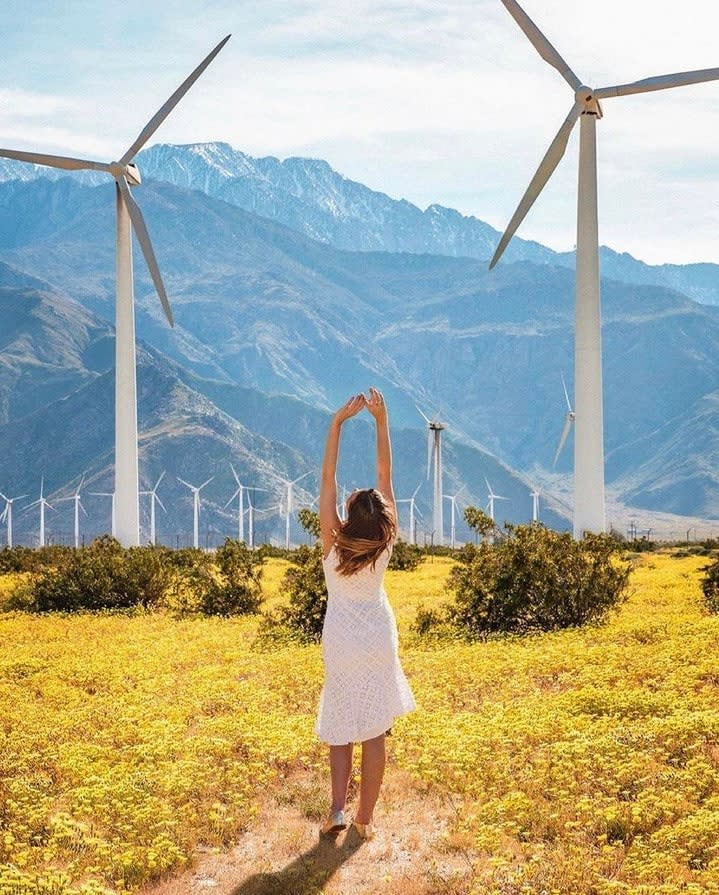
Palm Springs Windmill Tours


windmills credit @asyatravels

Credit @asyatravels

Palm Springs Aerial Tramway

For ultimate elevation, the Aerial Tramway is your ticket! Explore the mighty mountain ridge and discover photo ops at high elevation. Depending on the time of year, you can see snow, waterfalls, and even endangered species like bald eagles and bighorn sheep. Your portfolio will be wild, and your followers will be totes jelz!
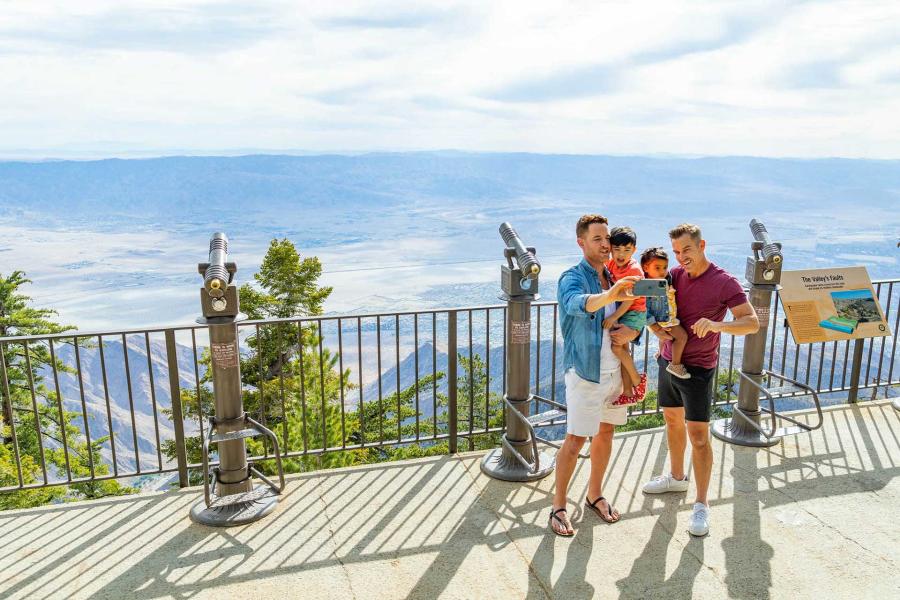
Family at the top of the tramway

Midcentury Legends

Palm Springs is a living museum of midcentury modern architecture.

  • Elvis Presley’s honeymoon hideaway. You’ll be the king (or queen) of Instagram! This is a private residence, so please take your images/video from the street.
  • Kaufmann House — one of the most iconic homes in the world

You'll recognize the Kaufmann house from one of the locations in the movie Don't Worry Darling.

Best time to shoot: Morning.
The circular façade and stonework catch soft light early in the day.
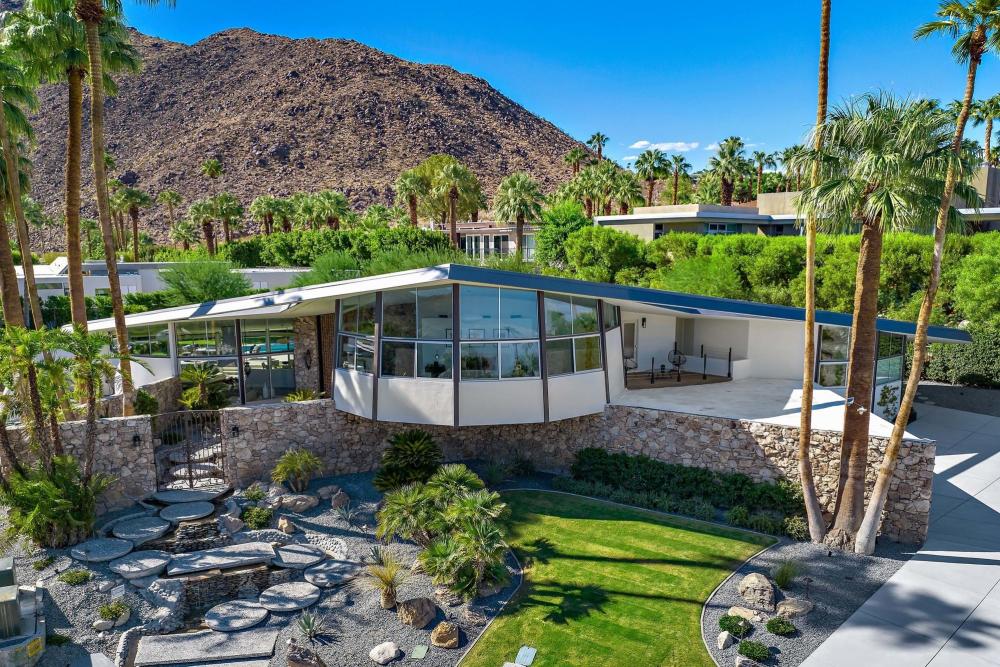
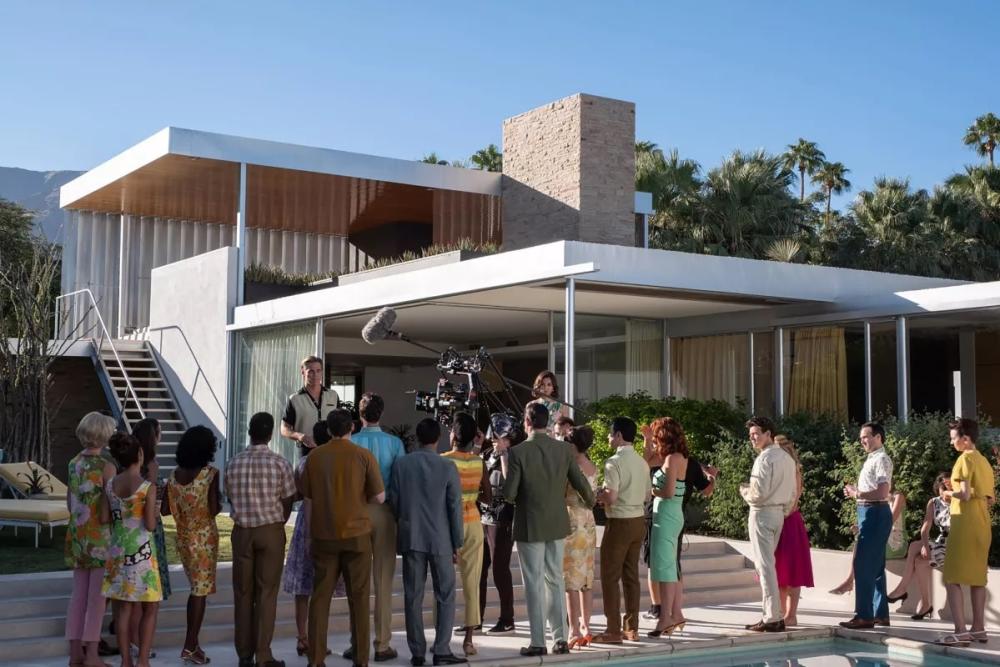
elvis honeymoon hideaway

https://www.distractify.com/p/dont-worry-darling-filming-locations “Don’t Worry Darling” Filmed in Palm Springs Palm Springs filming locations. By Randy Garner Don’t Worry Darling is a new psychological thriller film that takes place in a 1950’s fictional California town called Victory. Official Trailer https://youtu.be/FgmnKsED-jU Why Palm Springs? The location plays a role in telling the story. While the neighborhood you see looks too picturesque to be real, in does, in fact, exist in real life. It’s not a tame and controlled conservative suburban life. Victory is a spectacular place full of opulence. It depicts something of a secret society in America, so it doesn’t represent traditional 1950s America or its values. As such, the production team descended upon Palm Springs, the longtime playground of the Hollywood elite, to create their desert utopia. A land of ever-present sunshine, blue skies and midcentury architecture galore, the area proved the quintessential backdrop for the storyline. The Storyline The Victory Corporation is building a city called Victory. It is meant to be a suburban utopia complete with sprawling greenbelts, a clubhouse, a sparkling pool and even an onsite boutique. Victory residents will want for nothing and have little reason to every leave. It is the one place to stay and be safe. The storyline follows Alice (portrayed by Florence Pugh) and Jack (played by Harry Styles), who are a married couple with a troublesome relationship. They just moved to Victory, a company town created by and paid for by Jack’s new employer, Frank (played by Chris Pine). While Jack and his colleagues go to work on the “Victory Project”, their wives are left to enjoy the beauty and luxury of their community. Here’s a look at some more specific Palm Springs filming locations in Don’t Worry Darling. The Kaufmann House The Kaufmann House was used was for the home of Victory Corporation founder, Frank, portrayed by Chris Pine. The home is fragile and extremely valuable, so much care had to be take to ensure nothing was damaged. This included bubble wrapping portions of the home and having docents in every room. Department store owner Edgar Kaufmann hired architect Richard Neutra to design a desert home for his family. A decade earlier, Frank Lloyd Wright had built Fallingwater for Mr. Kaufmann. But Kaufmann, having seen Taliesin West, thought that Wright didn’t understand desert design and chose Neutra instead. The home turned out so well, that when Wright saw it, he admitted to that is was beautiful (uncharacteristic of him). The building remains the most famous in Palm Springs in terms of international recognition. The flat roof, steel frame, and glass walls embody one prominent version of Modernism by using sharp, clean, lines and contrasting them to the rugged slopes of Mt. San Jacinto as a backdrop. When photographed by Julius Shulman, the Kaufmann House became an iconic image of modern architecture. The north wing is the guest’s quarters, separated from the rest of the house. The secluded west wing is the service wing. It would be purchased by Joseph and Nelda Linsk. She was the glamorous woman wearing yellow depicted in legendary photographer Slim Aaron’s iconic photograph highlighting the good life in Palm Springs, dubbed “Poolside Gossip.” In 1968, Eugene and Francis Klein, owners of the San Diego Chargers, purchased it. Then in 1973, Barry Manilow purchased the property and owned it until 1993. Beth and Brent Harris become the new owners and were eager to restore the property.They found a home once originally open and light-filled now dense and dark thanks to 2,200 square feet of additions that turned courtyards into interior spaces. The iconic upstairs room visible from the street, an open-air deck that really is one of the house's main features, had its views of mountains and palm trees blocked by air-conditioning compressors. Linsk addition, designed by William Cody, was compatible and relatively seamless, but removed the glass corridor to the master bedroom and drastically reduced the amount of light to the interior. Modernist furnishings selected by Neutra were replaced with those chosen by prominent Palm Springs interior designer Arthur Elrod. The Harris’s dismantled the crumbling fireplaces and numbering each stone for reassembly. To repair gashes in the walls of Utah sandstone, the firm convinced the original quarry in Utah to return to a long-closed portion of its site so the color and texture of the new stone would match that of the old. To find a source for mica, a crystalline sand which workers applied to the house's exterior to provide a subtle, starry-night glow, the architects had to work with the U.S. Bureau of Mines. Can I Visit? The Kaufmann House is privately owned and not available for tours or a rental. However, you can take a peek of the home by driving by 470 West Vista Chino. Canyon View Estates This is where Alice and Jack live in the film. Their residence was on a circular cul-de-sac with their neighbors’ houses facing inwards on the perimeter. For filming at this location, every driveway had to be cleared for blocks and blocks of non-period elements. This affected the daily routine for hundreds of people and property owners. Canyon View Estates was designed by Dan Palmer and William Krisel. These local architects also designed Ocotillo Lodge, Las Palmas Estates, Kings Point and Racquet Club Estates. The “House of Tomorrow” was designed by Krisel for Robert Alexander and his wife Helen. They made it their personal residence and lived in it until their premature death in a plane crash in 1965. The house later gained fame as the honeymoon home of Elvis and Priscilla Presley. The design of these quaint one-story duplex-style condominiums offered floor-to-ceiling windows, and characteristic Palm Springs geometric stonework. It included post-and-beam construction, open floor plans in which the living room, dining room and kitchen flow together. Built in six stages in the 1960s by developer Roy Fey, it has a utopian neighborhood feel, with a shared pool, spa and green space. It includes 180 units with attached carports. Can I Visit? Properties in Canyon View Estates are privately owned and few are available as a vacation rental. However, the neighborhood is not gated, so grab a cruiser bike and explore. Palm Springs City Hall The Palm Springs City Hall was shown briefly in the film. It is centrally located and just steps away from the Palm Springs International Airport, another beautiful midcentury modern style building. Palm Springs City Hall was one of Clark, Frey and Chambers’ most important public buildings, built between 1952 and 1957. Although a collaborative effort with the local architectural firm of Williams and Williams, the building’s initial phase was primarily the design work of John Porter Clark and Albert Frey. An unusual detail of the council chamber is its corner treatment consisting of projecting concrete blocks cut at a diagonal at every other paired row, which allows the blocks to cast light and shadow. Albert Frey was a leading early architect to Palm Springs and left a large design footprint on the city. His own residence, Frey House II, is also an architecturally significant building as was willed to the Palm Springs Art Museum upon his death. It is perched above Palm Springs with sweeping views and is available for tours through the museum. Can I Visit? Palm Springs City Hall is a popular spot on Palm Springs’ midcentury modern design tours, but visitors are also welcome to walk around and take photos. It is located at 3200 E. Tahquitz Canyon Way. Palm Springs Visitor Center Look for the Palm Springs Visitor Center, which was also shown briefly in the film. Like City Hall, it was also designed by architect Albert Frey. In 1965, it began as an Esso gas station situated in North Palm Springs. With a swooping and wing-shaped roof, it immediately captures the attention of visitors as they arrive in the city. In the 1990s, the building was converted into an art gallery, and subsequently taken over by the Palm Springs Bureau of Tourism.

Respect & Responsibility

🌿 A gentle, friendly reminder that aligns with your cultural stewardship pillar.

Respect the Neighborhoods - Many iconic doors and midcentury homes are private residences. Please stay on public sidewalks, keep noise to a minimum, and snap quickly.

Honor Tribal Lands - Indian Canyons and Tahquitz Canyon are part of the Agua Caliente Band of Cahuilla Indians' ancestral homeland. Please follow posted guidelines, stay on designated trails, and treat these sacred places with care.

Leave No Trace - Pack out what you bring in, stay hydrated, and help preserve the beauty that makes Palm Springs so special.

Tag us: #VisitPalmSprings

Explore More: