How Historic Buildings Shape the City’s Identity—and How to Experience Them Today
Palm Springs is often celebrated for its iconic homes, but its commercial architecture tells an equally powerful story—one of innovation, adaptation, and preservation in the heart of the desert.
Along Palm Canyon Drive and beyond, banks, theaters, department stores, and civic buildings have been carefully maintained and reimagined. These are not frozen relics—they are active, working spaces that continue to define the city’s character.
In Palm Springs, preservation isn’t just about looking back. It’s about ensuring that the buildings shaping daily life—where people shop, gather, and connect—continue to serve future generations.
Preservation as Sustainability in Action
Long before sustainability became a global movement, Palm Springs was already practicing it—by preserving what was built.
Reusing and restoring historic structures:
- Reduces construction waste
- Conserves raw materials
- Minimizes energy consumption
- Retains craftsmanship that cannot be replicated
While modern “green” architecture often focuses on new builds, preservation offers something even more powerful: the greenest building is the one that already exists.
Today, historic homes and buildings are being thoughtfully upgraded with:
- Energy-efficient glazing for iconic glass walls
- Improved insulation and climate systems
- Solar integration that respects the original design
This allows Palm Springs to honor its architectural legacy while adapting to the realities of desert living.
A Walk Through Preserved Downtown Palm Springs
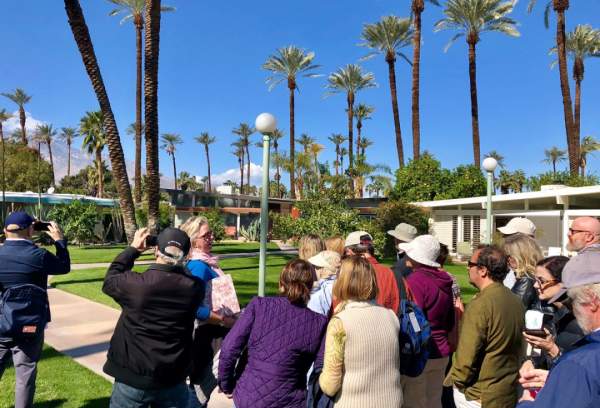
The best way to experience Palm Springs’ commercial architecture is on foot. Within a compact and walkable area, you’ll encounter some of the most important preserved structures in the city—each representing a different facet of its development.
Start at the Palm Springs Visitor Center
The Gateway to Modernism
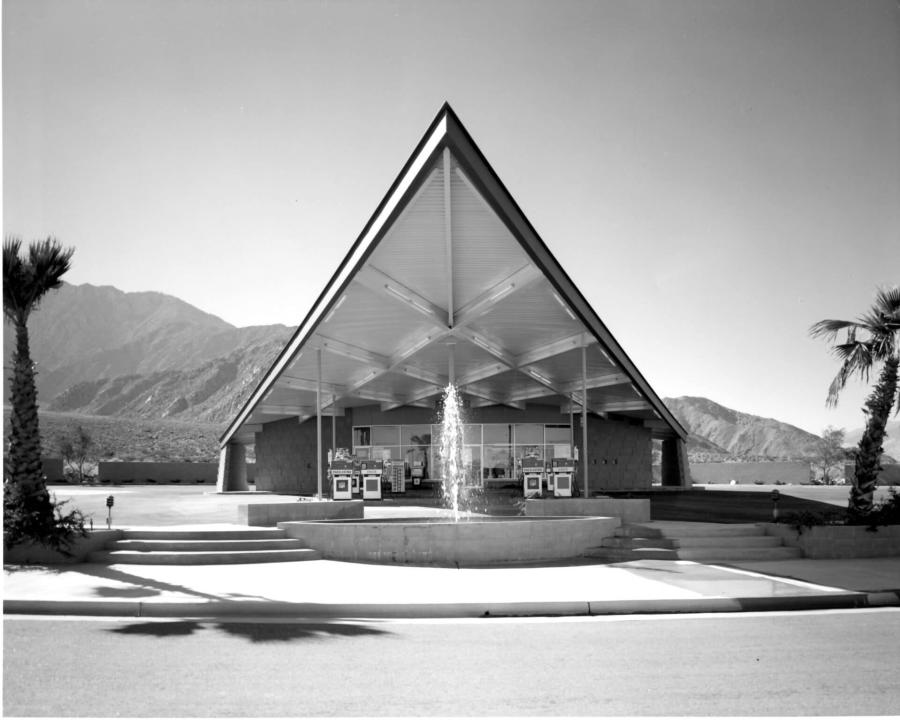
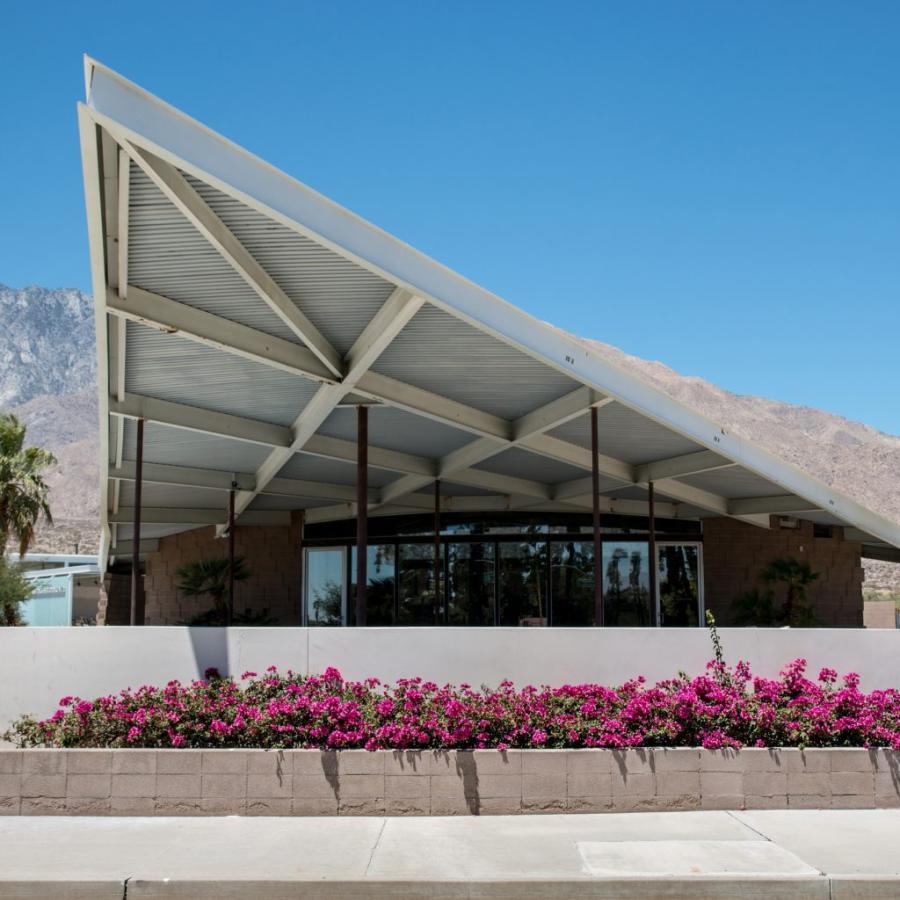
Originally built in 1965 as a gas station, the Palm Springs Visitor Center, a dramatic structure by Albert Frey, features a soaring, wing-like roof that has become one of the most recognizable architectural forms in Palm Springs.
Why it matters: A landmark example of adaptive reuse, transforming a roadside structure into a cultural and informational hub. Saved from potential demolition in the 1990s, the building was restored and repurposed as the city’s official Visitor Center, one of Palm Springs’ most celebrated preservation success stories.
Tip: Start here to get oriented before heading downtown. They also have gifts and maps.
Kaptur Plaza
Everyday Architecture, Preserved
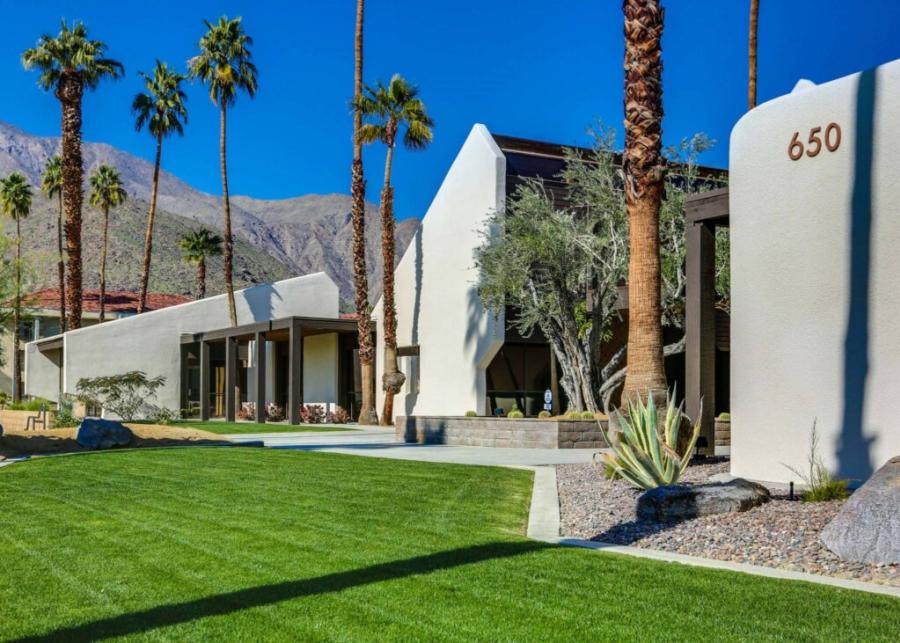
Designed by Hugh Kaptur, this midcentury commercial center shows how even neighborhood retail spaces can be preserved with care and community support.
Why it matters: Demonstrates that preservation extends beyond iconic landmarks to the fabric of daily life.
Stop in at:
J.W. Robinson Department Store
Retail Modernism at Its Peak (1958)
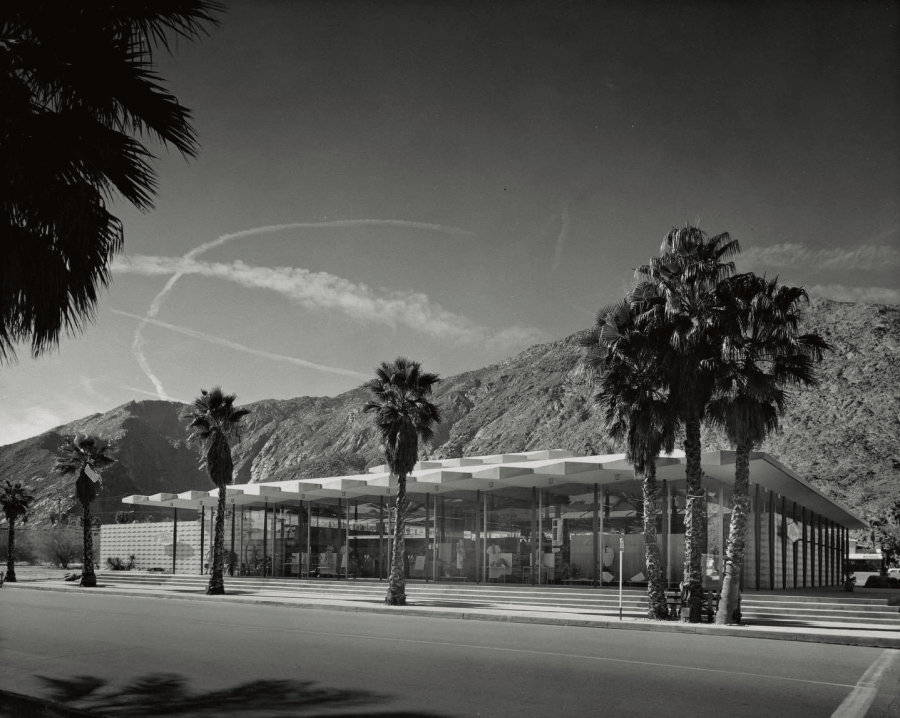
This former department store reflects the rise of Palm Springs as a luxury shopping destination in the midcentury era, with clean lines and an emphasis on openness and accessibility.
Why it matters: Its preservation demonstrates how midcentury commercial architecture can continue to evolve, maintaining its original design intent while adapting to new tenants and retail trends over time.
Oasis Commercial Building
A Downtown Anchor Since 1952
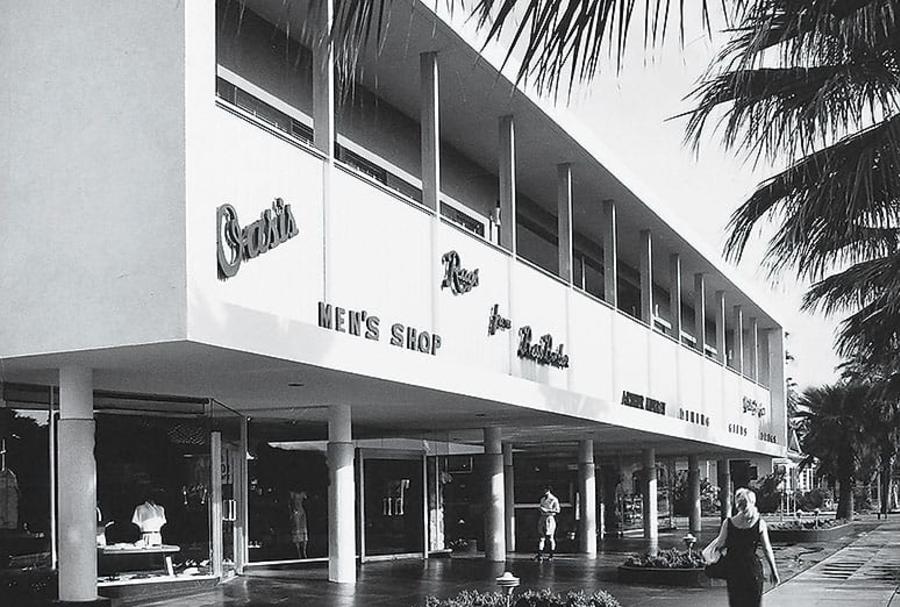
One of the earlier commercial developments in downtown Palm Springs, the Oasis complex helped establish the city’s core as a destination for shopping and social life.
Why it matters: Represents the transition from a small desert town to a structured downtown environment. Its continued use reflects Palm Springs’ commitment to preserving the commercial backbone of its historic downtown rather than replacing it.
Santa Fe Federal Savings & Loan Building
Finance Meets Modern Design (1960)
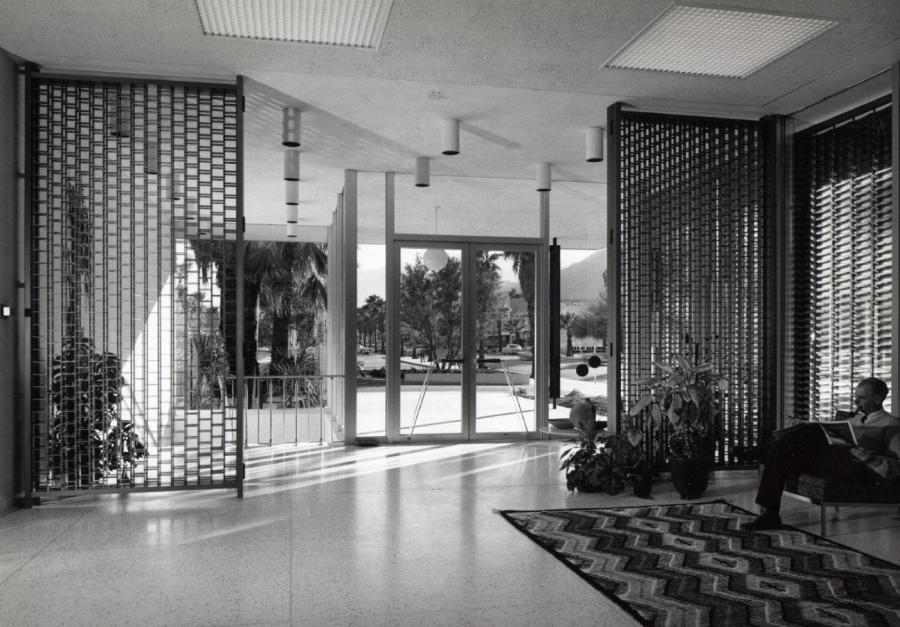
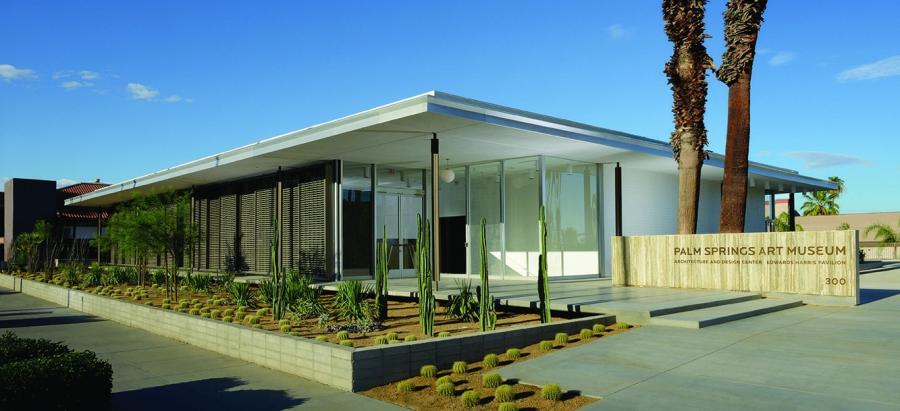
Now home to the Palm Springs Art Museum Architecture and Design Center, this building exemplifies how financial institutions embraced modernist design to project transparency and progress.
Why it matters: A standout example of adaptive reuse—preserving the structure while transforming its purpose into a cultural space.
City National Bank Building
Modernism and the Business of the Desert
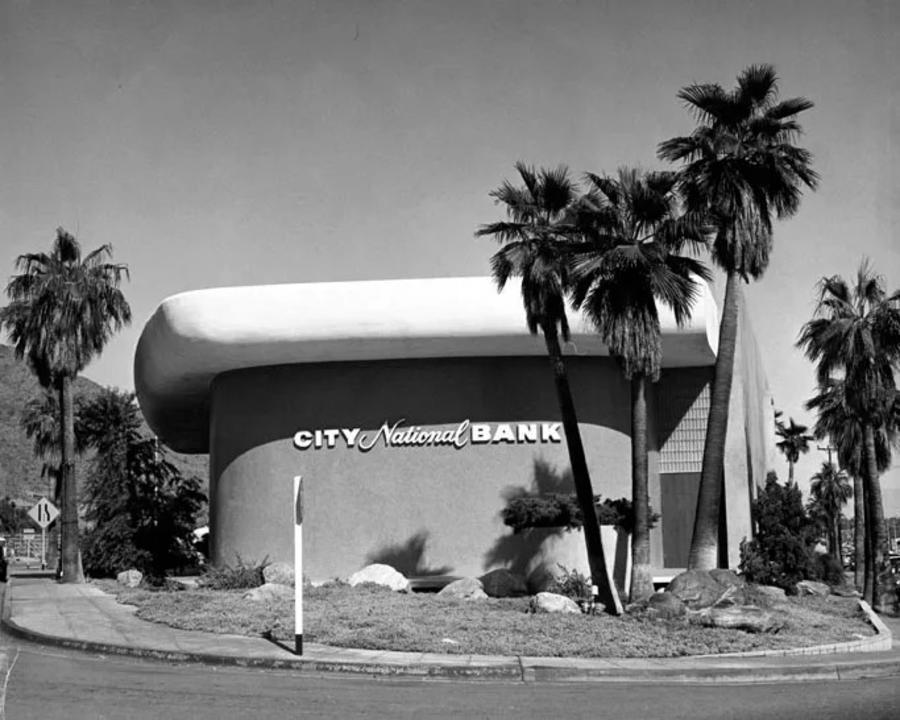
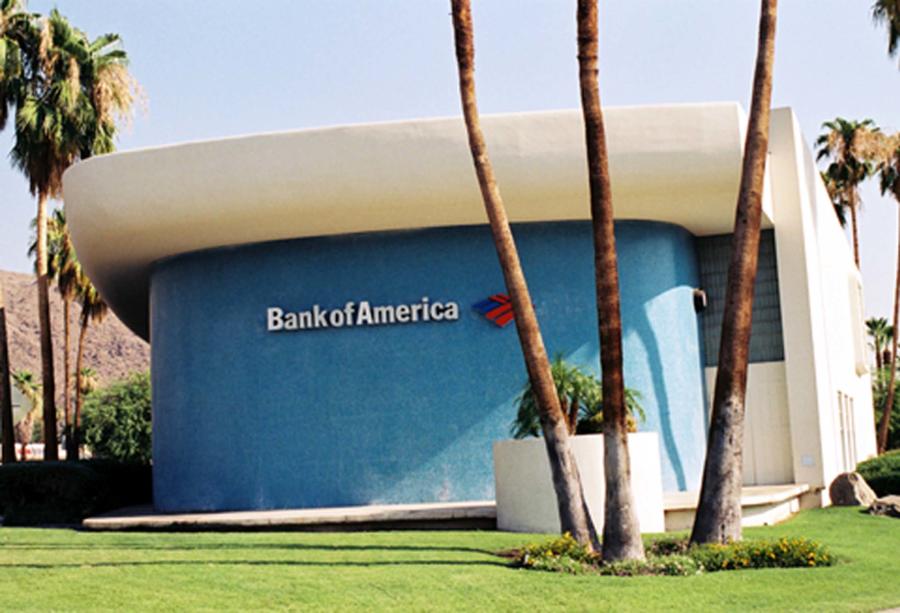
Designed by Victor Gruen, this building reflects the clean, confident lines of midcentury corporate architecture. It is now Bank of America and has gone through a complete renovation.
Why it matters: Its preservation highlights how financial institutions helped define Palm Springs’ modern identity—and how these structures continue to serve their original purpose decades later.
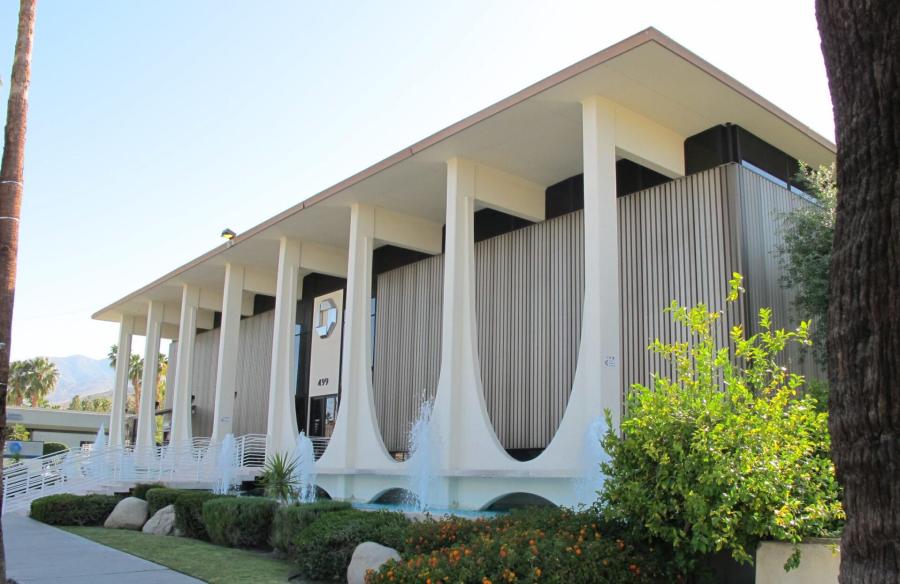
Coachella Valley Savings & Loan #2
A Financial Landmark of the 1960s (1961)
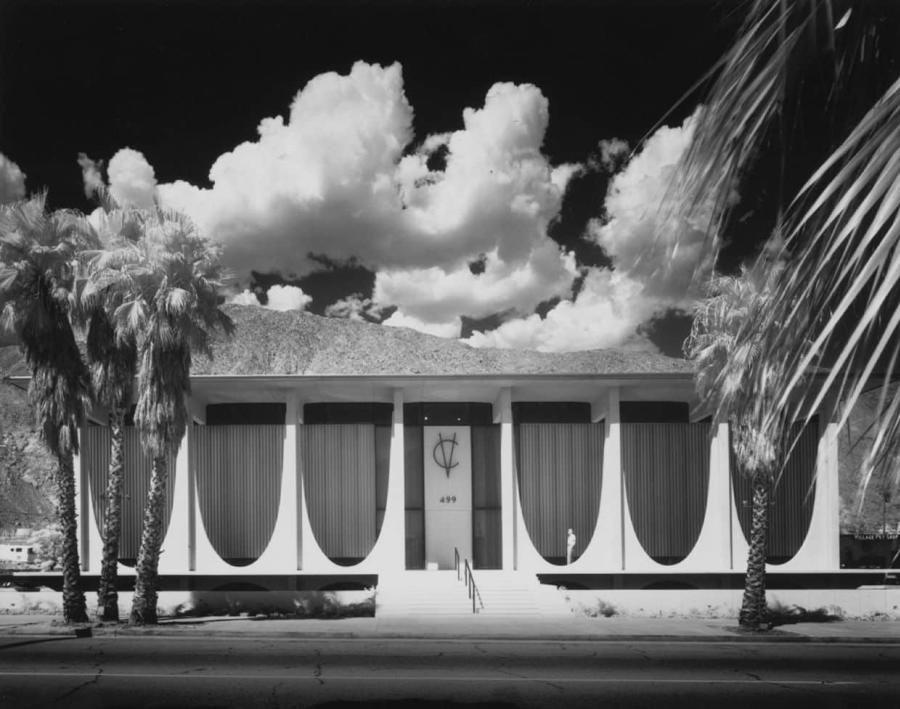
With its strong geometric lines and emphasis on form, this building represents the era when banks became architectural statements. Now Chase Bank.
Why it matters: A preserved example of how corporate architecture contributed to the city’s modernist identity.
Palm Springs Plaza Theatre
Entertainment, Restored
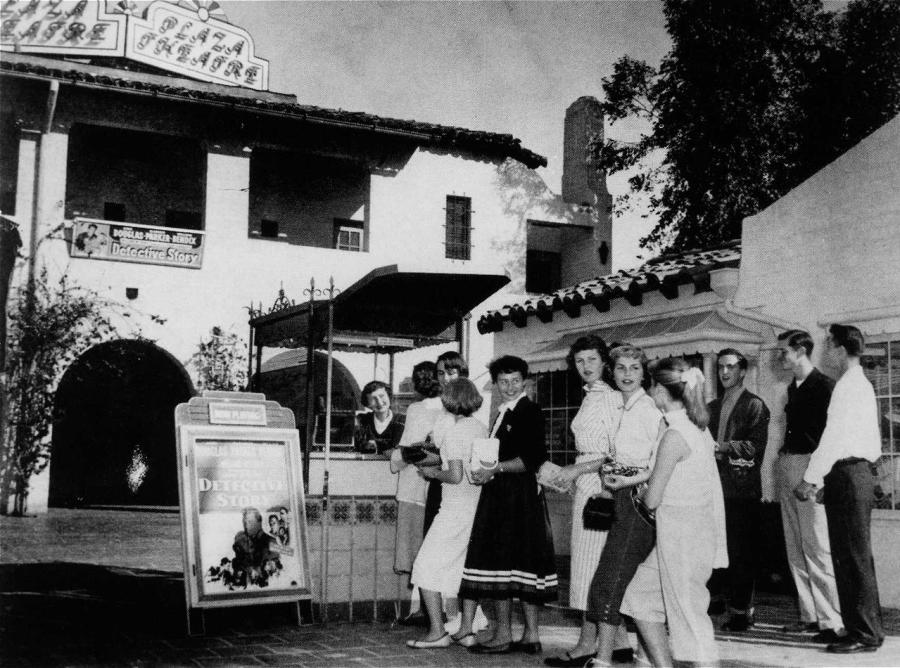
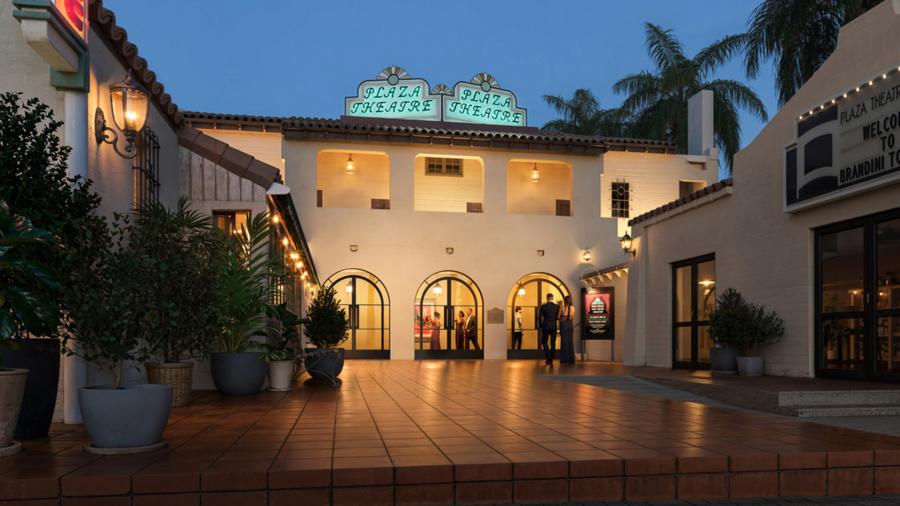
Opened in 1936, this historic Plaza Theatre has hosted premieres and performances by legends like Frank Sinatra. After decades of decline, the theater is undergoing a major, multi-million-dollar restoration led by the City of Palm Springs and community partners, carefully adhering to historic preservation standards to return it to its original 1936 grandeur.
Why it matters: A major restoration project that underscores the city’s commitment to preserving cultural landmarks—not just commercial ones.
Preservation in Practice
Palm Springs’ approach to preservation goes beyond saving buildings; it’s about keeping them alive and relevant. Across the city, you’ll find:
- Adaptive reuse – transforming banks, gas stations, and retail spaces into cultural destinations
- Community advocacy – grassroots efforts that have saved iconic structures from demolition
- Historic designations – protections that ensure architectural integrity is maintained
- Continued use – many buildings still serve their original purpose decades later
Together, these efforts create a living architectural landscape—one you can walk through, experience, and be inspired by.
A Practical Half-Day Walking Experience
You don’t need a full itinerary to appreciate these sites—just a few hours and comfortable shoes.
Start at the Palm Springs Visitor Center
Begin at the Palm Springs Visitor Center (2901 N Palm Canyon Drive), located at the northern entrance to the city.
Head into Downtown: A 5-minute drive south via North Palm Canyon Drive. Parking is available throughout downtown, including garages and street parking near Palm Canyon Drive.
Walking the Route: Once downtown, most featured buildings are within a 5–10 minute walk of each other, making it easy to explore at your own pace.
Move south along Palm Canyon Drive, stopping at:
- Kaptur Plaza
- J.W. Robinson Department Store
- Oasis Commercial Building
- Palm Springs Plaza Theatre
- Santa Fe Federal Savings & Loan Building (Palm Springs Art Museum Architecture and Design Center)
- Coachella Valley Savings & Loan #2 Building (Chase Bank)
- City National Bank Building (Bank of America)
Take your time—this is where Palm Springs’ architectural identity is most concentrated.
Beyond the Walk: Preservation in Context
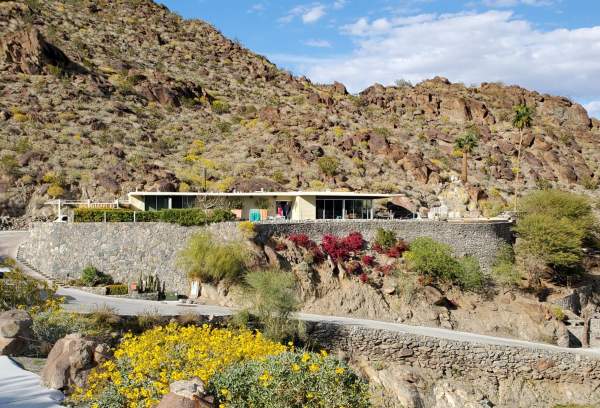
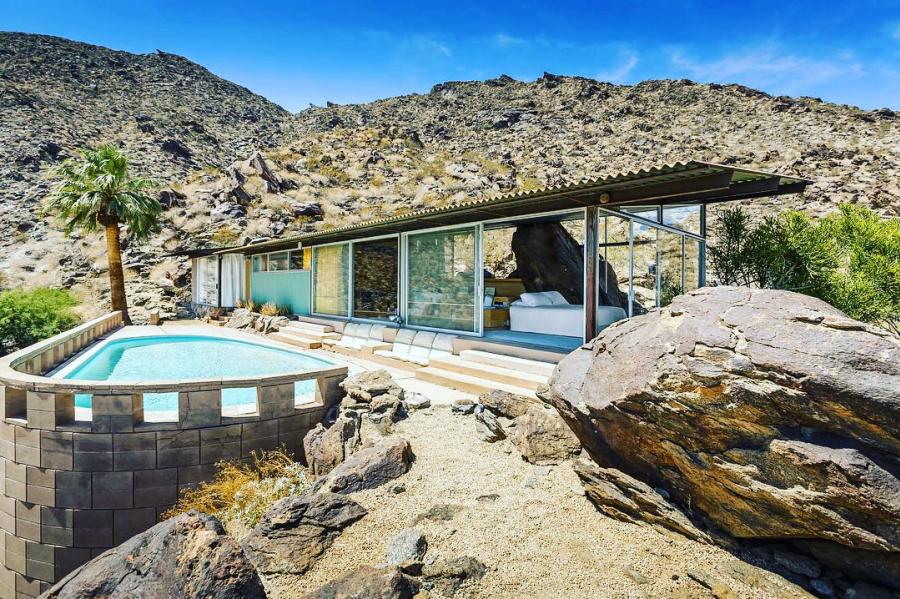
While this guide focuses on commercial buildings, Palm Springs’ preservation story extends into residential architecture as well. Landmarks like Frey House II—though not regularly open to the public—continue to influence how architects think about design, sustainability, and the relationship between structure and landscape.
👉 Explore the Iconic Frey House II: A Must-See Architectural Tour
A City That Lives in Its Architecture
What makes Palm Springs unique is not just what it has preserved—but how it uses it.
Banks still operate in modernist buildings. Shops occupy restored storefronts. Cultural institutions thrive in reimagined spaces. This is not a city of museums—it is a city where history is part of everyday life.
And that may be the most powerful form of preservation of all.
Palm Springs Architectural Preservation Organizations
The Palm Springs Preservation Foundation is a nonprofit organization dedicated to educating and promoting public awareness of the importance of preserving the historical resources and architecture of Palm Springs and the Coachella Valley area.
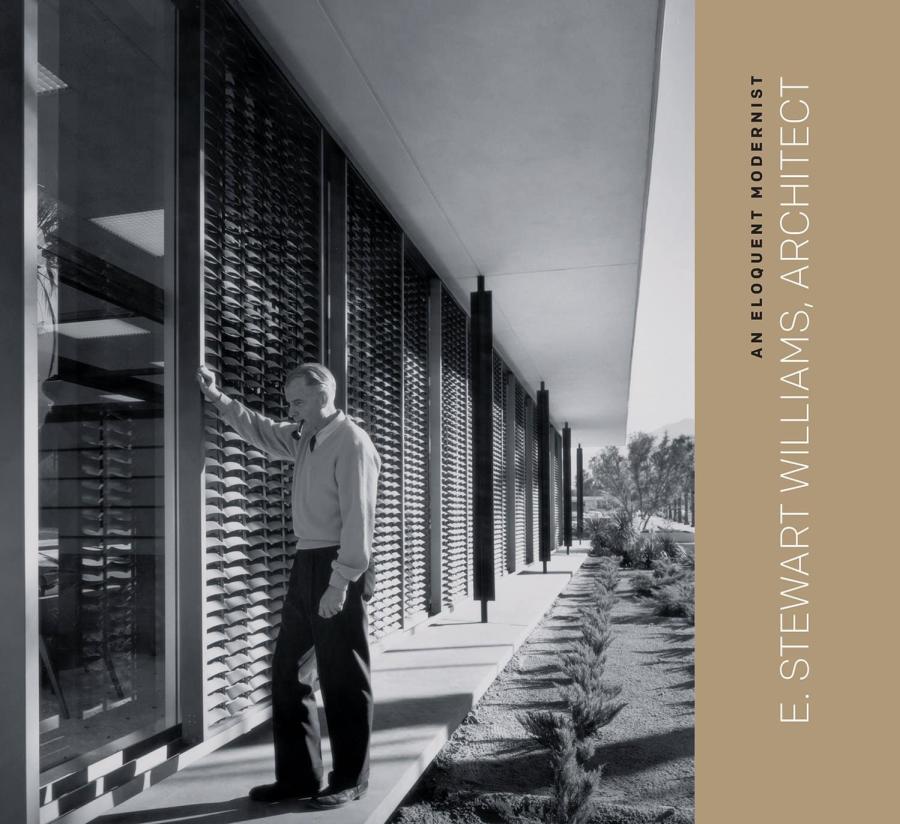
The foundation is known for publishing tribute journals dedicated to various desert architects and builders of the area, such as William F. Cody, E. Stewart Williams, and the Alexander Construction Company. The tribute journals also celebrate Spanish colonial revival and Polynesian architecture, popular design styles featured in Palm Springs.
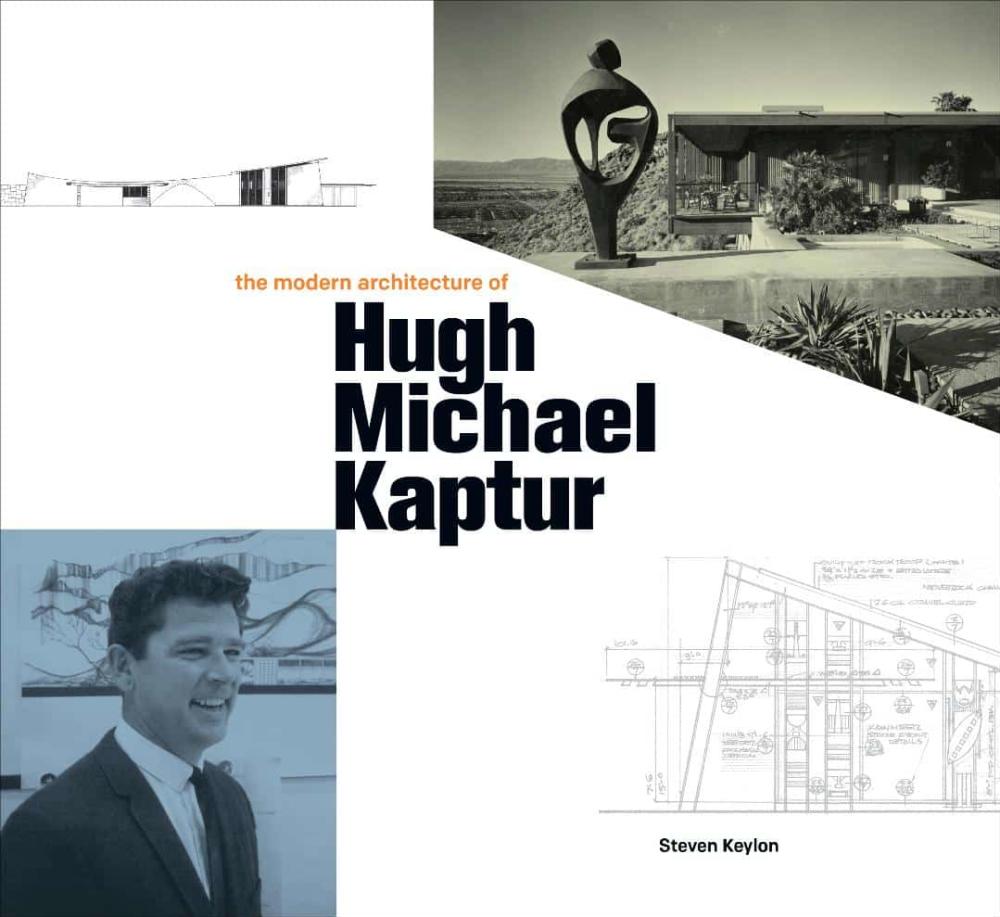
Several organizations are dedicated to architectural preservation in Palm Springs:
-
Palm Springs Preservation Foundation: Focuses on education, public awareness, and publishing tribute journals about significant architects and historic styles.
-
Historic Site Preservation Board (HSPB): Recommends potential historic sites and districts to the City Council while fostering public awareness and appreciation of the City's rich cultural and architectural heritage. Municipal codes made by the Palm Springs City Council preserve and protect areas and specific buildings that portray Palm Springs’ cultural, social, economic, political, and architectural history.
-
Palm Springs Modernism Committee: Dedicated to the appreciation and preservation of modern architecture and design in the desert through education, advocacy, heritage tourism promotion, and celebration of preservation and adaptive reuse successes.
Committee members also conduct annual modern home architectural tours and assist property owners in restoring and upgrading historic buildings.
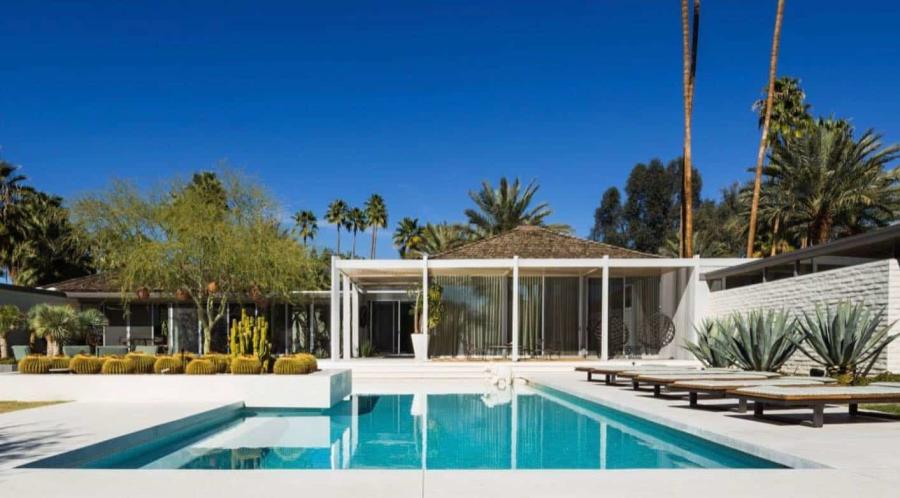
William Cody’s masterpiece, the Abernathy Residence, a Class 1 historic site built in 1962
Bringing Preservation to Life
Together, these sites tell a larger story: Palm Springs doesn’t just protect its architecture—it actively lives in it.
From private homes to public landmarks, from glamorous estates to neighborhood plazas, preservation here is not frozen in time. It’s dynamic, evolving, and deeply tied to the city’s identity.
So as you explore Palm Springs, look a little closer. That hotel, that storefront, that tucked-away residence—it may not just be beautiful. It may be a carefully preserved piece of history, still shaping the city today.
Why It Matters—Now More Than Ever
Palm Springs offers a rare example of a city that understands its identity and actively protects it.
Preservation here is about more than architecture:
- It safeguards cultural memory
- It supports sustainable growth
- It strengthens tourism and the local economy
- It inspires future generations of designers
In a world where cities often erase their past to build their future, Palm Springs proves that a different path is possible.
Explore More: