

Exploring Post-War Motor Lodges That Shaped Palm Springs
In the years immediately following World War II, Palm Springs transformed almost overnight.
Before the war, the desert town was known primarily for its grand resorts, the legendary Desert Inn and the El Mirador, catering to Hollywood's elite. But after 1945, a new kind of traveler began arriving. Veterans returned home, middle-class families took to the highways, and Southern California's booming population discovered the freedom of the automobile vacation.
Palm Springs responded with a new kind of hospitality: the motor lodge.
Low-slung, stylish, and often intimate in scale, these midcentury boutique hotels reflected the optimism of the postwar era. Built mostly between the late 1940s and early 1950s, they blended modern architecture, pool-centered layouts, and playful themes, from desert modernism to Polynesian fantasy. Many of today's beloved boutique properties began life as these modest roadside resorts.
Today, these historic boutique hotels remain part of the city's charm, living reminders of a time when the journey down Palm Canyon Drive ended in a colorful desert oasis.
The Motor Lodge Revolution
The postwar travel boom reshaped hospitality across America, and Palm Springs was perfectly positioned to benefit.
As automobile ownership surged and new highways opened the desert to weekend travelers, small hotel developers realized that visitors didn't necessarily want large resorts; they wanted privacy, sunshine, and a pool.
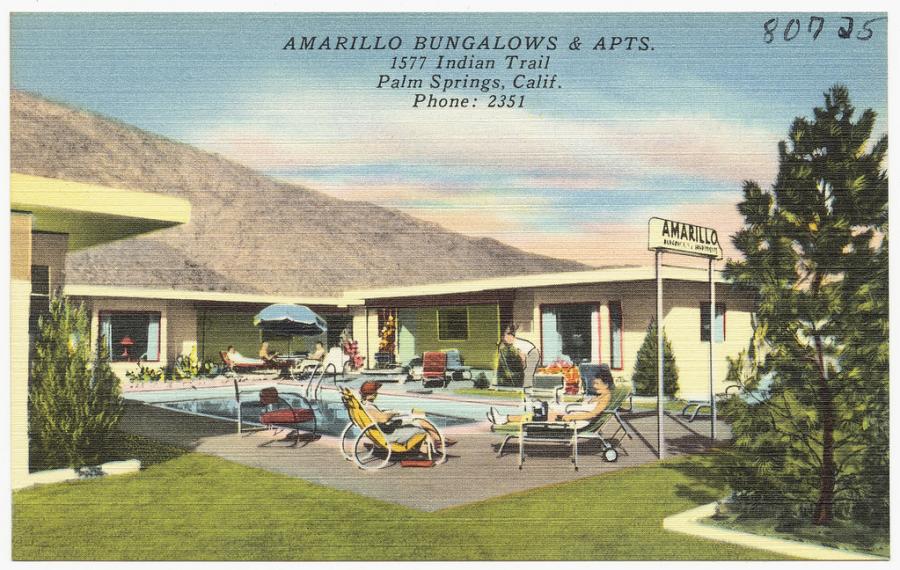
The solution was the motor lodge: a hotel designed around the automobile. Parking is just steps from the guest room. Buildings were typically centered on a swimming pool where guests gathered during the day, and cocktails were served at night.
These properties were rarely large, creating the relaxed, social atmosphere that still defines Palm Springs boutique hotels today.
Architecturally, they embraced the emerging midcentury modern style, flat roofs, breezeways, colorful screens, and a strong connection between indoor rooms and outdoor desert landscapes, for which Palm Springs is now so famous.
The Preservation Movement That Saved Palm Springs' Small Hotels
By the 1970s and 1980s, many of Palm Springs' post-war motor lodges had begun to show their age. What had once been fashionable roadside retreats were increasingly viewed as outdated motels. Across much of California, similar properties were demolished to make way for larger resorts, condominiums, or chain hotels.
Palm Springs nearly followed the same path.
But in the late twentieth century, a growing appreciation for midcentury modern architecture began to shift public opinion. Architects, historians, and preservationists recognized that the modest motor lodges scattered throughout the city represented something rare: an intact landscape of midcentury hospitality design.
Unlike larger resorts that had been repeatedly rebuilt or expanded, many of the smaller hotels remained remarkably authentic. Their courtyard layouts, breezeways, and pool-centered social spaces still reflected the design ideas of the late 1940s and 1950s.
This realization sparked a preservation movement that gradually reshaped how Palm Springs viewed its architectural past.
One of the most influential organizations in this effort was the Palm Springs Modern Committee, founded in 1999 to promote awareness of the city's midcentury design heritage. The group helped educate residents and visitors about the significance of modernist buildings, including the many small hotels that help define the city.
At the same time, the Palm Springs Preservation Foundation worked to document historic structures and advocate for their protection. Together with city leaders and property owners, these organizations helped shift Palm Springs from a place that once saw midcentury buildings as outdated to one that celebrated them as cultural treasures.
Events like Modernism Week, which began in 2006, further elevated the city's reputation as a global center for midcentury architecture. Visitors began traveling to Palm Springs specifically to experience its preserved neighborhoods, hotels, and resorts.
This renewed interest created a powerful incentive for owners to restore rather than replace their historic properties.
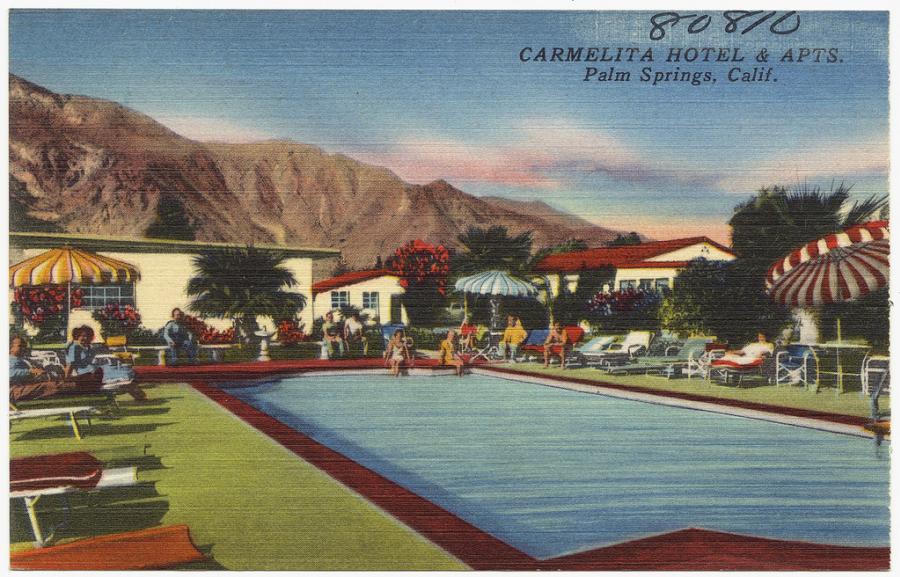
Across the city, aging motels were carefully renovated and reborn as boutique hotels. Designers embraced vintage elements, breeze-block walls, butterfly rooflines, kidney-shaped pools, and period-inspired furnishings, while adding modern comforts expected of today's travelers.
The result is one of the most remarkable hospitality landscapes in the United States.
While many American cities lost their midcentury roadside hotels to redevelopment, Palm Springs preserved dozens of them. Today, visitors can still stay in intimate properties that closely resemble the motor lodges built during the desert's post-war tourism boom.
These hotels are more than nostalgic accommodations. They are living artifacts of midcentury travel culture, places where architecture, leisure, and the romance of the open road once came together in the California desert.
And thanks to the preservation movement, that experience continues today.
A Collection of Post-War Boutique Motor Lodges in Palm Springs
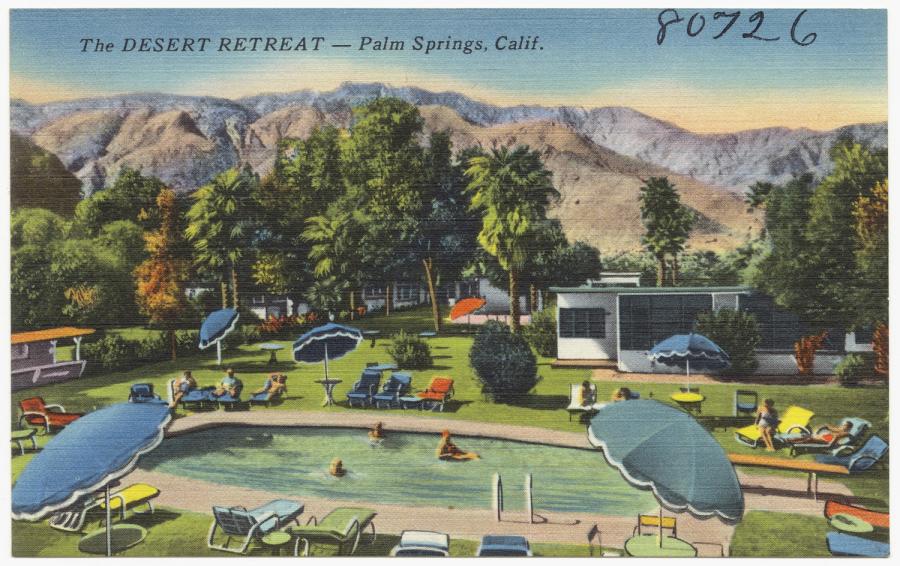
Between roughly 1946 and the early 1960s, dozens of small hotels appeared across Palm Springs. Most had fewer than 50 rooms, and many had far fewer. Built by local entrepreneurs, architects, and investors hoping to capitalize on the booming desert tourism market, these properties formed the backbone of the city's hospitality industry.
Many of these properties survive today, beautifully restored and reimagined as boutique hotels.
Below is a selection of notable small hotels and inns, with some of their histories, that trace their roots to the post-World War II motor lodge era.
Del Marcos Hotel
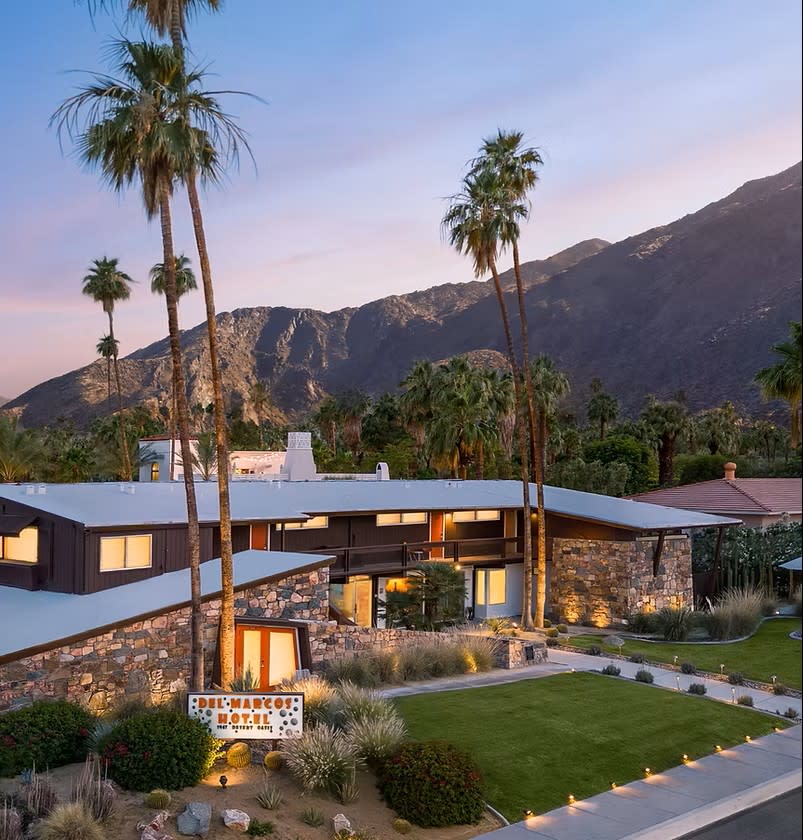
One of the most architecturally significant small hotels in Palm Springs is the Del Marcos Hotel.
Designed in 1947 by noted modernist architect William F. Cody, the property is widely considered one of the earliest examples of desert modernism applied to hospitality design. The hotel's clean lines, angular roof forms, and integration with the surrounding landscape helped define the emerging Palm Springs modern style.
With only 17 rooms arranged around an intimate courtyard, the hotel demonstrates how architectural experimentation flourished even within modest boutique properties.
Enjoy a continental breakfast and complimentary bikes.
Desert Hills
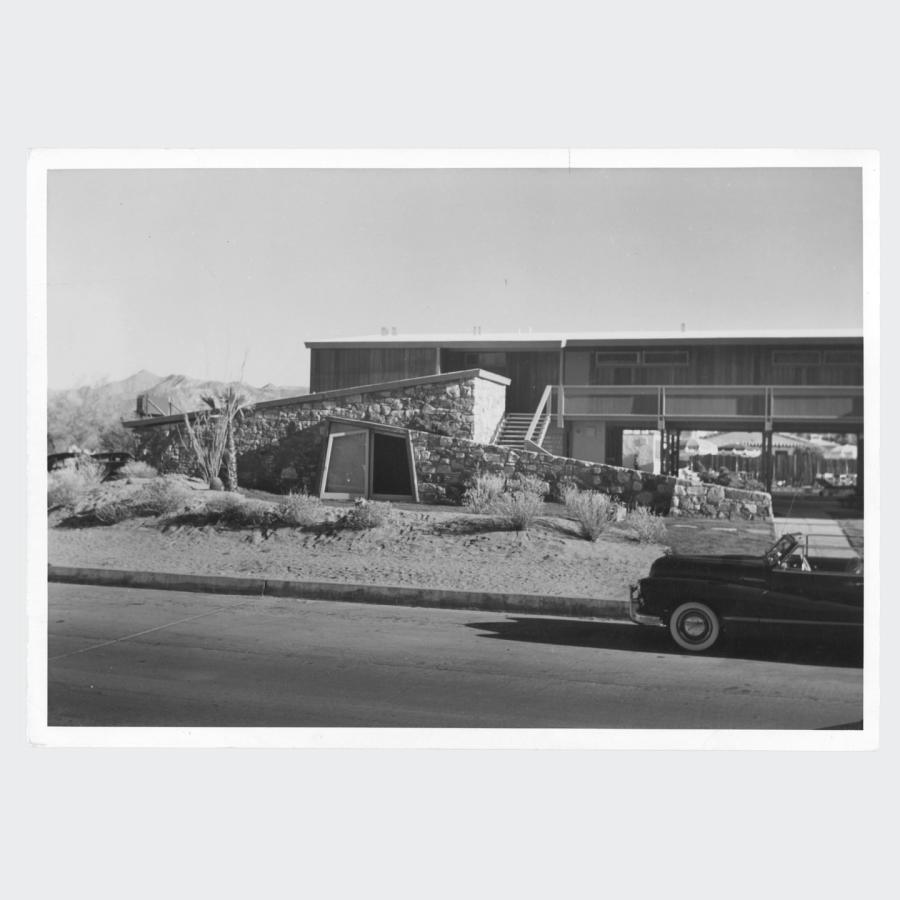
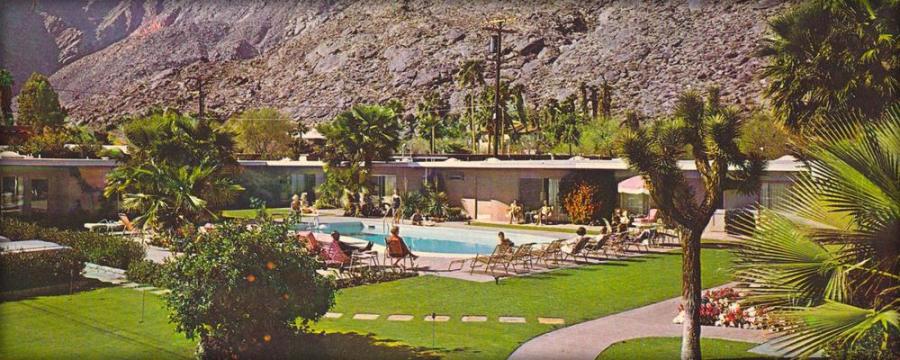
Designed in 1956 by Herbert W. Burns, it was unveiled as a mountainside hotel in the Historic Tennis neighborhood. Originally constructed of 9 rooms, the hotel expanded to 14 rooms in the mid-seventies. Hotels of this era were originally called Apartment Hotels for their kitchenettes and generous living spaces that accommodated long-term stays.
Today, the vintage kitchenette rooms offer a unique experience, along with a well-equipped kitchenette. While many features have been updated, the original 1956 tile and accents in the bathrooms remain in excellent condition.
Desert Riviera Hotel
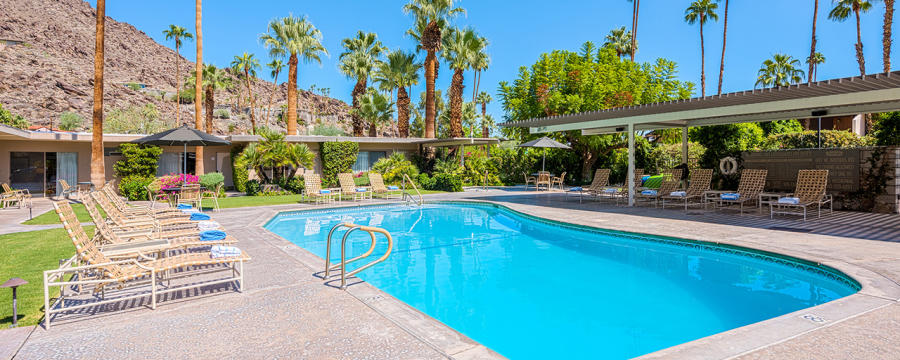
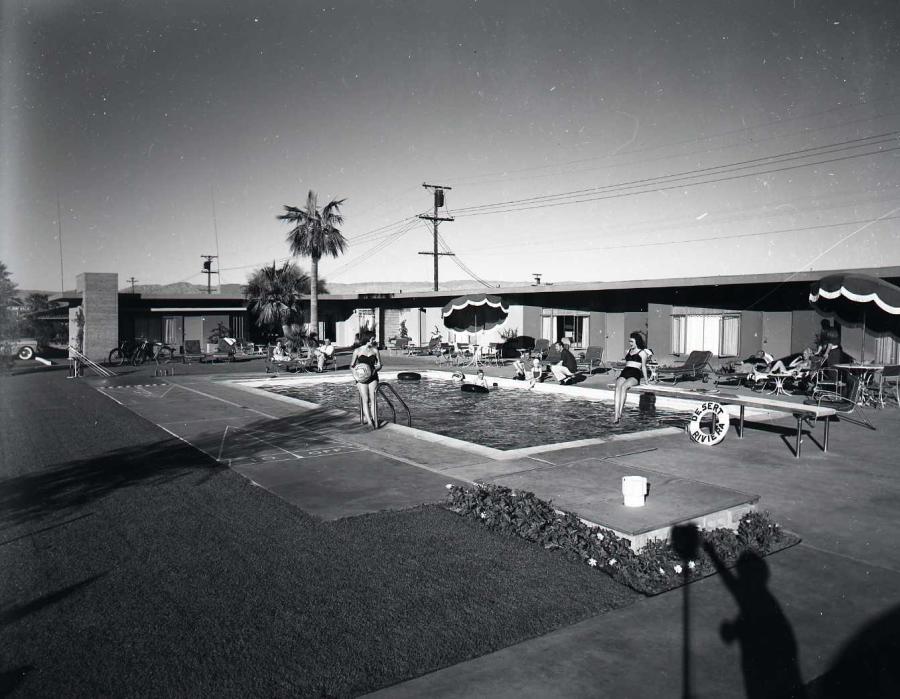
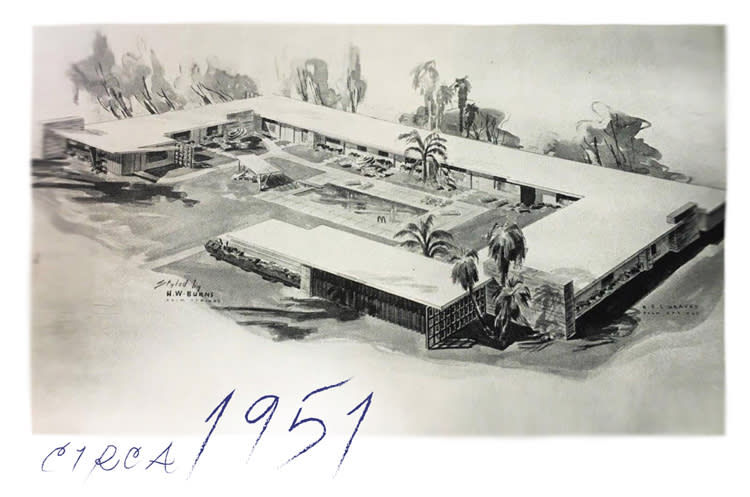
Built in 1951 by Herbert W. Burns, it is one of the best-preserved examples of the classic Palm Springs motor lodge.
The property's design reflects the midcentury emphasis on outdoor leisure, with a pool at its center and guest rooms arranged in a low-rise courtyard. Landscaping softened the desert environment, creating a lush retreat that contrasted with the surrounding arid landscape.
Rooms include kitchenetts and a complimentary continental breakfast is served. TripAdvisor #1 small hotel in Palm Springs - Best of the Best 2025.
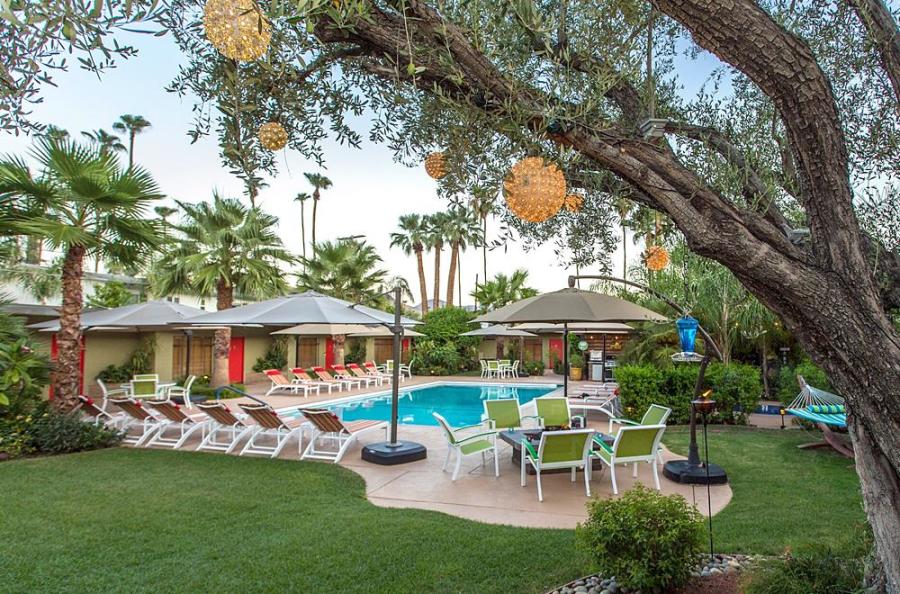
Credit: Desert Riviera
Desert Star
Designed by renowned architect Howard Lapham in 1956, the Desert Star in South Palm Springs is a Class I Historic property. Known for its "colliding flat and shed roof" design and extensive use of concrete slumpstone, it offers six renovated studio apartments centered around a serene pool.
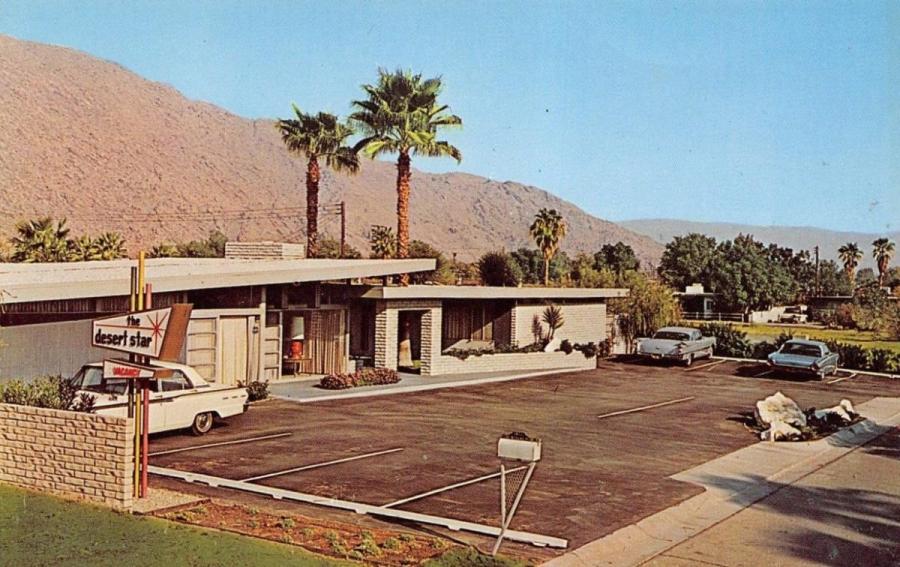
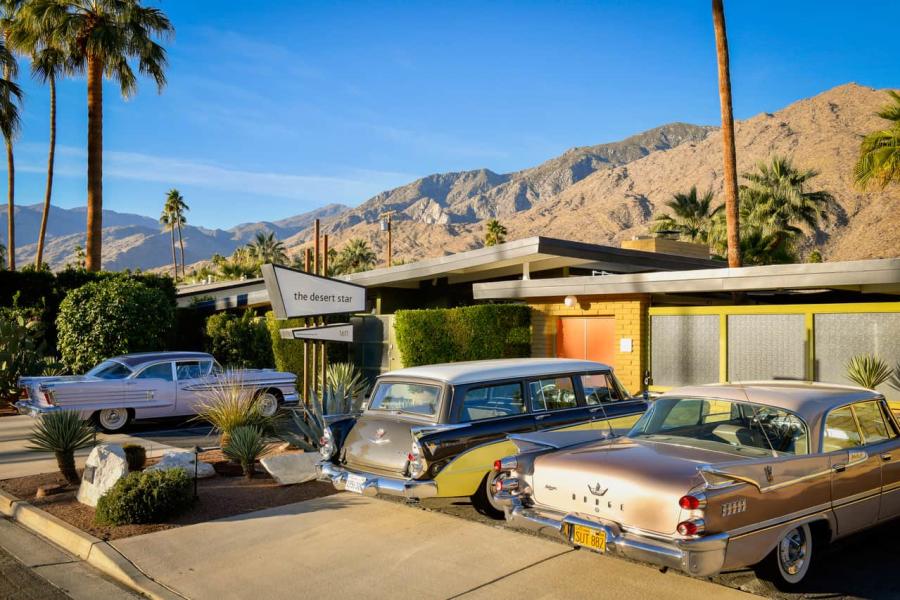
Credit: Desert Star
Orbit In
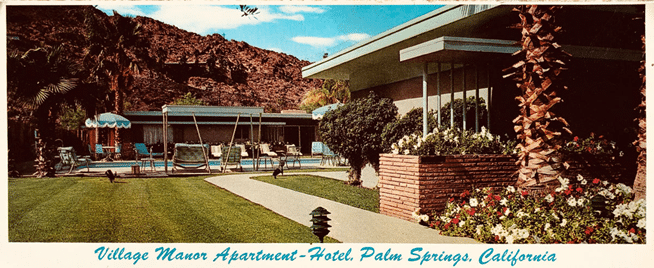
Originally built in 1957 by Herbert Burns, a pioneer of the modern apartment-hotel style in Palm Springs, the property opened in 1957 as the Village Manor. Decades later, it was lovingly restored by a leading architectural firm. The intimate scale—fewer than a dozen rooms—captures the spirit of Palm Springs hospitality during the 1950s, when travelers sought stylish but relaxed desert escapes.
Many of the rooms have the original 1950s kitchens and bathrooms with original tile. Furnishings include Bartoia, Saarinen, and Herman Miller. Enjoy gourmet yogurts and granola in the morning and poolside snacks during the day. A special treat served Thursday through Sunday is their Orbitini cocktail hour.
Holiday House Palm Springs
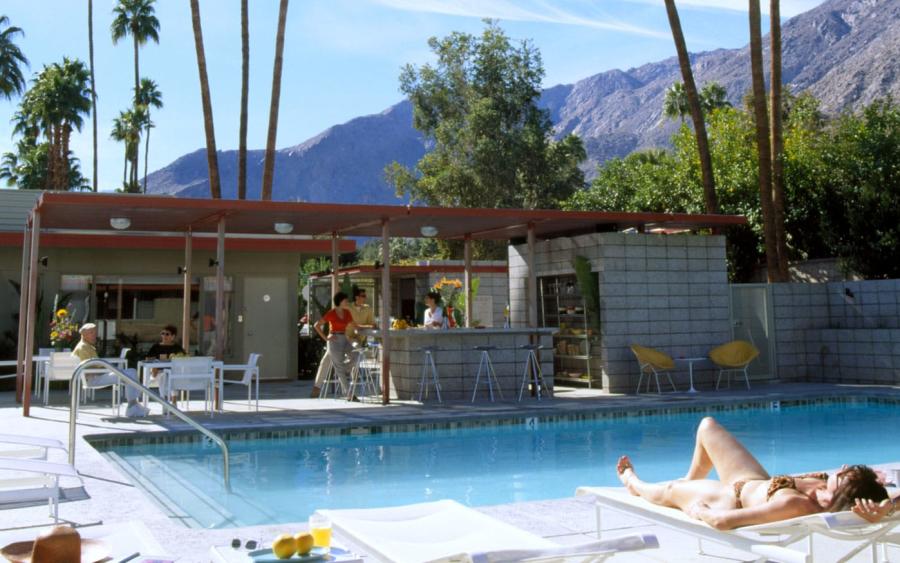
Originally built in 1951 by Herbert W. Burns, Holiday House is another excellent example of a small garden-style motor lodge in the desert-modernist style. Originally, Holiday House had 13 private apartments. In the 1960s, following the success of Holiday House, second-level rooms were added, making the 13-room resort a 28-room hotel. It was renamed the Chase Hotel until the new owners, Jeff Brock and Richard Crimson, who also own Sparrows Lodge, brought back its original name in 2017.
The property's intimate scale and courtyard layout reflect the design priorities of the postwar era: privacy, outdoor living, and relaxed social spaces centered on the swimming pool.
The design centers on Gio Ponti-inspired tilework in the bar and artwork throughout the property, including pieces by David Hockney, Roy Lichtenstein, Herb Ritts, Alex Katz, and Mr. Brainwash, along with a garden sculpture by Donald Sultan. The Pantry offers a simple continental breakfast.
Holiday House is a 2025 Michelin Key Awarded.
The Cole
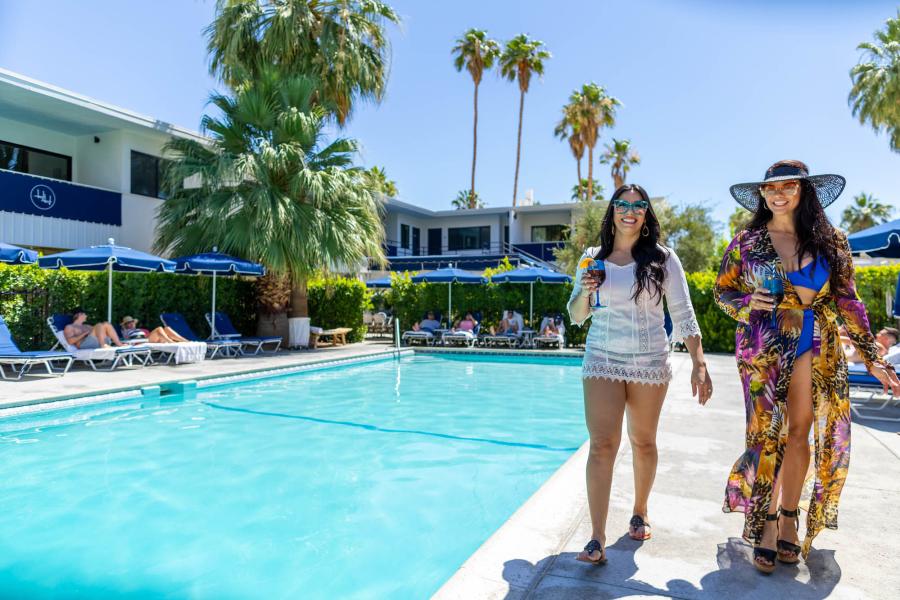
Opened in 1959 as the Bahama Hotel, it offered 15 rooms with kitchenettes and 15 rooms without. That same year, the hotel hosted the Air Force plane guards for President Eisenhower's October visit to Palm Springs.
The masonry work was by John Francis Gallerini, who would later duplicate similar work for the Spa Resort Hotel (demolished). Hugh Kaptur was credited with the exterior décor, while Raymond Devor of San Clemente was credited with the building's design.
It opened as The Cole in 2020, preserving its original midcentury charm and undergoing approval from the Palm Springs Architectural Advisory Committee.
Freddie's Kitchen is the on-site restaurant serving French-California cuisine.
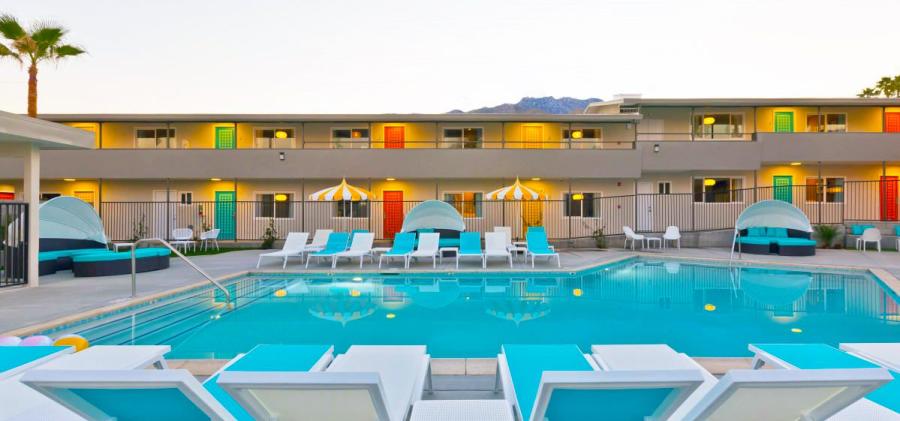
Iron Tree Inn
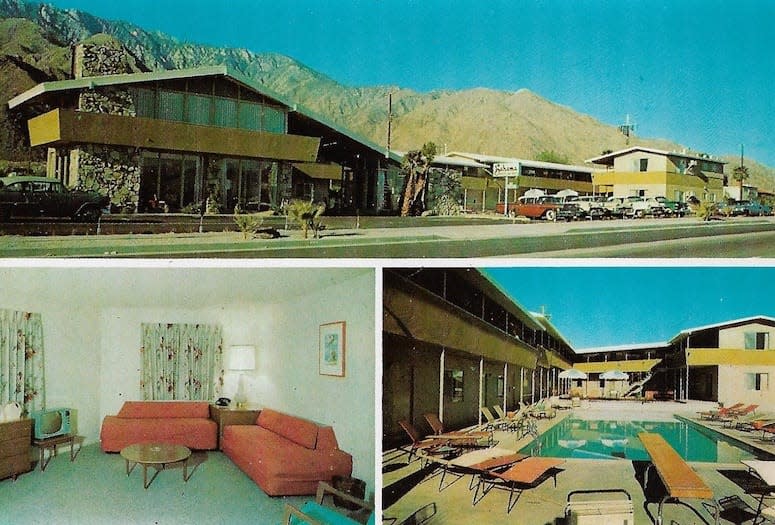
Built in the late 1940s, the 14-room property opened as the El Miramac Hotel and was arranged around a swimming pool. Today, the adults-only property retains its midcentury character. Its survival is a testament to the enduring appeal of Palm Springs' early boutique hotel culture.
Most units have fully equipped kitchens. There is also a one-bedroom and a deluxe two-bedroom.
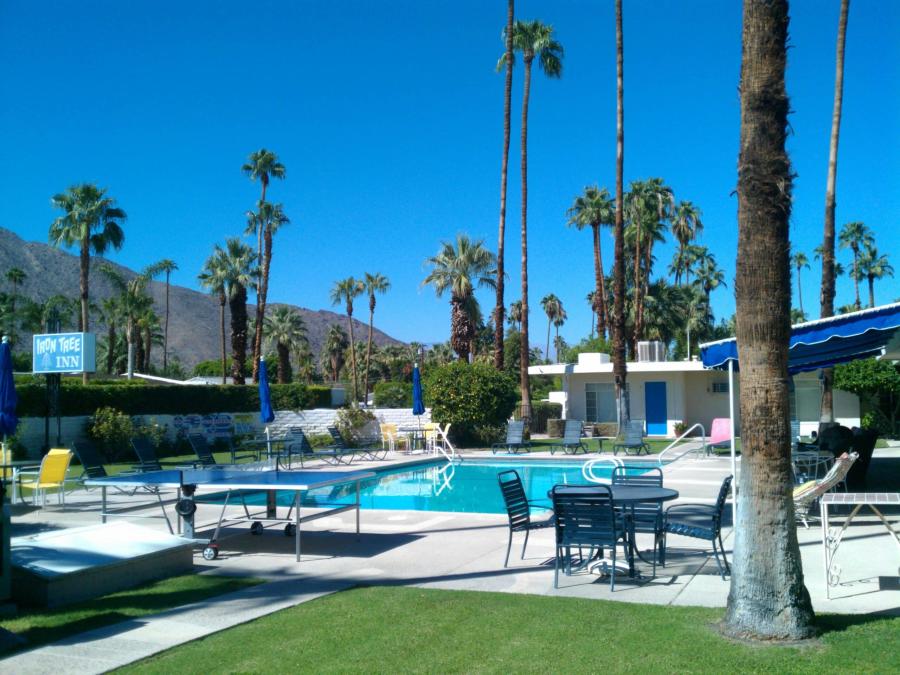
The Hideaway
Designed in 1947 by modernist Herbert W. Burns, it opened as the Town & Desert Apartments, and later the Town & Desert Hotel. This property offers timeless sophistication for travelers who appreciate architecture, design, and comfort.
The Hideaway suites feature kitchens, and all rooms include midcentury-modern decor.
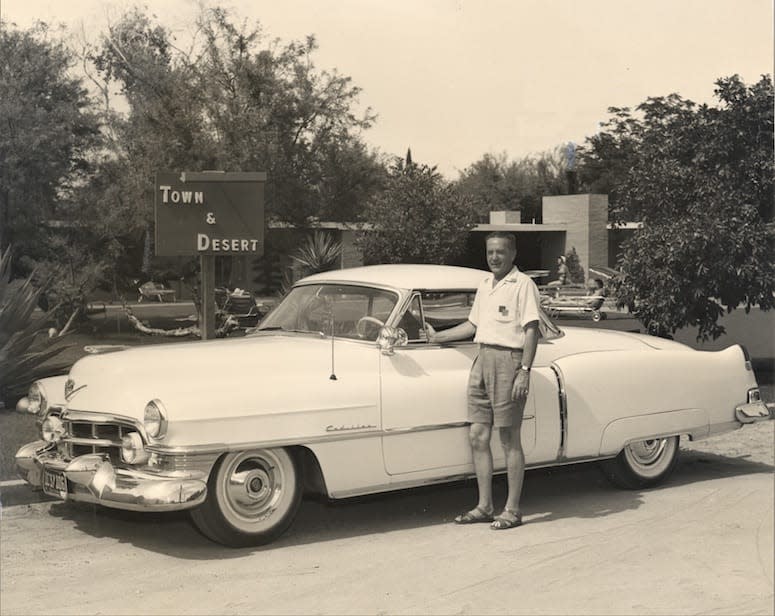
Herbert Burns at Town & Desert
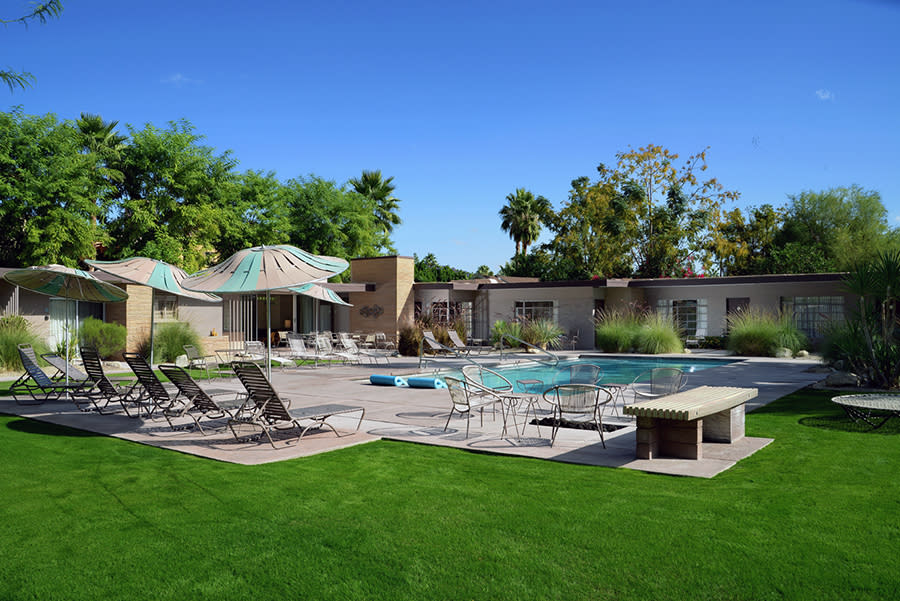
The Three Fifty Hotel
Located in the heart of downtown, The Three Fifty Hotel occupies a beautifully preserved midcentury property that reflects the streamlined architecture of the late 1950s.
It's small-scale, with 10 rooms and a courtyard design, exemplifying the boutique hotel model that became synonymous with Palm Springs hospitality.
The Skylark
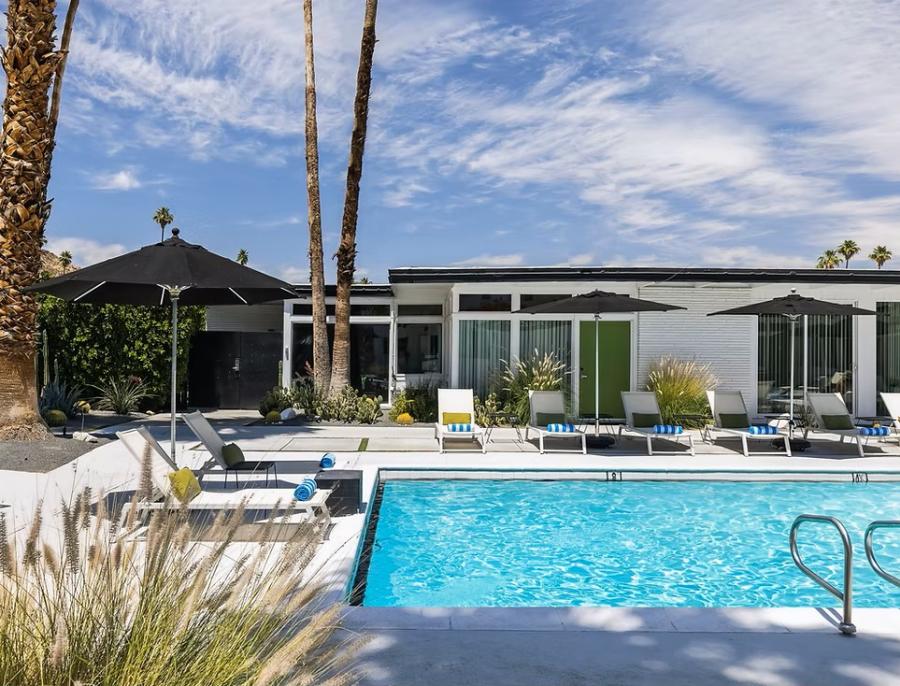
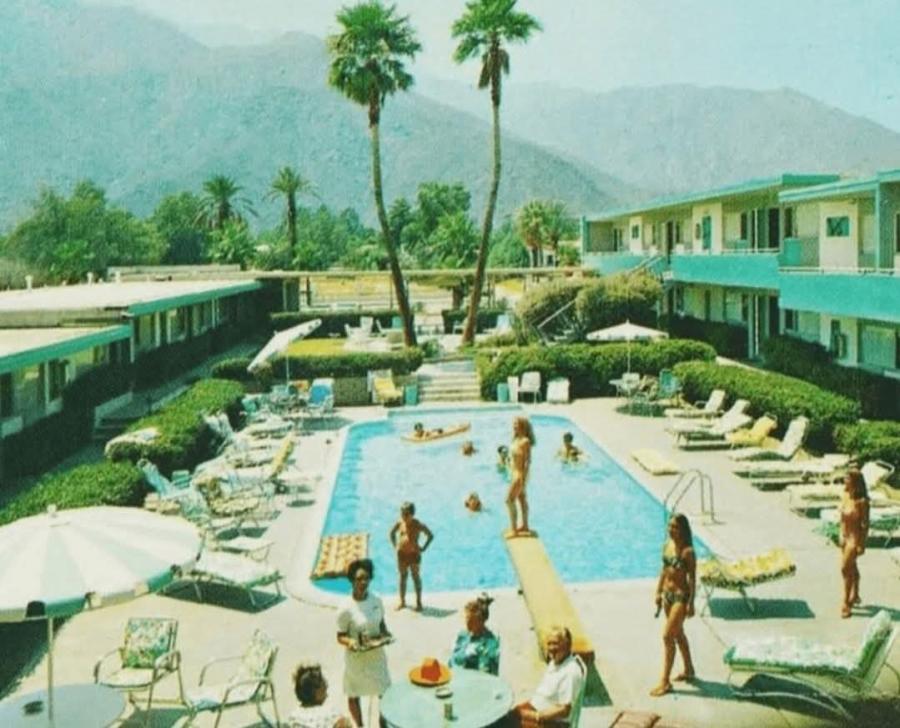
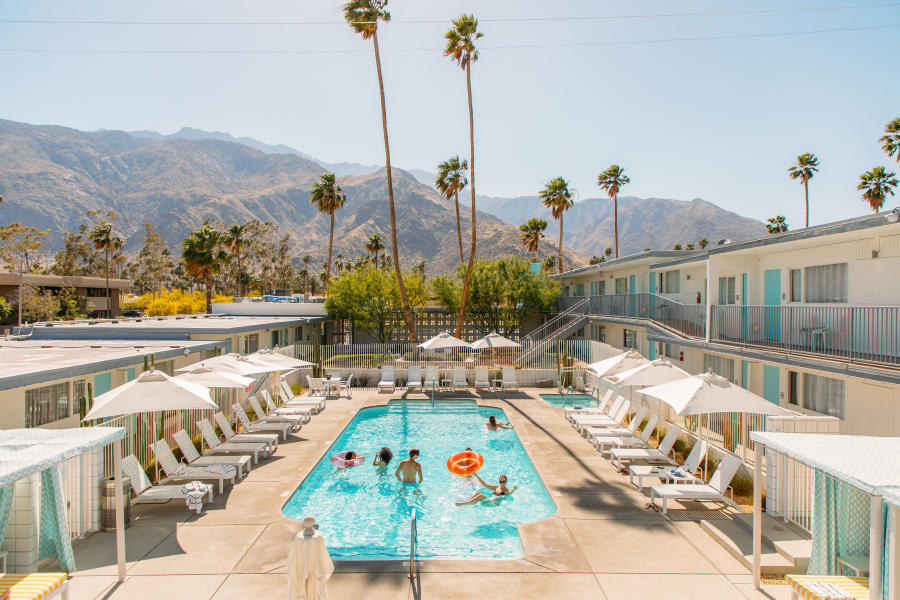
Located in the Uptown Design District, the Skylight Hotel Apartment was constructed in 1955 as a classic roadside motor lodge with 28 rooms serving highway travelers entering Palm Springs from the north.
With its compact footprint and pool-centered layout, the property exemplifies the era's practical design philosophy: simple rooms, easy parking, and immediate access to sunshine.
In 1956, it was owned by George Simon, as reported by the Desert Sun, the co-founder of the American publisher house Simon & Schuster, and singer-songwriter Carly Simon is one of his nieces. He hired Howard Lapham to design some expansions. It's believed George changed the name to Skylark in 1956.
Today, Skylark offers the same cozy midcentury modern charm and features its on-site restaurant, Lost Property, serving coastal American bar fare.
Triangle Inn
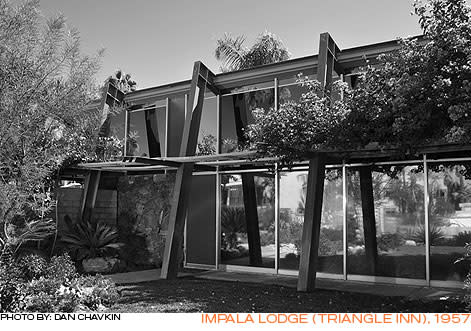
Designed in 1957 as the Impala Lodge by Hugh Kaptur, it included nine three-room suites. The main building incorporated a lobby and family room framed in plate glass and exposed Bethlehem structural steel, reaching a height of 15 feet. Five steel bents, painted burnt-umber, pinpoint the location of the lodge from the main street (as it was at the time).
Today, it operates as a popular gay men's resort. A generous breakfast is served poolside each morning, and afternoon mixers provide the perfect setting for meeting fellow guests.
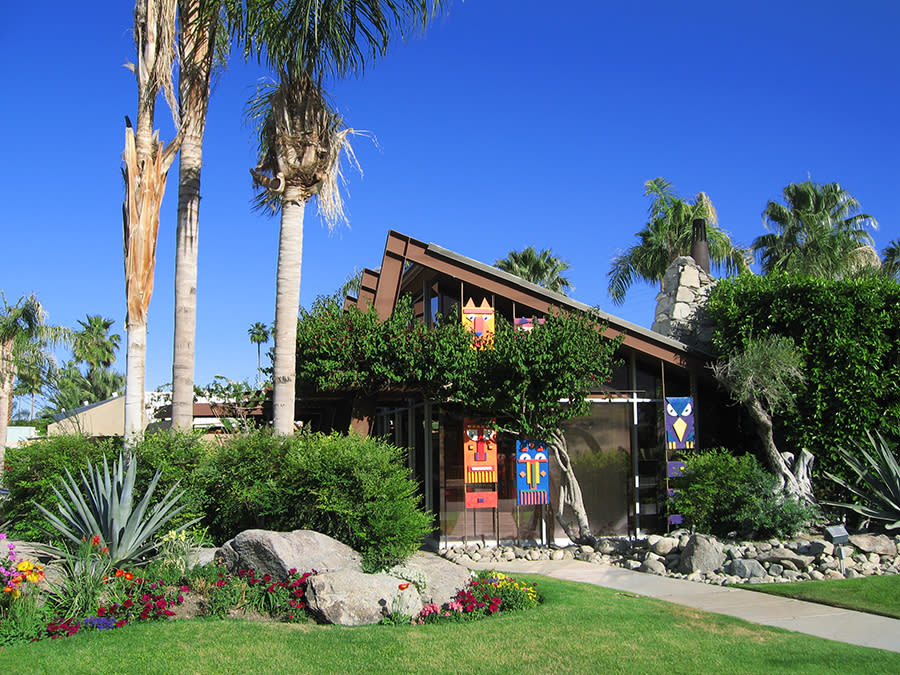
Adara Hotel Palm Springs
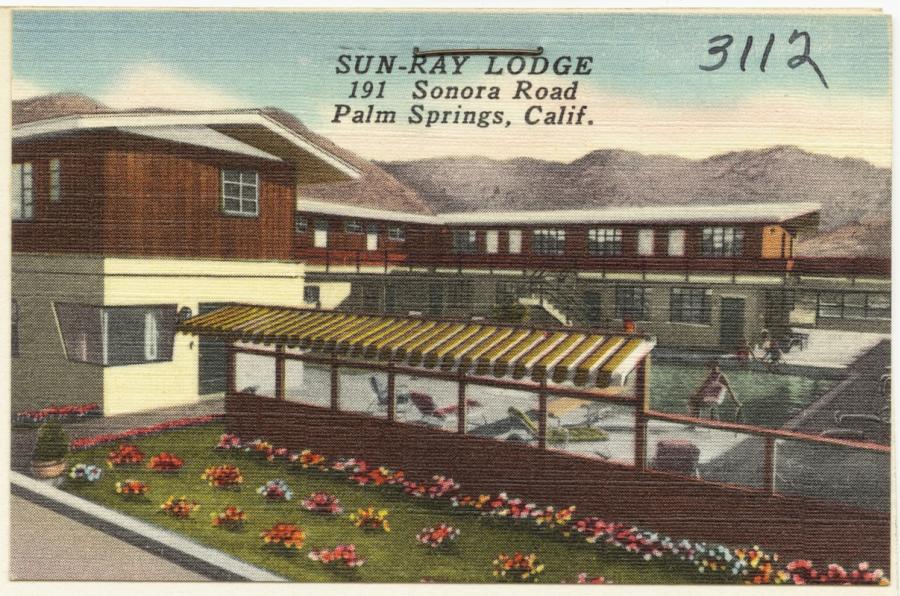
Like many Palm Springs boutique properties, the hotel began life as a modest midcentury motor lodge catering to travelers arriving by car in the late 1940s. It was called Sun Ray Lodge, and its restaurant was Piccadilly Jr., advertised as the most modern in Palm Springs.
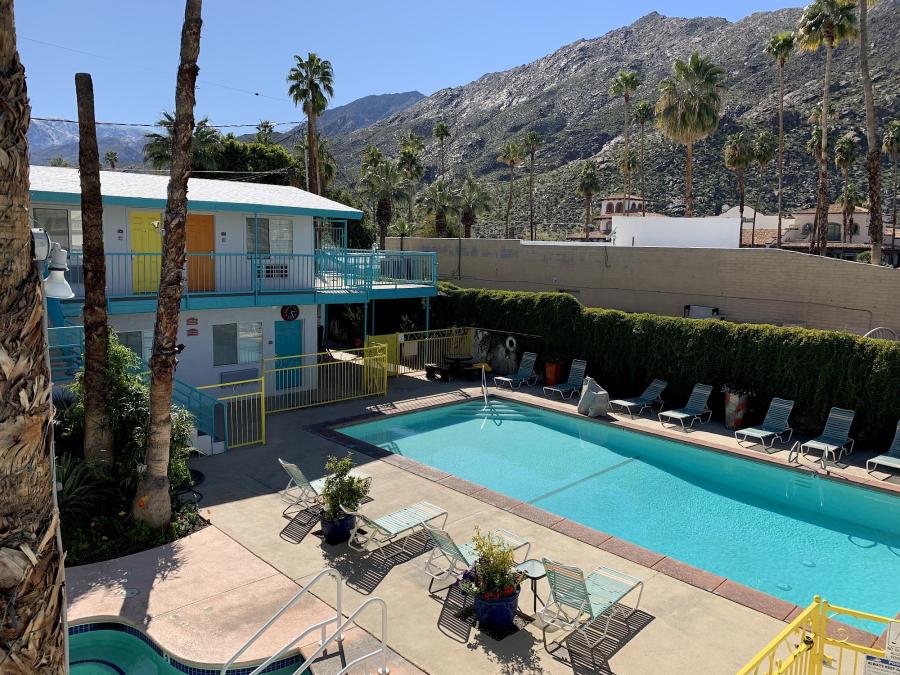
Properties like Adara illustrate a broader trend in Palm Springs: the adaptive reuse of midcentury motels. Rather than demolishing them, owners have restored and reimagined these buildings for a new generation of travelers seeking authentic retro experiences.
This style—pool, garden, mountains, and sun—became the blueprint for countless midcentury desert inns.
Spacious extended-stay rooms include kitchens.
A Desert Tradition That Still Welcomes Travelers
Today, Palm Springs remains one of the few places in the United States where visitors can still experience the golden age of midcentury motor lodges.
Thanks to decades of preservation efforts and thoughtful renovations, many of the city's small hotels continue to operate much as they did during the post-war tourism boom. Courtyard pools shimmer beneath the desert sun, palm trees sway above low-slung buildings, and guests gather outdoors in spaces designed more than seventy years ago.
For travelers seeking a more personal alternative to large resorts, these boutique hotels offer something rare: a stay that feels both authentic and timeless.
Book a room at one of Palm Springs' historic small hotels, and you're not just checking into a boutique property—you're stepping into a living chapter of desert history.
You May Also Like: