A Deep History Rooted in Cahuilla Homeland
Long before Palm Springs became a destination, the Cahuilla people lived across more than 6,000 square miles of desert, mountain, and canyon landscapes in Southern California. The clans who lived near the sacred hot spring known as Séc-he became known as the Agua Caliente. Their lives were shaped by the land: hunting mule deer and rabbits, gathering agave, yucca, acorns, and mesquite, and maintaining ceremonial traditions tied to the natural world.
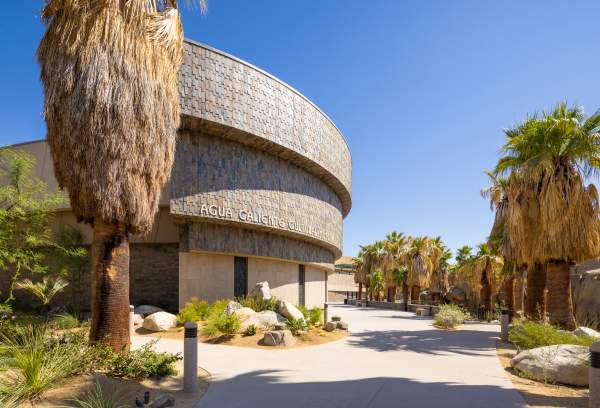
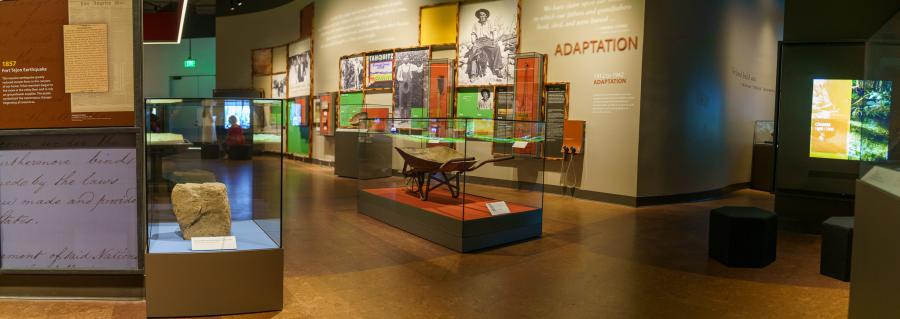
This deep connection to place continues today in sites such as Indian Canyons, Tahquitz Canyon, and the Agua Caliente Cultural Museum, where visitors can experience the living history of the Tribe.
Treaties Signed — Then Hidden
In 1852, U.S. Indian Agent O.M. Wozencraft negotiated 18 treaties with Southern California tribes, including the Treaty of Temecula with the Cahuilla. These agreements promised land protections and recognized Tribal sovereignty.
But Congress refused to ratify them.
Instead, the treaties were locked away for more than 50 years. Without legal recognition, California tribes were denied land ownership, leaving them vulnerable to displacement as settlers, railroads, and developers moved into the region.
This injustice set the stage for the creation of reservations, not as a fulfillment of treaty obligations, but as a federal response to growing conflict and pressure for westward expansion.
Did you know?
- The 18 unratified California treaties were kept secret until 1905
- Without ratified treaties, California tribes were legally barred from owning land
Establishing the Agua Caliente Indian Reservation
The modern reservation emerged through two presidential executive orders:
- 1876 — President Ulysses S. Grant established the Agua Caliente Indian Reservation, including Section 14 in downtown Palm Springs.
- 1877 — President Rutherford B. Hayes expanded the reservation to more than 30,000 acres.
The resulting checkerboard pattern — alternating Tribal and non-Tribal parcels — was shaped by federal land policies and railroad land grants. This unusual geography created long-term challenges for land management, development, and sovereignty, but it also ensured that the Tribe retained a permanent presence in its ancestral homeland.
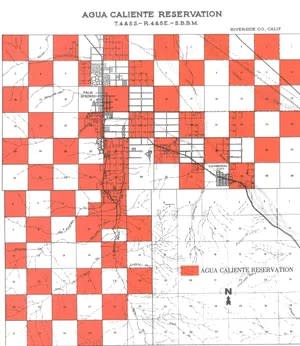
Section 14, in the heart of downtown Palm Springs, remains one of the most historically significant parcels of Tribal land. Visitors walking near the Agua Caliente Cultural Plaza are standing on land central to the Tribe’s modern story.
Tribal Leadership Through a Century of Change
During the late 1800s and early 1900s, leaders such as John Joseph Andreas, Francisco Patencio, and Marcus Belardo guided the Tribe through federal allotment policies, assimilation efforts, and legal battles over land and water.
Francisco Patencio, born in the 1860s, became a key voice in the early Tribal Council era and helped protect Tribal land rights into the mid‑20th century.
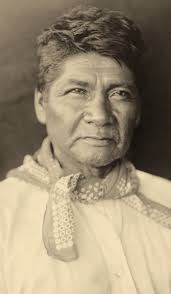
Marcus Belardo, born in 1865, lived through the entire reservation era and played a crucial role in preserving cultural continuity.
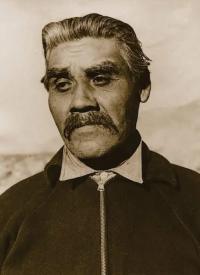
John Joseph Andreas, born in 1874, served in leadership roles between the 1890s and the 1930s. His father, Juan Andreas, had served in leadership roles for the Cahuilla people in the early 1800s.
Their leadership ensured that Tribal governance, culture, and sovereignty endured despite immense external pressure.
Advocacy and Awareness: Helen Hunt Jackson’s Influence
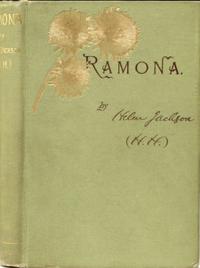
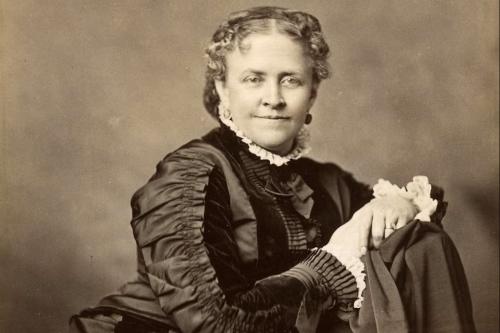
In the late 1800s, author and federal investigator Helen Hunt Jackson became one of the most influential advocates for California’s Native peoples. Her nonfiction work, A Century of Dishonor (1881), documented federal mistreatment of tribes, while her novel, Ramona (1884), dramatized the human cost of broken treaties and forced assimilation.
Her writing helped bring national attention to the injustices faced by tribes like the Agua Caliente and contributed to early reform efforts.
A Timeline of Sovereignty, Policy, and Cultural Survival
This timeline highlights key federal policies and Tribal milestones that shaped the Agua Caliente Band of Cahuilla Indians and Native nations across the United States.
Early Federal Policy
- 1830 — Indian Removal Act - Authorized the forced relocation of numerous Native Americans from their ancestral lands
- 1851–1852 — Treaty of Temecula (unratified) - One of 18 unratified treaties intended to set aside reservations in Southern California
- 1871 — 25 USC 71 - Prohibits the government from entering into treaties with any Indian nation or tribe
Reservation Era
- 1876–1877 — Agua Caliente Reservation established and expanded
- 1887 — Dawes Act divides Tribal lands
- 1891 — Act for the Relief of Mission Indians - authorized land allotments
Reorganization & Self-Governance
- 1934 — Indian Reorganization Act - encouraged tribal self-government and facilitated the restoration of tribal lands
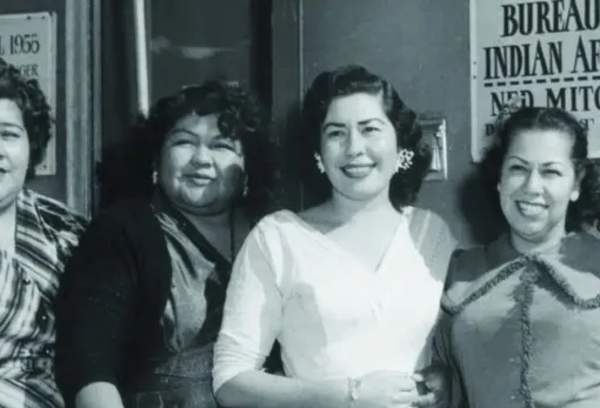
- 1955 — Agua Caliente Constitution and By-Laws adopted
Modern Sovereignty & Cultural Protection
- 1978 — American Indian Religious Freedom Act - protects Native Americans' rights to exercise their traditional religions
- 1988 — Indian Gaming Regulatory Act - allows tribes to engage in specific forms of gaming
- 1989 — Agua Caliente Development Authority established - initiated economic development
- 1990 — Native American Graves Protection and Repatriation Act
- 2010 — Tribal Law and Order Act - improves public safety and access to justice for Native Americans
These milestones reflect a long journey toward self-determination, cultural preservation, and economic empowerment.
Why This History Matters in Palm Springs Today
The story of Palm Springs is inseparable from the story of the Agua Caliente Band of Cahuilla Indians. Their stewardship of the land, cultural traditions, and leadership in modern development continue to shape the city's identity.
Visitors experience this living heritage through:
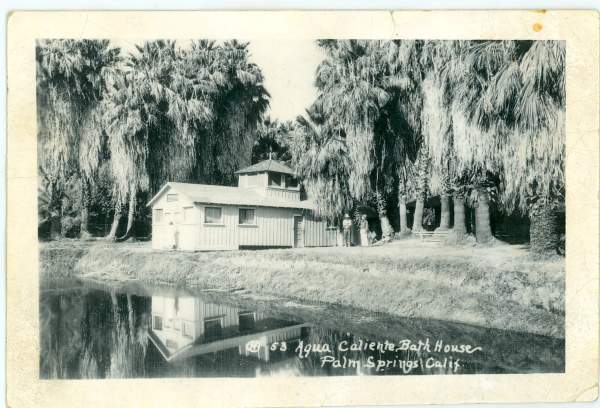
The Spa at Séc-he - Experience the sacred hot mineral spring that has flowed for more than 12,000 years.

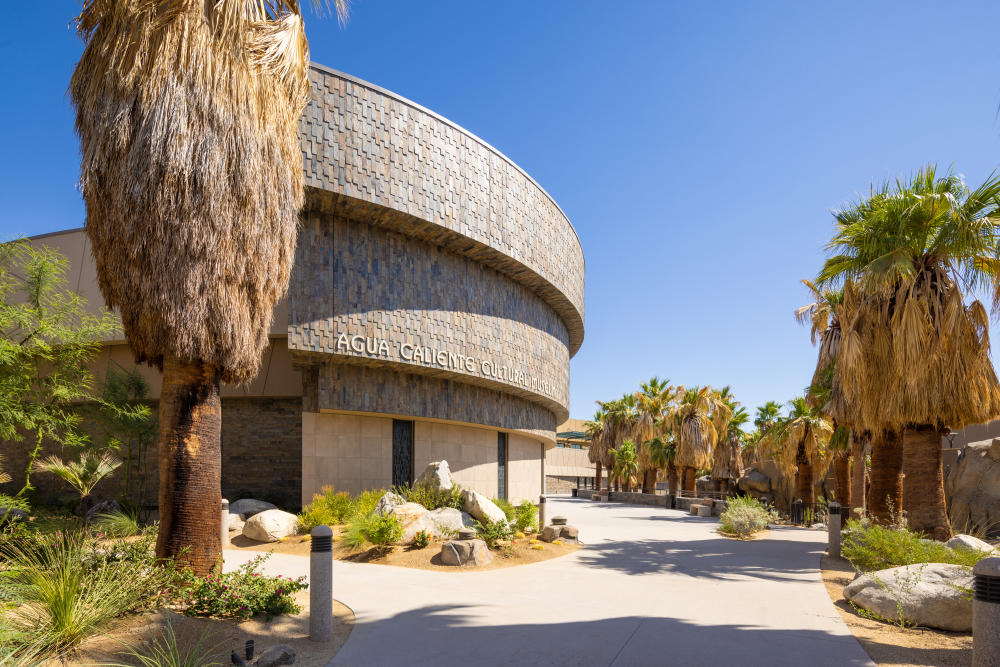
Agua Caliente Cultural Museum & Plaza - Learn about Cahuilla traditions, sovereignty, and the Tribe’s modern story.
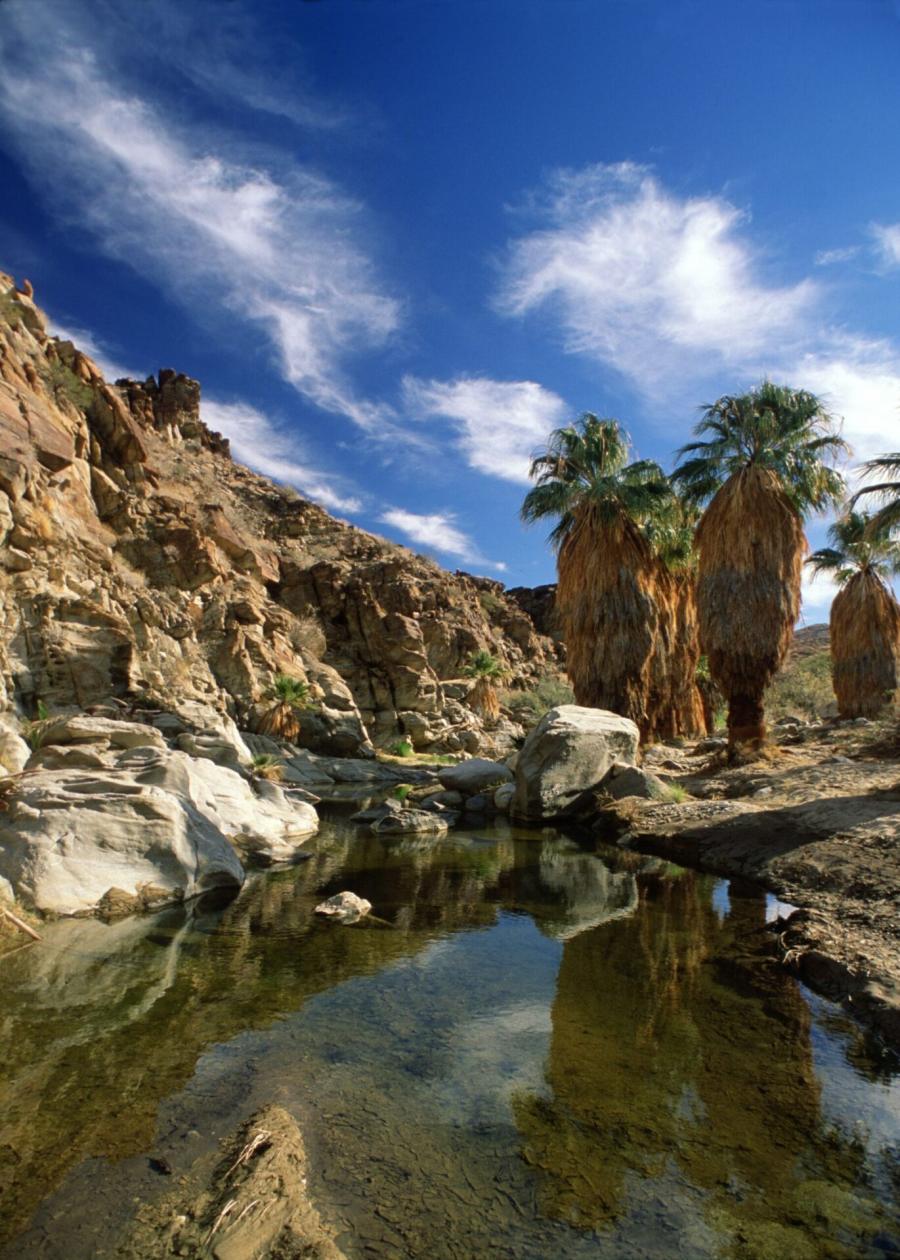
Indian Canyons - Explore ancient trails, palm oases, and landscapes central to Cahuilla life
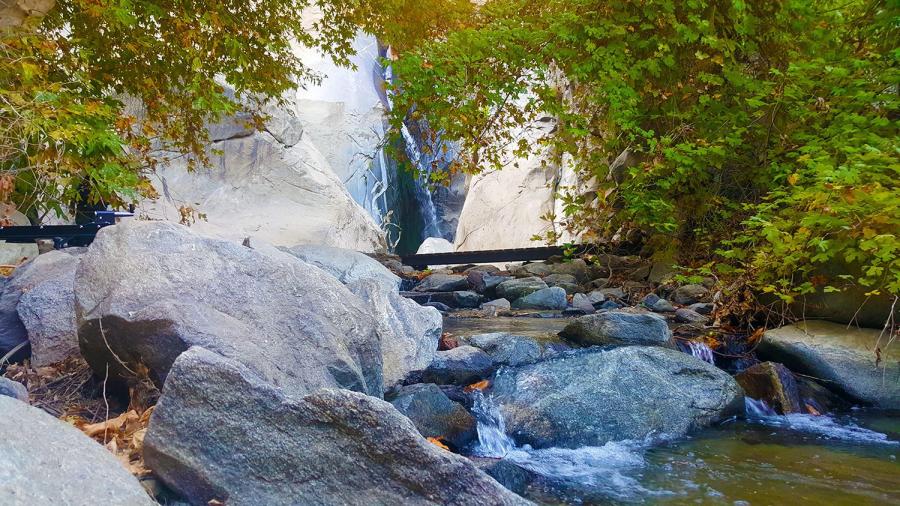
Tahquitz Canyon - Walk through a canyon rich with stories, rock art, and cultural significance.
Understanding this history deepens the experience of Palm Springs and honors the people who have cared for this land since time immemorial.
Visiting with Respect
When exploring Tribal lands:
- Stay on marked trails
- Follow posted guidelines
- Respect cultural sites and natural resources
This reinforces your role as a cultural steward and trusted guide.
Frequently Asked Questions About the Agua Caliente Band of Cahuilla Indians
What does “Agua Caliente” mean?
“Agua Caliente” is Spanish for “hot water.” The name refers to the sacred hot mineral spring known as Séc-he, which has been central to Cahuilla life for thousands of years. The spring continues to flow today beneath The Spa at Séc-he.
How long have the Cahuilla lived in the Palm Springs region?
Archaeological and oral history evidence indicate that the Cahuilla people have lived in the region for at least 10,000 years, with estimates reaching 12,000 years or more. Their presence predates the formation of the desert landscape as we know it today.
What language do the Agua Caliente Band of Cahuilla Indians speak?
The Cahuilla language belongs to the Uto‑Aztecan language family. While English is widely spoken today, language revitalization efforts continue through Tribal programs, cultural education, and community initiatives.
What is the significance of the hot mineral spring (Séc-he)?
Séc-he is considered a sacred life source. For the Cahuilla, the spring is tied to creation stories, healing traditions, and community gatherings. Its water was used for ceremony, wellness, and daily life. Today, it remains a symbol of cultural continuity and Tribal sovereignty.
Why is the reservation laid out in a checkerboard pattern?
The checkerboard pattern was created in the 19th century when the federal government granted alternating square‑mile sections of land to the Southern Pacific Railroad. When the Agua Caliente Reservation was established, it was overlaid on this existing grid, resulting in alternating Tribal and non‑Tribal parcels.
How is the Agua Caliente Band of Cahuilla Indians governed today?
The Tribe operates under a Tribal Constitution adopted in 1955, which established:
- A Tribal Council
- A framework for self‑governance
- Authority over land, resources, and Tribal affairs
The Tribal Council oversees cultural preservation, economic development, environmental stewardship, and community programs.
How does the Tribe balance cultural preservation with modern development?
The Tribe approaches development through a lens of sovereignty, stewardship, and cultural continuity. Projects like the Cultural Plaza and The Spa at Séc-he demonstrate how modern architecture and economic growth can coexist with deep cultural roots.