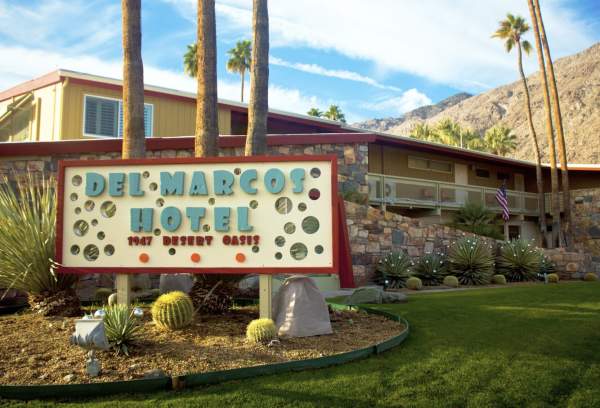
Midcentury Modern Architecture, Alexander Homes, and the Desert Modernist Legacy
Palm Springs owes much of its architectural identity to the postwar modernist movement and to the architects who translated modern design principles into livable, climate-responsive desert homes. Among the most influential of these architects were Dan Palmer and William Krisel, whose collaborative work, particularly with the Alexander Construction Company, helped define Palm Springs as a global center of midcentury modern architecture.
Their designs, especially in developments such as Twin Palms Estates, introduced a new residential language that balanced affordability, modern aesthetics, and environmental adaptation. Today, Palmer and Krisel are widely recognized as foundational figures in the architectural history of Palm Springs and the greater Coachella Valley.
Dan Palmer: Education, Early Career, and Entry into Desert Modernism
Dan Palmer (1920–2001) was born in Los Angeles. He earned his architecture degree from the University of Southern California School of Architecture, an institution that would also shape many of Southern California’s most influential modernists. Palmer began his career during a pivotal period in American architecture, when post–World War II housing demand intersected with new materials, construction methods, and modernist ideals.
Drawn to Palm Springs in the early 1950s, Palmer found an environment uniquely suited to experimentation. The desert climate, dramatic mountain backdrop, and relative design freedom allowed architects to explore post-and-beam construction, open floor plans, and indoor–outdoor living at scale. Palmer’s early work reflected a sensitivity to site, climate, and lifestyle that would become hallmarks of his later collaborations.
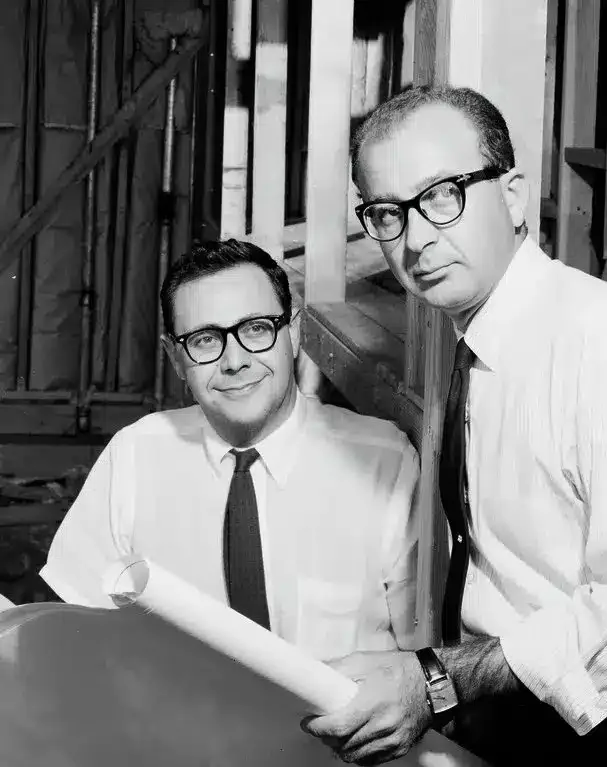
William Krisel and Dan Palmer
William Krisel: Modernist Training and Developer Partnerships
William Krisel (1924–2017) was born in Shanghai and raised in Beverly Hills. Like Palmer, he studied architecture at the University of Southern California, grounding his practice in modernist principles. Early in his career, Krisel worked for Victor Gruen, the influential architect and planner known for both retail centers and progressive housing concepts.
Krisel’s professional and personal friendship with Bob Alexander of the Alexander Construction Company proved transformative. At Alexander’s invitation, Krisel began designing modernist residential tracts in the desert, including the development initially known as Smoke Tree Valley, later renamed Twin Palms Estates after the paired palm trees planted at each home.
Krisel’s ability to merge architectural rigor with large-scale residential development positioned him as one of the most prolific modernist architects in Southern California.
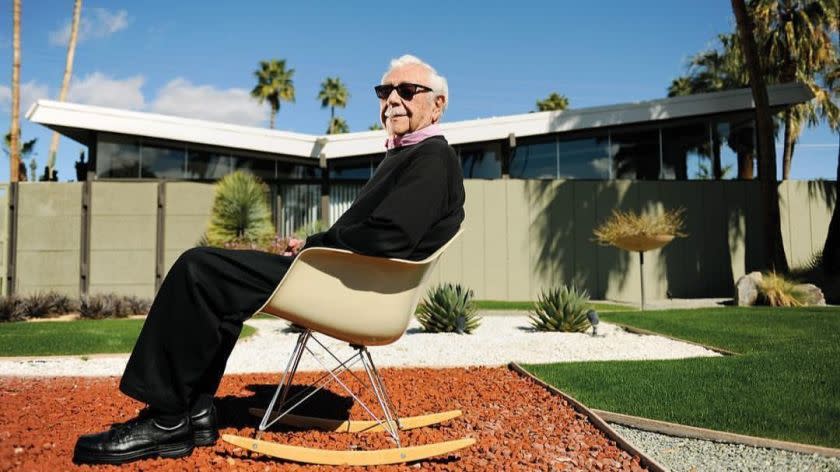
A Shared Architectural Language: Desert Modernism Defined
Together, Palmer and Krisel developed an architectural vocabulary now synonymous with midcentury modern design in Palm Springs. Their work emphasized:
- Clean, horizontal lines and low-slung roof profiles
- Butterfly roofs and extended eaves for shade and airflow
- Floor-to-ceiling glass to frame mountain and desert views
- Breezeways connecting carports to main living spaces
- Strategic privacy through orientation rather than enclosure
Materials such as steel, concrete, glass, and concrete block were selected not only for their modern appearance but also for their durability in extreme desert conditions. Their designs balanced openness with protection, offering light, views, and airflow while mitigating heat and glare.
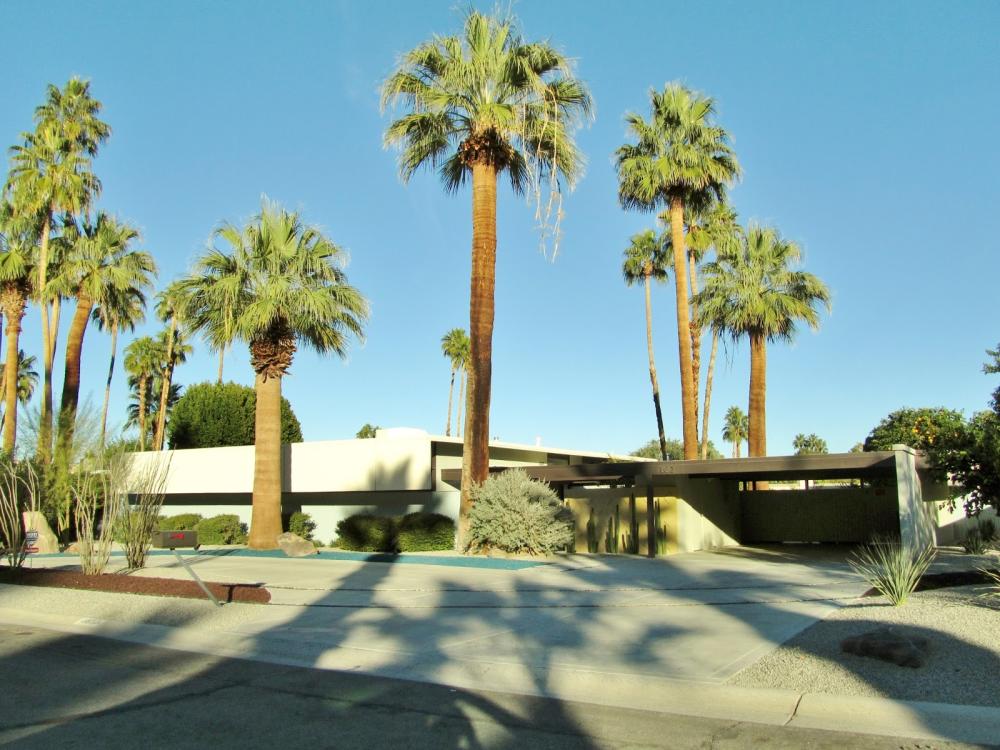
Alexander Construction Company: Architecture at Scale
The partnership between Palmer & Krisel and the Alexander Construction Company, led by George and Robert Alexander, was among the most significant collaborations in postwar American residential architecture.
The Alexanders sought to deliver architect-designed modern homes to the middle class—homes that appeared custom while being efficiently constructed. Palmer and Krisel first worked with the Alexanders at Corbin Palms in Woodland Hills (1953–1955) before relocating their collaboration to Palm Springs.
Across the Coachella Valley, the partnership resulted in more than 2,200 homes, including major developments such as Twin Palms Estates, Racquet Club Estates, and Vista Las Palmas. Collectively, Palmer and Krisel are credited with contributing to roughly 20,000 residential units across Southern California.
Selected Works by William Krisel and Dan Palmer
Twin Palms Estates
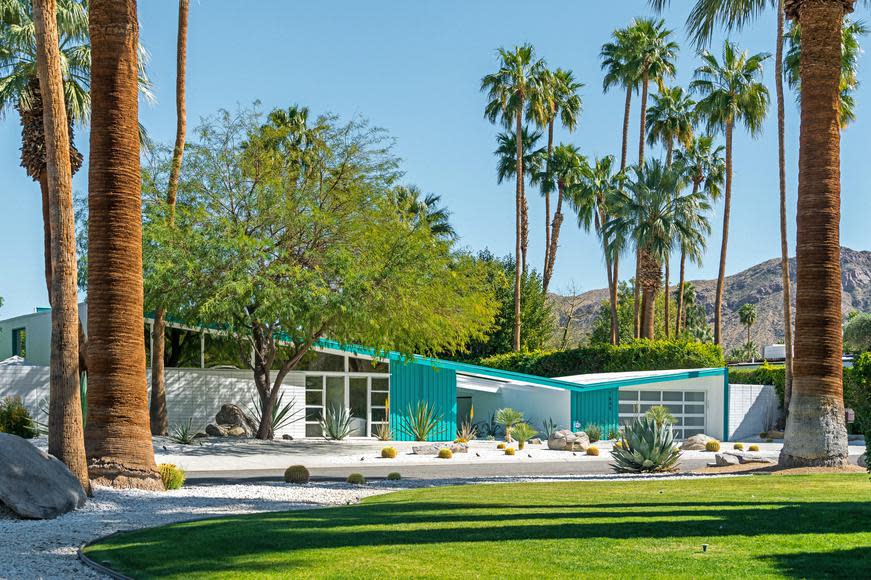
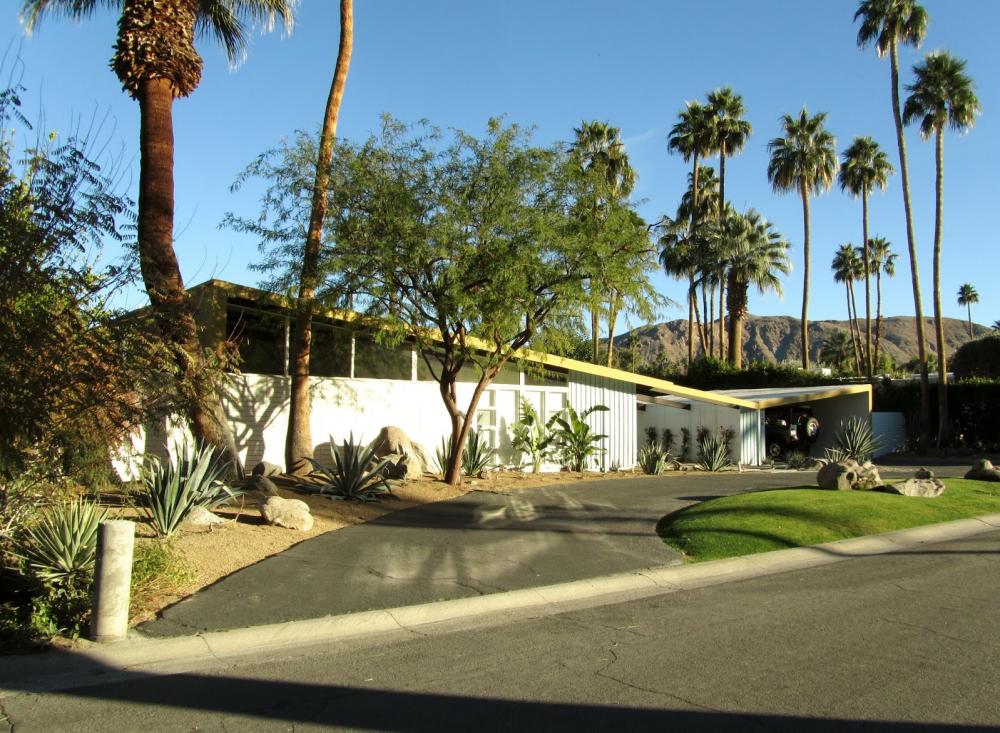
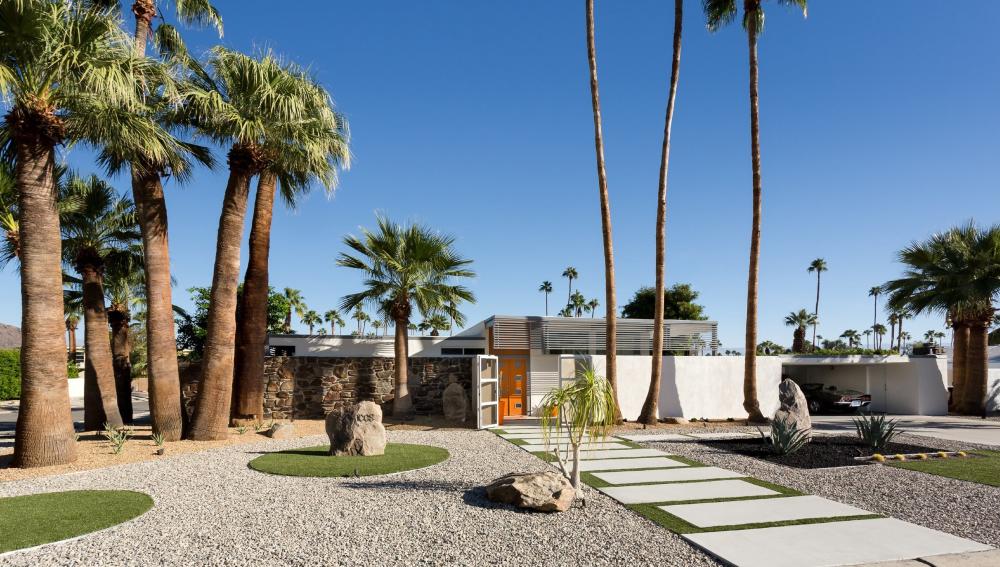
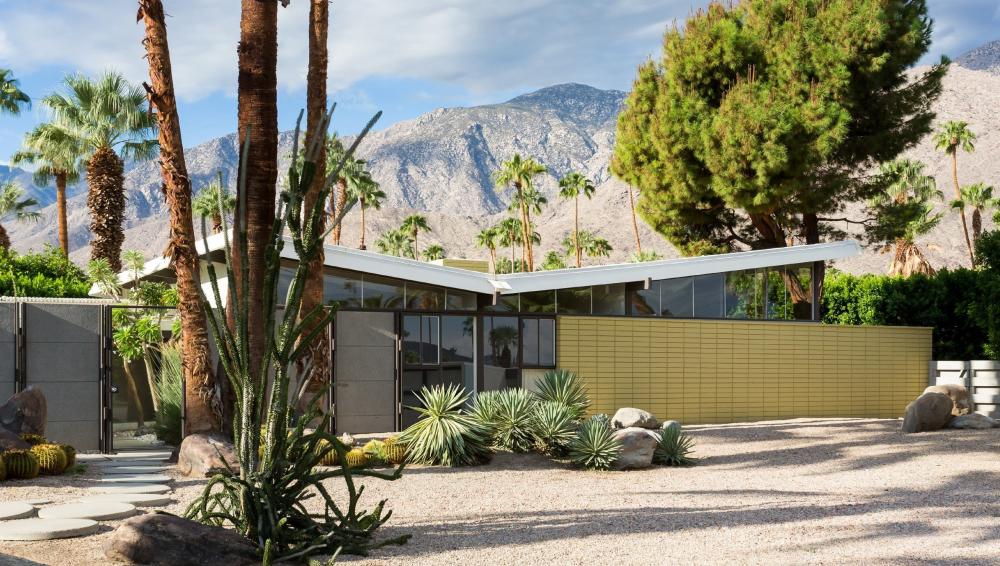
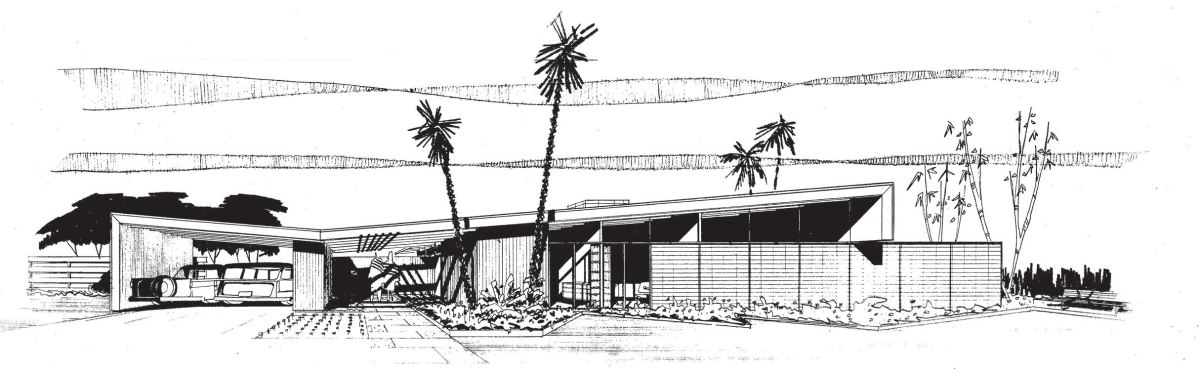
Completed in 1957, Twin Palms Estates remains one of the most studied and celebrated examples of tract-based modernist housing. The development includes approximately 90 single-family homes, each around 1,600 square feet, originally accompanied by two palm trees that gave the neighborhood its name.
While unified by architectural language, the homes vary in their facades, rooflines, and site orientations. This approach avoided repetition and gave each residence a distinct identity while maintaining cohesion across the neighborhood.
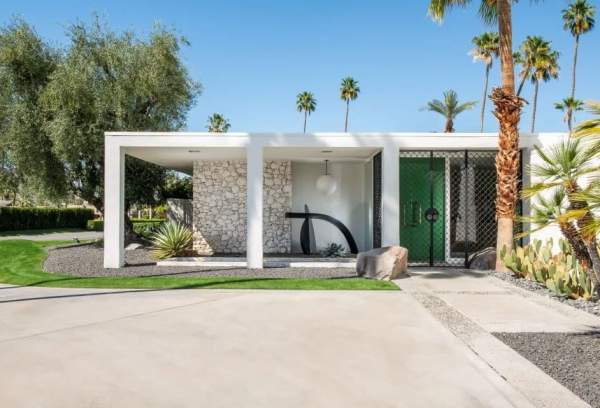
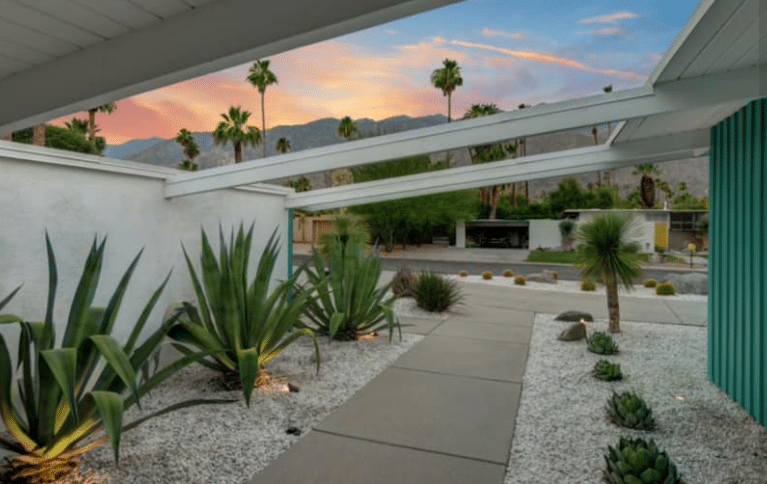
A defining feature of Twin Palms homes is the breezeway, which functions as both circulation and climate control, reinforcing the indoor–outdoor lifestyle central to desert modernism. Many homes also included swimming pools, emphasizing leisure and entertaining as core components of postwar Palm Springs living.
Ocotillo Lodge: Resort Modern
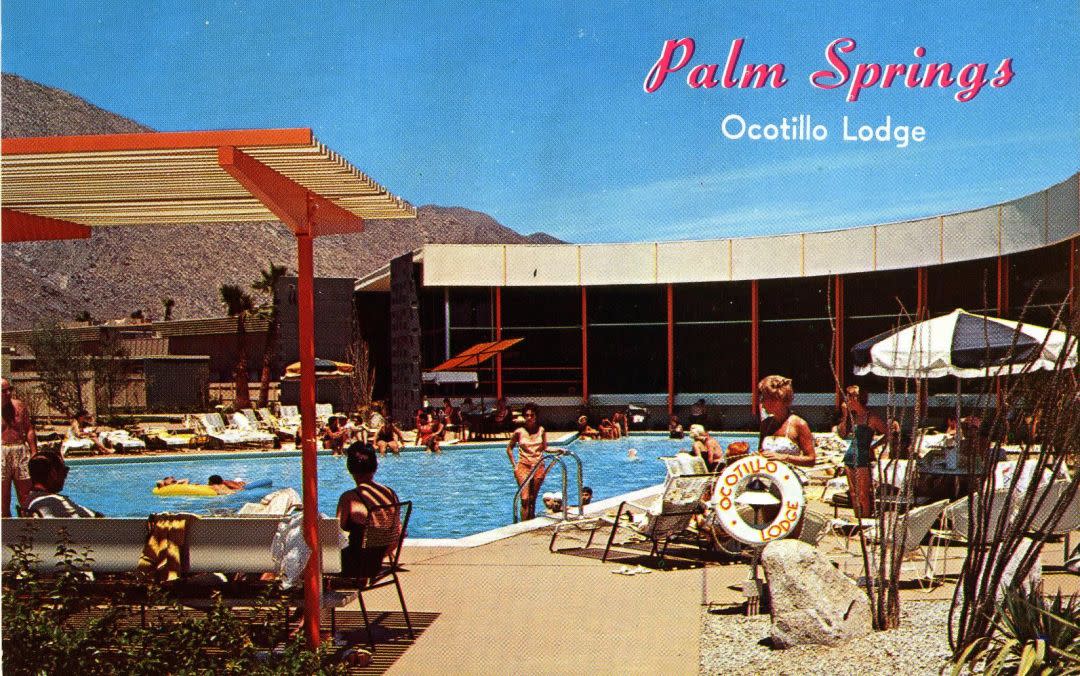
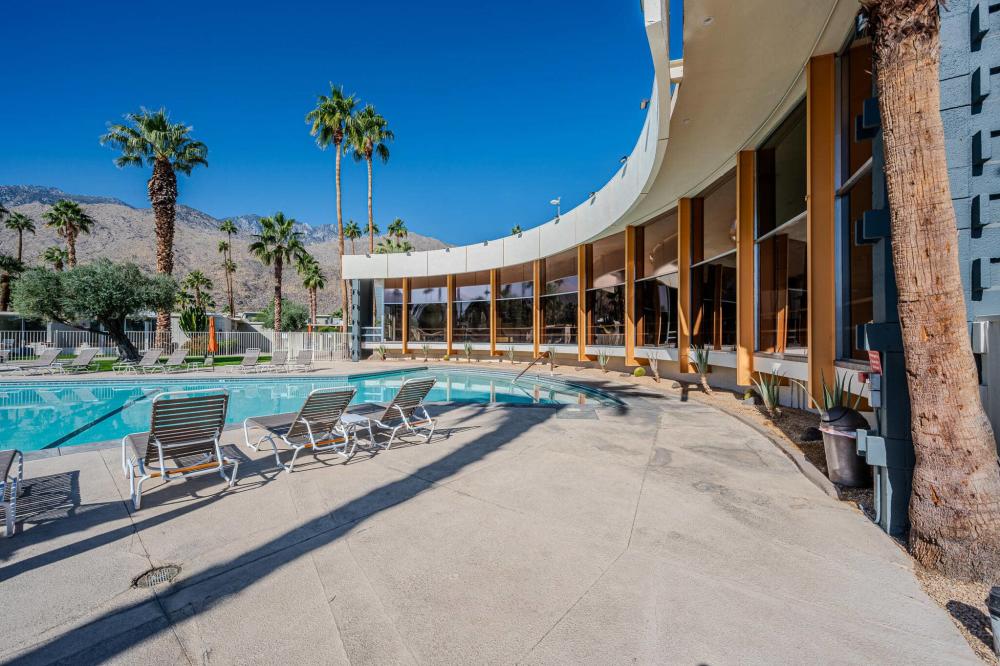
Designed by Palmer & Krisel in 1955 and completed in 1957, Ocotillo Lodge represents their application of modernist principles to hospitality architecture. Developed by the Alexander Construction Company and Joseph Dunas, the resort spans 10 acres and includes more than 100 units, each with private patios.
The central building, distinguished by its curved interior wall and linear street frontage, originally housed the famed Candlewood Room, once described as “one of the most beautiful rooms in America.” While interiors have changed, the iconic keyhole-shaped swimming pool, designed with landscape architect Garrett Eckbo, remains a defining feature and a rare surviving example of intact midcentury resort planning.
Las Palmas Estates (Vista Las Palmas)
These homes, built in the late 1950s, are characterized by their clean lines, open floor plans, and integration with the surrounding desert landscape. The Alexanders were known for their ability to create homes that were both stylish and affordable. They were able to produce homes that appeared custom-built but were efficiently constructed using modular concepts and standard floor plans. This approach allowed for the rapid development of neighborhoods.
Kings Point
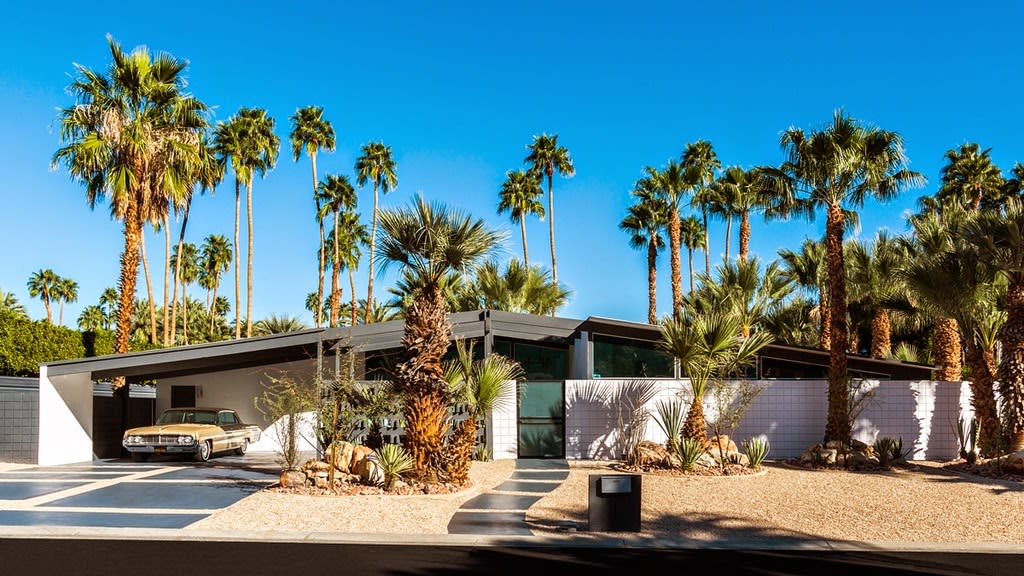
Designed by William Krisel, Kings Point consists of 44 detached homes arranged around shared pools and tennis courts. These homes were developed and built between 1968 and 1970. Krisel’s design philosophy for Kings Point emphasized minimalist concepts, featuring open interiors, expansive glass, and strong vertical and horizontal lines. Flat roofs, large windows, and the use of architectural concrete blocks and white stucco characterize the homes. These elements combine to create a sleek, functional aesthetic that maximizes light and views while providing shade from the intense Palm Springs sun.
Krisel adapted the International Modern style to the local environment by increasing window sizes and extending the roof eaves to provide better shade. His designs were pragmatic and affordable, focusing on enhancing residents’ quality of life by leveraging the surrounding landscape and climate.
Buil on Indian leased land, currently extended to 2063.
Canyon View Estates
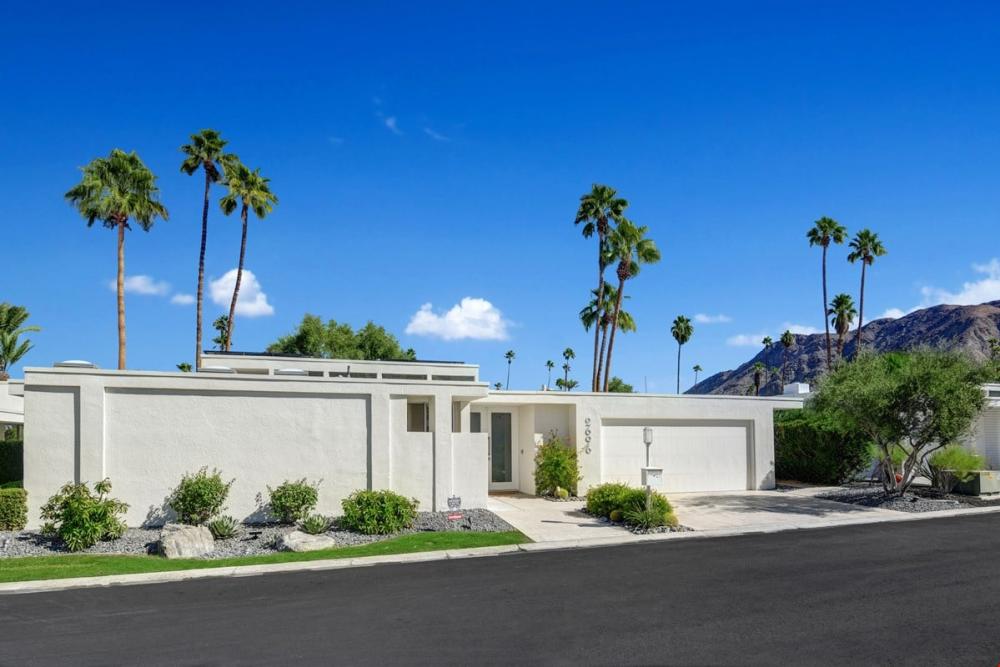
Palmer & Krisel collaborated with developer Roy Fey, a pioneer in Palm Springs real estate, on the development of Canyon View Estates. It was California’s first vacation home community. Construction began in 1962 and was completed in 1965, resulting in about 160 homes. The neighborhood experienced a resurgence in popularity in the 1950s and 1960s as a vacation destination, and it has undergone numerous changes and renovations over the years.
The community is known for its villa-style condominium units, park-like gardens, expansive lawns, sparkling pools, and putting greens. The homes are characterized by creative clerestory windows and a variety of geometric patterns in concrete screen blocks that play with light and cast artistic shadows.
Racquet Club Estates
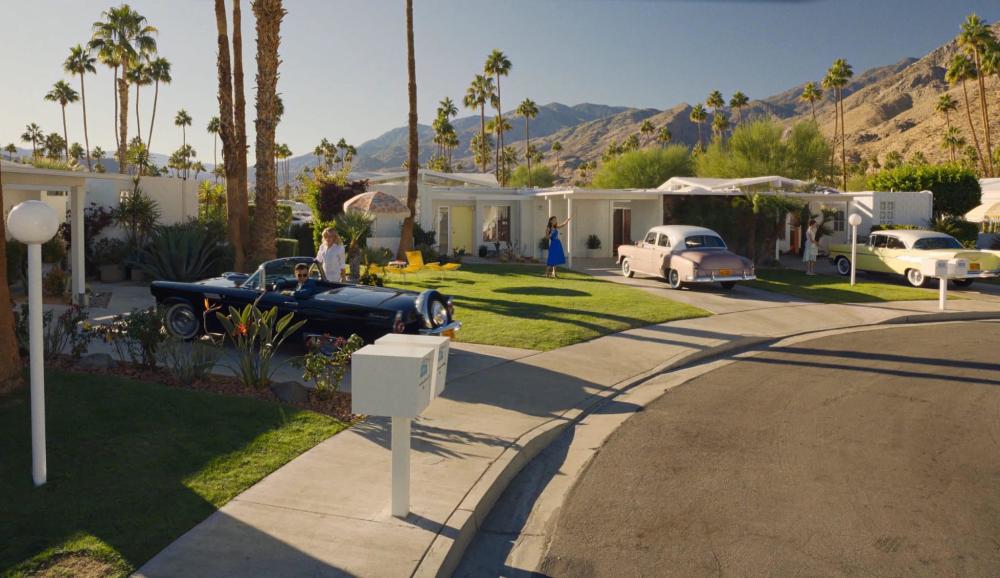
The first homes were completed in 1959, during a period of space-age optimism and architectural innovation. The neighborhood was designed by the renowned architect William Krisel and developed by the Alexander Construction Company.
The properties are situated on generous quarter-acre lots, which contribute to the spacious feel of the neighborhood. From the street, open carports connect to the house via a breezeway, and thin roofs appear to float overhead. Inside, walls of glass open to the backyard or private breezeway, often offering breathtaking views of the San Jacinto mountains. The neighborhood’s development coincided with the height of popularity of the nearby Palm Springs Racquet Club, which added to its allure. Over the years, Racquet Club Estates has maintained much of its original charm.
House of Tomorrow
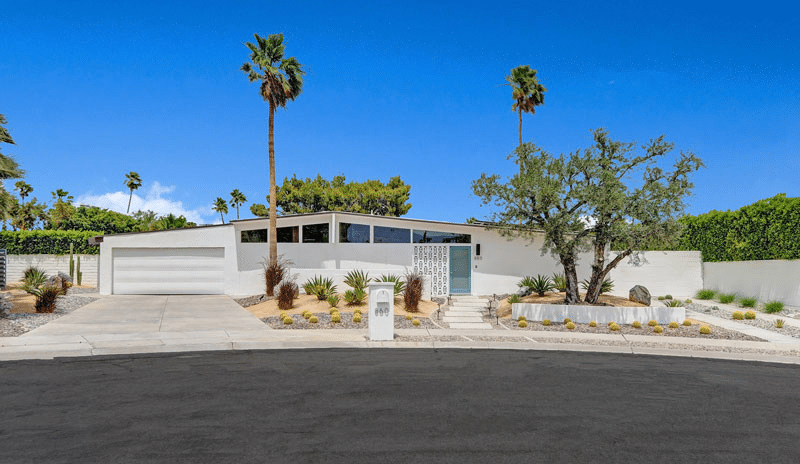
In the early 1960s, the architectural landscape of Palm Springs was transformed by the creation of the “House of Tomorrow,” a futuristic residence that epitomized the era's optimism and innovative spirit. Designed by the visionary architects Dan Palmer and William Krisel, this architectural marvel was commissioned by Robert and Helene Alexander of the influential Alexander Construction Company.
The House of Tomorrow, also known as the Elvis Honeymoon Hideaway, was a masterpiece that stood out even in a city known for its mid-century modern architecture. The Alexanders, having worked with Krisel on the Twin Palms neighborhood, knew he was the architect to realize their ambitious vision.
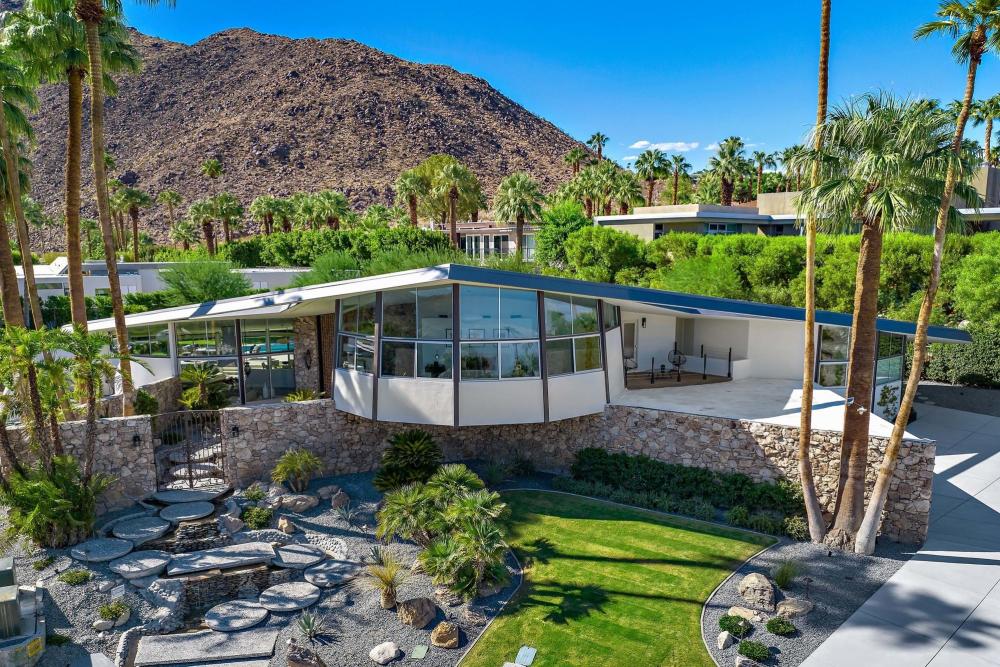
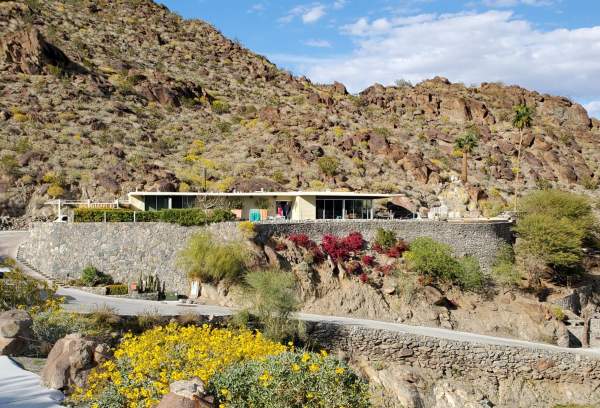
Krisel’s design was revolutionary, featuring four circular pods that seemed to float above a rocky foundation, creating a dramatic statement against the desert backdrop. The home’s layout was unconventional, with each pod serving a distinct purpose and collectively forming a cohesive living space.
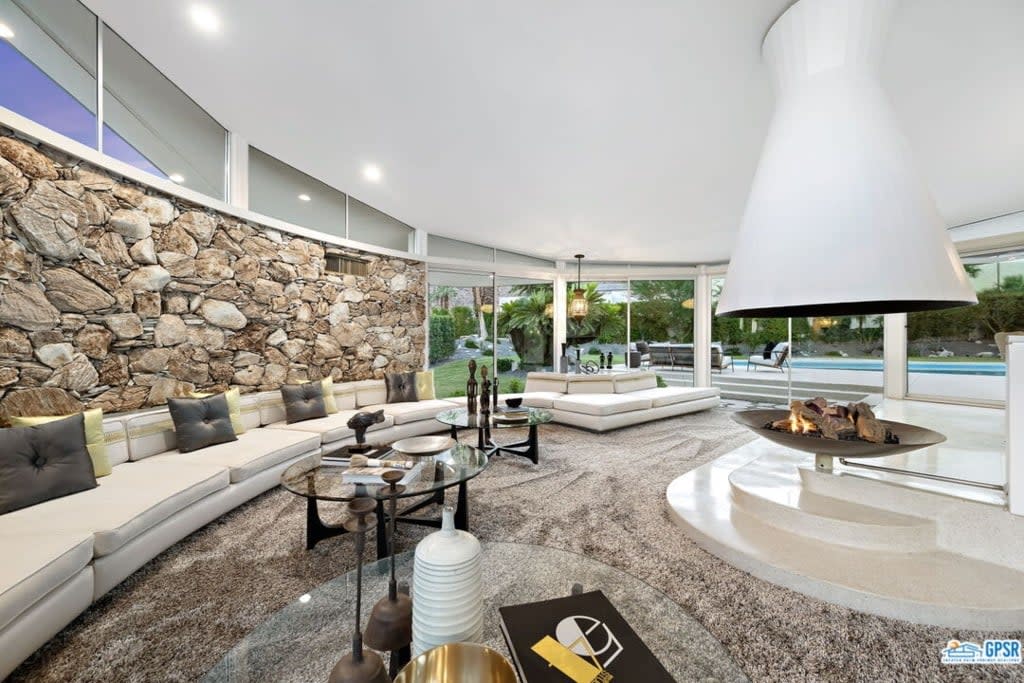
The House of Tomorrow was not just a residence; it was a statement piece that boldly declared its presence. With its boomerang-shaped roof and walls of glass, the house invited the outside in, blurring the lines between the natural and built environments.
The home gained notoriety when Elvis and Priscilla Presley chose it as their honeymoon retreat, further cementing its place in pop culture and architectural history. It has since been designated a Class 1 Historic Site, preserving its legacy for future generations.
For those interested in exploring the House of Tomorrow, tours are usually available during Modernism Week, offering a glimpse into the innovative design that continues to captivate the imagination of all who visit.
Legacy and Influence on Palm Springs Architecture
While Palm Springs boasted a thriving architectural scene during the mid-20th century, Palmer and Krisel's work stood out for its distinctive blend of modernist principles and desert-inspired elements. Unlike some contemporaries who favored more traditional Spanish or Mediterranean styles, Palmer and Krisel adopted a forward-looking approach that reflected the spirit of postwar optimism and innovation.
Their designs, characterized by clean lines, geometric shapes, and minimalist aesthetics, differed from the ornate styles prevalent in other architectural circles. Palmer and Krisel's emphasis on indoor-outdoor living and their sensitivity to environmental considerations set them apart as pioneers of desert modernism in Palm Springs.
The legacy of Dan Palmer and William Krisel extends far beyond the architectural landmarks they left behind. Their innovative designs continue to inspire architects and homeowners alike, serving as a blueprint for sustainable, desert-appropriate architecture. Today, the Twin Palms Estates remain a symbol of their enduring influence on Palm Springs' architectural identity, preserving their vision for future generations to appreciate.
This article is part of the ongoing series, "Architects Who Built Palm Springs," which explores the designers whose visions transformed a desert town into a modernist landmark.
Architects Who Built Palm Springs: William Cody
Architects Who Built Palm Springs: Donald Wexler
Architects Who Built Palm Springs: Howard Lapham
Appendix: Dan Palmer & William Krisel
Chronology of Major Works, Partnerships, and Architectural Contributions
1920–1945: Early Life and Education
- 1920 — Dan Palmer is born in Los Angeles, California.
- 1924 — William Krisel is born in Shanghai and later raised in Beverly Hills, California.
- 1940s — Both Palmer and Krisel studied architecture at the University of Southern California School of Architecture, where modernist design principles and postwar housing theory heavily influenced their training.
Late 1940s–Early 1950s: Professional Foundations
- Late 1940s — William Krisel works for architect Victor Gruen, gaining experience in modernist commercial and residential design.
- Early 1950s — Dan Palmer begins practicing architecture in Southern California, focusing on modern residential forms and efficient postwar construction methods.
- Early 1950s — Palmer and Krisel meet while working in Los Angeles architectural circles, including professional overlap connected to Gruen’s practice.
1953–1955: Alexander Construction Company Collaboration Begins
- 1953–1955 — Palmer & Krisel collaborate with George and Robert Alexander on Corbin Palms in Woodland Hills, California.
This project establishes the template for architect-led tract housing: modular planning, modernist aesthetics, and affordability.
The success of Corbin Palms leads to expanded work with the Alexanders in Palm Springs.
1955–1957: Palm Springs Expansion & Landmark Projects
- 1955 — Palmer & Krisel design Ocotillo Lodge, commissioned by the Alexander Construction Company and Joseph Dunas.
- 1957 — Ocotillo Lodge is completed, featuring over 100 units, a central lobby structure, and the iconic keyhole swimming pool designed with landscape architect Garrett Eckbo.
- 1957 — Twin Palms Estates is completed in Palm Springs, comprising approximately 90 single-family homes and becoming one of the most significant midcentury residential developments in the city.
Late 1950s: Defining Desert Modernism at Scale
- 1958–1959 — Palmer & Krisel continue designing large-scale residential tracts across Palm Springs and the Coachella Valley.
- 1959 — Construction begins on Racquet Club Estates, designed by William Krisel and developed by the Alexander Construction Company.
During this period, Palmer & Krisel refine hallmark elements including butterfly roofs, breezeways, clerestory windows, and indoor–outdoor spatial continuity.
Early 1960s: Experimental & Iconic Works
Early 1960s — Palmer & Krisel design the House of Tomorrow, commissioned by Robert and Helene Alexander.
The residence becomes one of Palm Springs’ most recognizable architectural landmarks.
1967 — Elvis Presley and Priscilla Presley honeymoon at the House of Tomorrow, significantly elevating its cultural profile.
1962–1965: New Residential Models
1962–1965 — Palmer & Krisel collaborate with developer Roy Fey on Canyon View Estates, California’s first purpose-built vacation home community.
The development introduces villa-style condominiums with landscaped common areas, geometric concrete screen blocks, and clerestory lighting.
1964: End of the Palmer–Krisel Partnership
1964 — Dan Palmer and William Krisel formally end their architectural partnership.
By this point, they have collectively contributed to the design of approximately 20,000 residential units across Southern California.
Late 1960s–1970s: Independent Careers
1968–1970 — William Krisel designs Kings Point, a 44-home modernist enclave in Palm Springs built on Indian lease land.
Krisel continues refining International Modern principles for desert living, emphasizing affordability, climate adaptation, and community-oriented planning.
Dan Palmer pursues independent architectural work following the dissolution of the partnership.