

Palm Springs is not simply a place where modern architecture exists; it is where Desert Modernism was born, refined, and made world-famous.
Beginning in the 1920s and flourishing through the 1940s, ’50s, and ’60s, visionary architects transformed this once-remote desert village into an international laboratory of modern design. Against a backdrop of rugged mountains, palm oases, and endless sun, they created a new architectural language, one that embraced climate, celebrated landscape, and reimagined how people could live in the desert.
Today, Desert Modernism defines Palm Springs’ global identity. From iconic celebrity estates and experimental steel houses to entire neighborhoods of midcentury tract homes, the city remains the world's largest and most cohesive concentration of Desert Modern architecture.
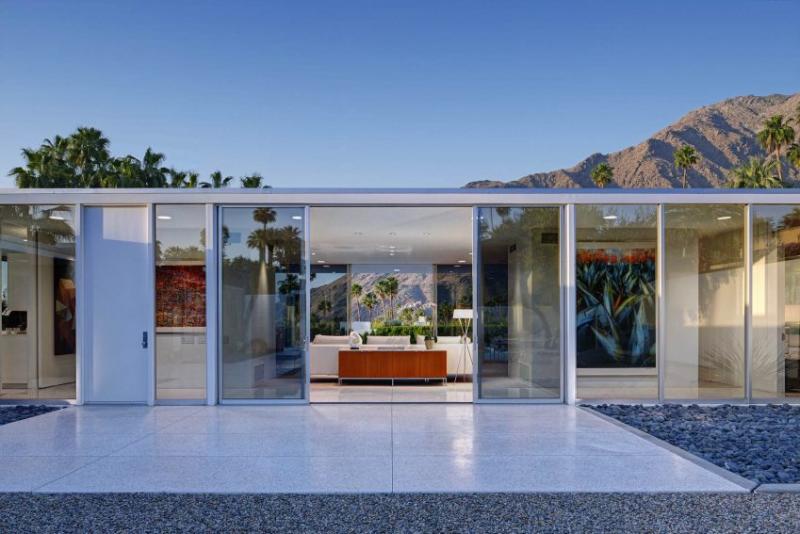
By architect William Cody
What Is Desert Modernism?
Desert Modernism is a regional interpretation of Midcentury Modern architecture that evolved specifically in response to the environmental realities and lifestyle of Palm Springs.
It blends the clean lines and functional philosophy of European Modernism with informality, indoor-outdoor living, and climate-responsive innovation.
Rather than imposing architecture onto the desert, Desert Modernism works with it.
Core ideas include:
• seamless transitions between interior and exterior spaces
• low, horizontal forms that echo the desert floor
• expansive glass to frame mountain views
• passive cooling through shade, breezeways, and orientation
• natural and industrial materials used side by side
• an emphasis on leisure, openness, and light
This architecture was meant not just to be seen, but to be lived in—around pools, courtyards, patios, and shaded terraces.
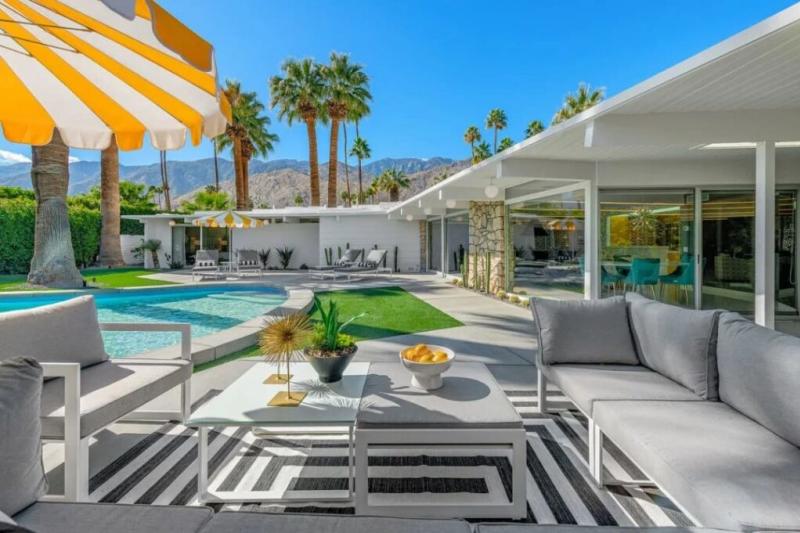
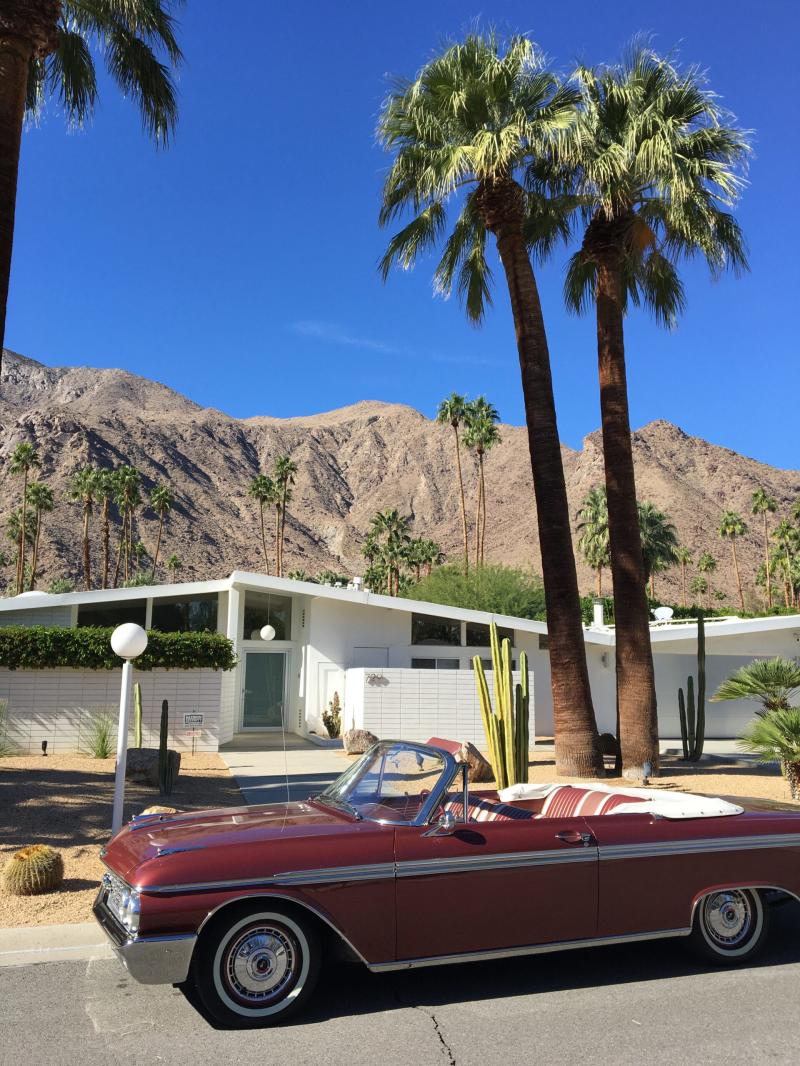
Alexander Company Tract Home, 1958, Charles DuBois Architect
Why Palm Springs Became the Birthplace of Desert Modernism
Palm Springs offered a rare combination that architects could not resist:
• dramatic natural scenery
• a warm, dry climate ideal for experimentation
• seasonal residents open to bold design
• Hollywood money and visibility
• large parcels of developable land
• and minimal traditional architectural expectations
By the 1930s and 1940s, the village had become a magnet for progressive architects seeking freedom from conservative urban design. Wealthy winter residents and celebrities wanted vacation homes that felt modern, glamorous, and radically different from East Coast formality.
Because Palm Springs was primarily a resort town, architects could test ideas here first — lightweight construction, flat roofs, post-and-beam systems, and entire neighborhoods of modernist tract housing.
In Palm Springs, modernism wasn’t confined to museums or one-off homes. It became the city itself.
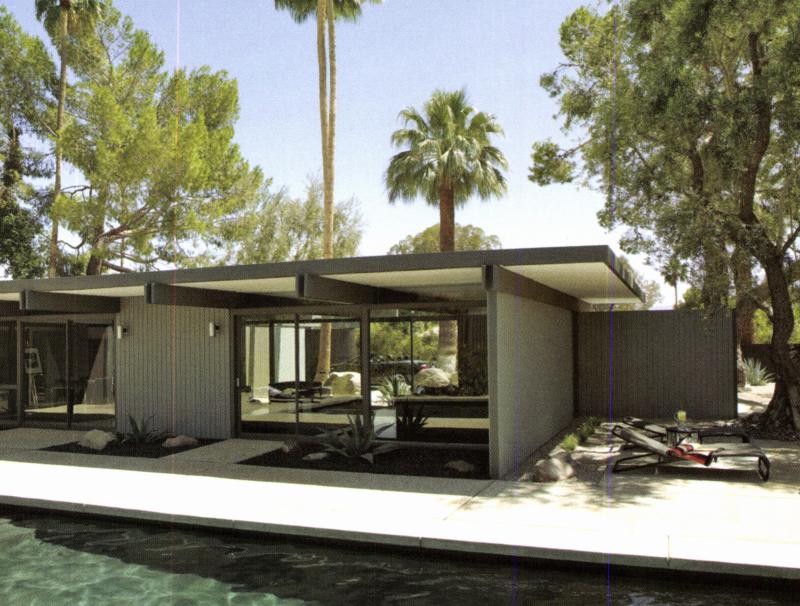
Wexler
The Hallmarks of Desert Modern Design
No two Desert Modern buildings are exactly alike, but most share defining features that respond directly to desert conditions.
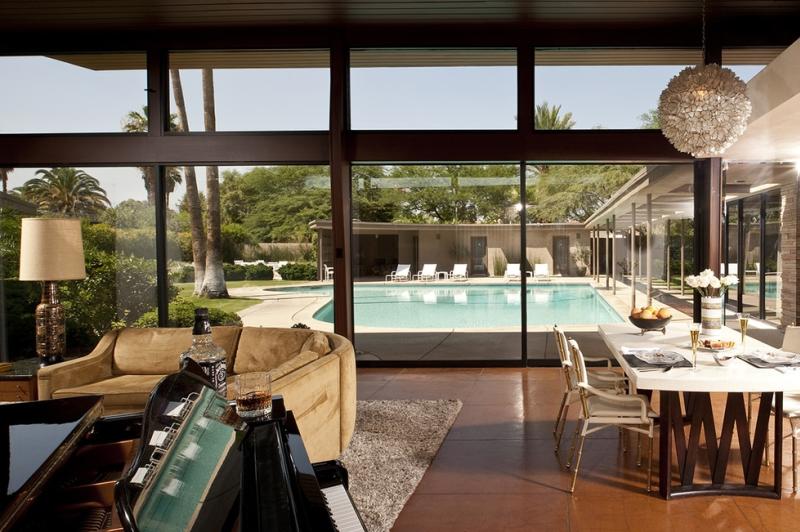
Climate-Responsive Form: Flat or gently sloping roofs, deep overhangs, cantilevered planes, and shaded breezeways protect against intense sun while encouraging airflow.
Glass and Transparency: Floor-to-ceiling windows, clerestory glass, and sliding walls dissolve the boundary between indoors and outdoors, framing mountain ranges, palm groves, and the sky.
Indoor-Outdoor Living: Pools, courtyards, atriums, and patios are not accessories — they are central living spaces.
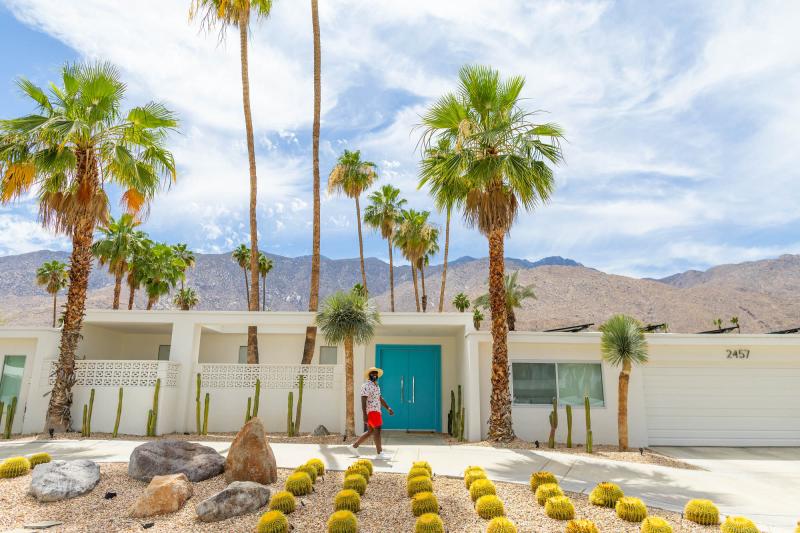
Brise-Soleil and Breeze Block: Decorative concrete screens filter light, reduce heat gain, and provide privacy while becoming signature visual elements of Palm Springs architecture.
Natural + Industrial Materials: Stone, wood, and plaster are paired with steel, aluminum, and glass to blur the line between nature and modern technology.
Minimalism with Warmth: Desert Modernism is restrained but not cold. Color palettes mirror sand, rock, and vegetation. Simplicity becomes sensual.
The Architects Who Shaped Desert Modernism
Palm Springs Desert Modernism brought together architects, developers, and interior designers to create an effortless, simple style. These midcentury designers helped put Desert Modern on the map and left Palm Springs even more beautiful.
Richard Neutra
An internationally known modernist, Neutra brought global attention to Palm Springs.
The Kaufmann House (1946) is perhaps the most famous Desert Modern home ever built. With floating planes, expansive glass, and dramatic siting against the San Jacinto Mountains, it crystallized Palm Springs as a modernist destination.
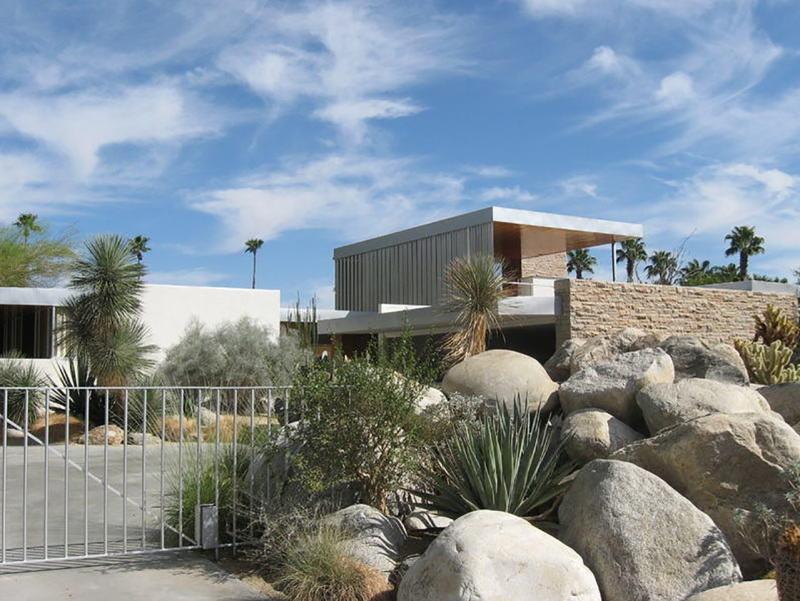
Kaufman House by architect Richard Neutra
Dan Palmer & William Krisel
Palmer & Krisel brought modernism to the masses.
Working with the Alexander Construction Company, they designed thousands of homes that introduced clean modern design to middle-class buyers. Neighborhoods like Twin Palms made Palm Springs the first city where modernism became mainstream.
Their butterfly roofs, breeze block walls, and playful geometry shaped Palm Springs' everyday visual language.
Albert Frey
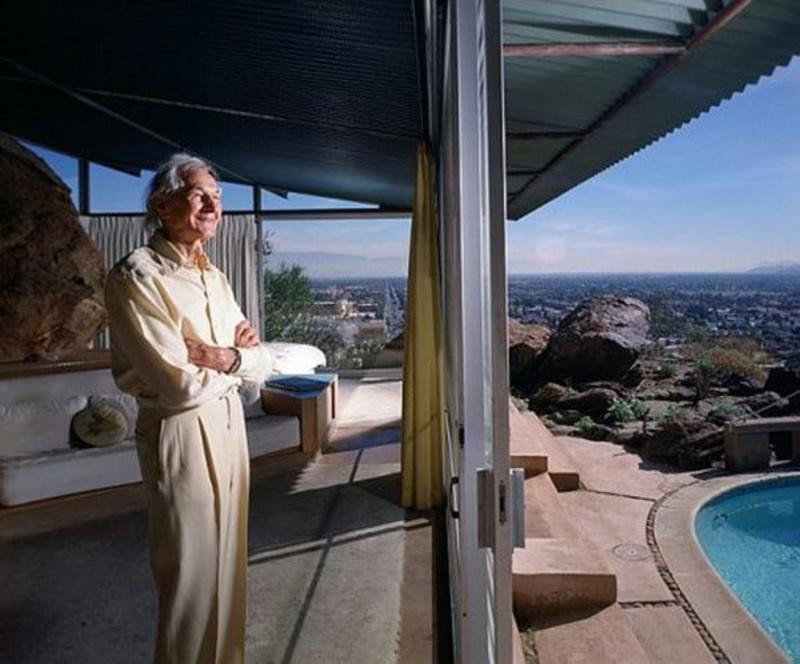
Often considered the founding figure of Desert Modernism, Frey believed architecture should submit to nature rather than dominate it. His work integrated buildings directly into rocky landscapes and emphasized lightness, efficiency, and environmental harmony.
Frey House II (1964) — built into the mountainside above Palm Springs, this residence is among the most important modernist houses in America. Frey lived there until his death at 95. Today, the Palm Springs Art Museum owns and operates it, and it stands as a masterclass in desert-responsive design.
Visit the Aluminaire House Exhibit
Donald Wexler
Wexler expanded Desert Modernism beyond luxury homes into experimental and civic architecture.
His Steel Houses (1962) tested prefabrication, modular systems, and industrial materials in desert conditions. These are a rare and important example of midcentury innovation.
Wexler also co-designed Palm Springs International Airport and numerous public buildings, proving Desert Modernism could serve an entire city, not just private estates.
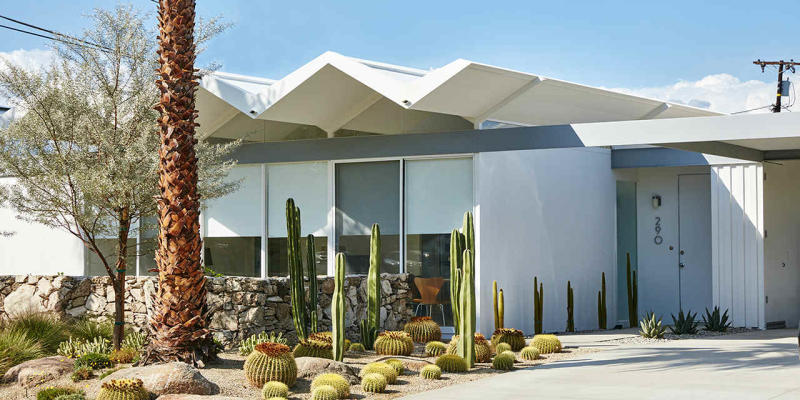
Wexler Steel House
E. Stewart Williams
Williams created many of the city’s most refined modernist structures — civic buildings, banks, hotels, and celebrity estates.
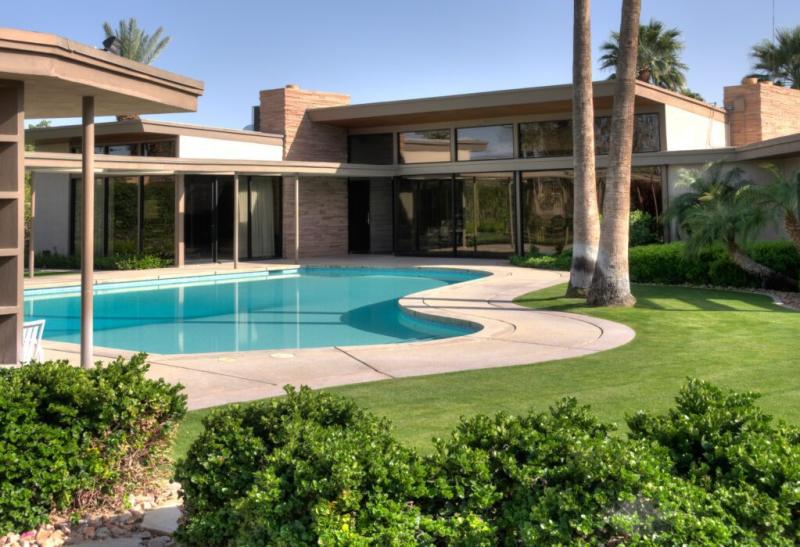
His design of Frank Sinatra’s Twin Palms Estate (1947) helped define the glamorous Palm Springs image that still endures: low lines, dramatic views, private leisure, and architectural cool.
Desert Modernism Beyond Homes
Unlike most architectural movements, Desert Modernism in Palm Springs extended into every aspect of the built environment.
City Hall, banks, schools, churches, gas stations, and hotels were all designed through a modernist lens. This produced something extremely rare: a cohesive, city-scale architectural identity.
Palm Springs is not a place where you “find” modern architecture.
It is where you constantly move through it.
The Living Legacy of Desert Modernism
Today, Desert Modernism is not a nostalgic footnote; it is a living, protected, and actively celebrated cultural asset.
• Entire neighborhoods remain architecturally intact
• The Palm Springs Art Museum preserves and interprets modernist history at the Architecture and Design Center
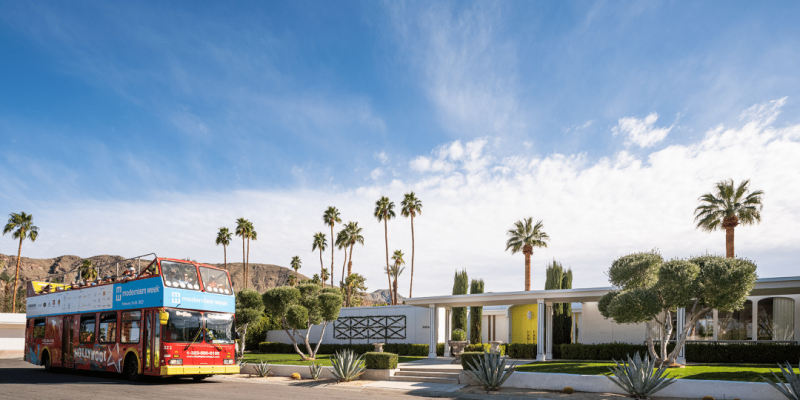
• Modernism Week attracts global audiences annually in February and October
• Homeowners continue restoration efforts
• New architecture frequently references midcentury principles
Desert Modernism continues to shape how Palm Springs grows, markets itself, and understands its cultural value.
It is the foundation of the city’s visual identity, tourism appeal, and creative reputation.
Experiencing Desert Modernism Today
Visitors can experience Desert Modernism through:
• Self-guided architecture drives
• Neighborhood walking tours
• Palm Springs Art Museum Architecture & Design Center
• Guided modernism tours
• Preserved landmark homes
• Hotels and resorts originally built in the midcentury era
• Modernism Week and Modernism Week - October events and exhibitions
Every palm-lined street offers a new lesson in form, light, shadow, and space.
Why Desert Modernism Still Matters
Desert Modernism was never just a style. It was an early experiment in climate-aware design, lifestyle-driven architecture, and regional expression—concepts now central to contemporary architecture worldwide.
Long before sustainability became a buzzword, Palm Springs architects were designing for heat management, orientation, airflow, material efficiency, and human comfort.
The result is an architectural legacy that feels as relevant today as it did seventy years ago.